
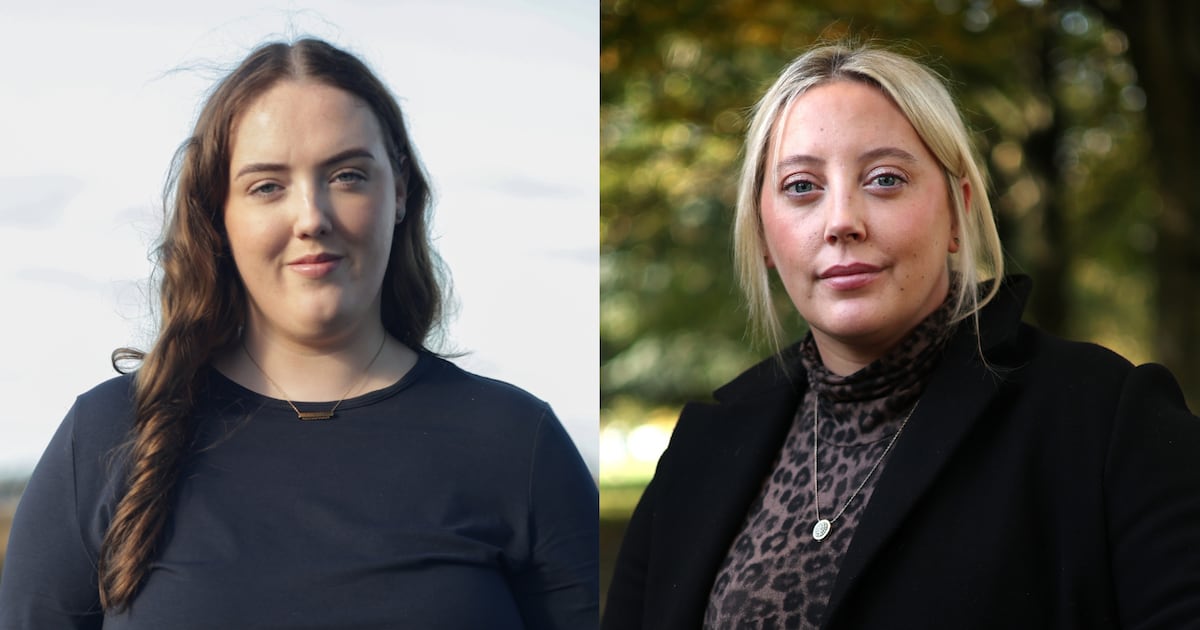
Leitrim woman Rachel Tymon says the pain she endures from endometriosis is “on another level”. “It’s like as if someone has my left ovary in their hands and they’re squeezing it or pulling it,” says the 24-year-old. Severe pain has been a constant for Tymon since the age of 11, the year her mother died, when she got her first period. “I could be off for days at a time,” she recalls. READ MOREAs a teenager, the periods got heavier and the pain intensified. “I’ve been on more than 30 medications over the years,” she says. And still endometriosis – a tissue similar to the lining of a womb that grows outside the uterus – went undiagnosed. The Health Service Executive (HSE) estimates that one in seven women could be affected by endometriosis, which it says is “difficult to diagnose and treat because it presents in various ways”. For Tymon, MRI and CT scans and blood tests all returned “normal”, contradicting her agony. She remembers medics saying there was “nothing wrong with you” or suggesting counselling as the pain was psychological. Rachel Tymon hopes the HSE will fund her travel and medical bills. Photograph: Enda O'Dowd/The Irish Times A breakthrough came in May 2024, when a laparoscopy – a diagnostic surgery – finally revealed, “my bowel was wrapped around my ovary and there was endometriosis tissue on my right ovary behind my uterus”. She was also diagnosed with polycystic ovary syndrome, which impacts menstrual cycles. Based in Galway where she worked in the beauty industry, Tymon returned home to live with her father Michael in Summerhill, Carrick-on-Shannon, two months ago because the pain became “unbearable”. The disease has stripped Tymon of her independence. Her sisters, Rebecca and Katelyn, help her to shower, bath and get in and out of bed. They support financially, too. Tymon would love children, at some stage, with her partner of seven years, Dean. “Every woman is different but for my endometrioses the only way I can get help is by going abroad,” she said.Tymon identified a specialist in Athens with the necessary multidisciplinary team to do the surgery she requires. She hopes the HSE will fund her travel and medical bills through its Endometriosis Surgery Abroad Interim Scheme (ESAIS) launched last October. The HSE said it is “not currently possible to determine with absolute accuracy the number of women awaiting endometriosis surgery nationally or to provide an average waiting time specifically for endometriosis surgery”. It said, however, that 1,400 endometriosis-related surgeries were completed in Ireland during 2025. Tymon is one of 260 women who have engaged with the HSE about accessing treatment abroad through ESAIS. Some 116 of these women applied for treatment abroad under the scheme; 88 were approved and “arrangements have been made for them to travel abroad”, 12 more are “expected to travel in the coming weeks”, the HSE said. One woman who travelled abroad for endometriosis surgery is Dubliner Robyn Murray. She first experienced symptoms aged 21, after her first childbirth, which felt “like a switch changed in me”. Robyn Murray: 'We are letting women down. I want a public inquiry.' Photograph: Clodagh Kilcoyne for The Irish Times “I was in extreme pain. Debilitating periods. Hip pain. Sometimes I couldn’t walk, with a sensation in my legs. Around the time of my period, I would literally be housebound with the pain ... I ended up be anaemic,” recalls the 37-year-old married mother of two from Beaumont. Murray, an office assistant, says she was told this was “all very normal” after pregnancy, but the problems persisted. It was a decade later before endometriosis was discovered through diagnostic surgery. The December 2022 procedure was scheduled to take 45 minutes but lasted over five hours when surgeons discovered she had advanced endometriosis. “I was told they were unable to clear it all, and if they did, I would be left with a stoma bag because I had a lot of bowel involvement. That frightened me,” she says.Surgery brought no relief, however. And she was then diagnosed with adenomyosis, a condition that brings prolonged, menstrual bleeding. She had a second surgery – a hysterectomy – in September 2024, and “was put into a chemical menopause” to prepare for it. Again she “got absolutely no relief”. Last year, she accompanied a friend who had endometriosis surgery in Athens. The Greek clinic wasn’t suitable for Murray due to her bowel complications, but she had a third surgery last May in Bucharest. She admits she was “absolutely terrified” before travelling but insists: “I’m one of many Irish women who will say Romania changed their life.”“When I woke up, I felt completely different. Basically, I’m endo-free,” she says, although she concedes it may return. The €6,000 medical costs were self-funded. Murray acknowledges Minister for Health Jennifer Carroll MacNeill’s announcement last year of an endometriosis framework was positive, but it brought no “meaningful change”. “We are letting women down. I want a public inquiry into this – if we don’t look at this properly, we’re never going to be able to help women in Ireland and we are going to have to continue sending them abroad.”
‘I was in extreme pain’: Women with endometriosis forced to travel abroad for treatment
Full Article
Original Source
Read the full article at Irishtimes →KhanList aggregates and links to publicly available news content. We do not host full articles from third-party sources. Always verify important information with original sources.