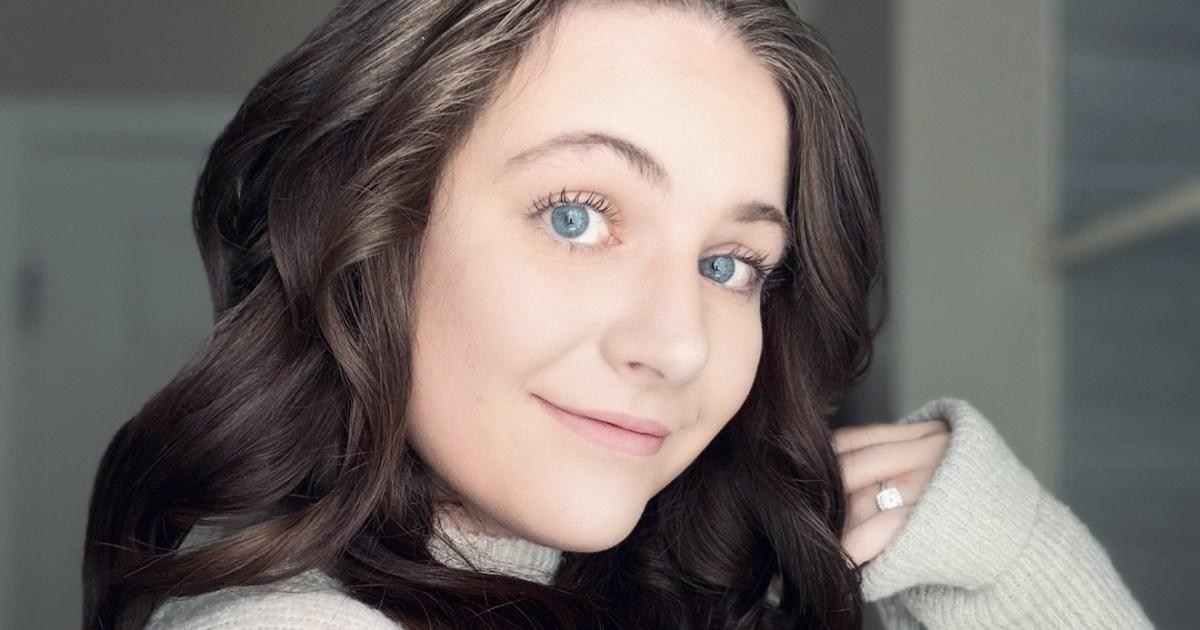
The mum-of-four is regularly told she ‘doesn’t look like she has Down’s syndrome’ (Picture: Ashley Zambelli) After her third child was diagnosed with Down’s syndrome, Ashley Zambelli says ‘alarm bells’ started ringing. She’d assumed it was a coincidence that her first two pregnancies had tested positive for the condition, but after the birth of her daughter, medics weren’t so sure. Ashley, then 23, had been in and out of doctors’ surgeries since she was a child — her long list of ailments included an abnormally high heart rate, dislocating joints, and difficulties at school. ‘I found school difficult,’ the 26-year-old tells Metro. ‘It took me a lot longer to learn to read, and I struggled to do homework. ‘I never managed to finish tests as I couldn’t answer the questions in time, so I often failed. Ask Metro Use AI to go deeper into the stories you care about – powered by Metro and trusted publications. ‘Doctors knew something was going on with me; they just didn’t know what. The 26-year-old has been experiencing health issues since childhood (Picture: Ashley Zambelli) ‘As I got older, they thought I might have Lupus, because my father had it, but when that diagnosis fell apart, the doctors just stopped looking.’ It wasn’t until she fell pregnant with her daughter, Katherine, now three, in 2023 that ‘alarm bells’ finally started ringing, and she received a surprising diagnosis. At the age of 23, Ashley, who lives in Macomb, Michigan, USA, discovered she had Trisomy 21, more commonly known as Down’s syndrome. The mum-of-four was diagnosed with a rare form of the genetic condition, known as Mosaic Down’s syndrome. This means that only some of her cells have an extra chromosome, not all of them. ‘I have a low-level mosaicism of Trisomy 21 in up to 20 per cent of my cells,’ Ashley explains. Currently, Mosaic Down’s syndrome accounts for about 2 per cent of all Down’s syndrome cases, but the actual percentage of those with the condition could be higher, as many cases go undiagnosed. Research suggests that those with Mosaic Down’s syndrome may have fewer characteristics of the condition than those with other types. However, as people with Down’s syndrome can display a broad range of abilities and characteristics, broader generalisations can’t be made. For Ashley, she only felt ‘relief’ when she got the news. ‘I was so happy when they gave me that diagnosis — it was finally an answer that I could add to my medical chart and use it to get the help I needed.’ In Ashley’s case, the condition was only discovered due to a hunch her gynaecologist had, after seeing test results for three of her pregnancies. Her first pregnancy in 2019 tragically ended in a missed miscarriage and an emergency D&C procedure (where the uterine lining is carefully scraped) to remove remaining tissue from the uterus. ‘The protocol at the hospital was to do a genetic test on the tissue after a D&C, and that came up saying it was a boy, and he had Down’s syndrome,’ Ashley recalls. When Ashley fell pregnant again, her second baby, a daughter named Lillian, who is now five, also tested positive for Trisomy 21, as did her fourth child, Katherine. Ashley says that she was so happy to have given birth to a healthy baby that she quickly accepted Lillian’s diagnosis. ‘It’s common — everyone who has a baby has a small chance of having a child with Down’s syndrome,’ she says. ‘My husband, Taylor, and I just thought that we must have a higher chance than others, as not all of our kids tested positive. ‘But the third time it happened with Katherine, alarm bells started ringing for my OBGYN, as she’d never had a patient with that many positive results before.’ Ashley and her husband, Taylor (Picture: Ashley Zambelli) Ashley’s doctor referred the mum to a genetic counsellor, who ran several blood tests. ‘The results said I didn’t have any genetic abnormalities, but the counsellor wasn’t convinced. She ended up doing a buccal smear test, which is where they swab inside your cheek and mouth to test tissue.’ This finally provided the answer Ashley had spent years searching for, and a few days later, she was diagnosed with Mosaic Down’s syndrome. ‘I was at the hospital with my daughter Lillian when I found out,’ the 26-year-old recalls. ‘She was having some tests done, and I got off the phone just as a nurse was coming in, and I was so happy. ‘I’ve never seen so much concern on somebody’s face. She didn’t understand why I was so pleased to have been diagnosed with Down’s syndrome. ‘I struggled to explain it to her, but I was just so glad to finally have an answer.’ The mum claims the diagnosis has deepened the bond she has with her children with Down’s syndrome. ‘I almost feel like I can understand more of what they are going through and how their brain processes things — it takes me longer to process things too, so I can just relate with them a little better.’ Ashley and Taylor have four children (L-R) Evelyn, 4, Katherine, 3, Damian, 2, and Lillian, 5 (Picture: Ashley Zambelli) However, there has been one major downside to getting the diagnosis, as Ashley claims it’s made some aspects of healthcare trickier. ‘It’s been harder than I thought to get help for some of the symptoms I’m experiencing, because now everything is just chalked up to my diagnosis. Everything is blamed on Mosaic Down’s syndrome,’ she says. ‘Some doctors also completely brush me off and don’t believe I have Down’s syndrome. ‘I’ve had people tell me I don’t have “real” Down’s syndrome, and that I don’t look “Down’s syndrome enough” because I don’t have any of the phenotypes of the condition. ‘The only thing I have is that my ears are smaller and they sit a little lower, but nobody ever sees my ears.’ The mum, who has started posting content online to raise awareness of Mosaic Down’s syndrome, also claims to have noticed a real lack of medical knowledge around her condition, which doesn’t help. ‘I get messages all the time on TikTok and Instagram from doctors and nurses who tell me they didn’t know about it at all,’ she says. ‘The main doctor I see for checkups wasn’t even aware that Mosaic Down’s syndrome was a thing.’ Seemingly, there’s so little information out there on the topic that biology professors have started using Ashley’s social media content in their lessons. ‘I feel honoured, but I can’t believe people are watching my videos in classes. ‘I’m not a doctor, I don’t have a degree in science or biology, I’m just sharing my own experience.’ She adds: ‘But I do really appreciate that they believe me and use me as an example – it’s cool, but weird.’ This article was first published on May 21, 2026. Do you have a story you’d like to share? Get in touch by emailing MetroLifestyleTeam@metro.co.uk Deals of the Day Parents can save up to 30% on Kickers school shoes ahead of the new term The back-to-school hack that's helping parents avoid queues and sold-out sizes Could your hair be wavy rather than straight? This brand thinks so Could your star sign improve your skincare routine? This new beauty launch thinks so Best skincare for menopausal skin? This dermatologist-created treatment is tailored to you Arrow MORE: Gertrude Ederle nearly drowned at 7 — then became the first woman to swim the English Channel Arrow MORE: Little-known theme park crowned the UK’s most affordable for families Arrow MORE: I’m 76 and transgender – life is far harder for trans kids today than it was for me The Slice Your free newsletter guide to the best London has on offer, from drinks deals to restaurant reviews.
I was diagnosed with Down’s syndrome at 23 — doctors couldn’t believe it
Full Article
Original Source
Read the full article at Metro →KhanList aggregates and links to publicly available news content. We do not host full articles from third-party sources. Always verify important information with original sources.