
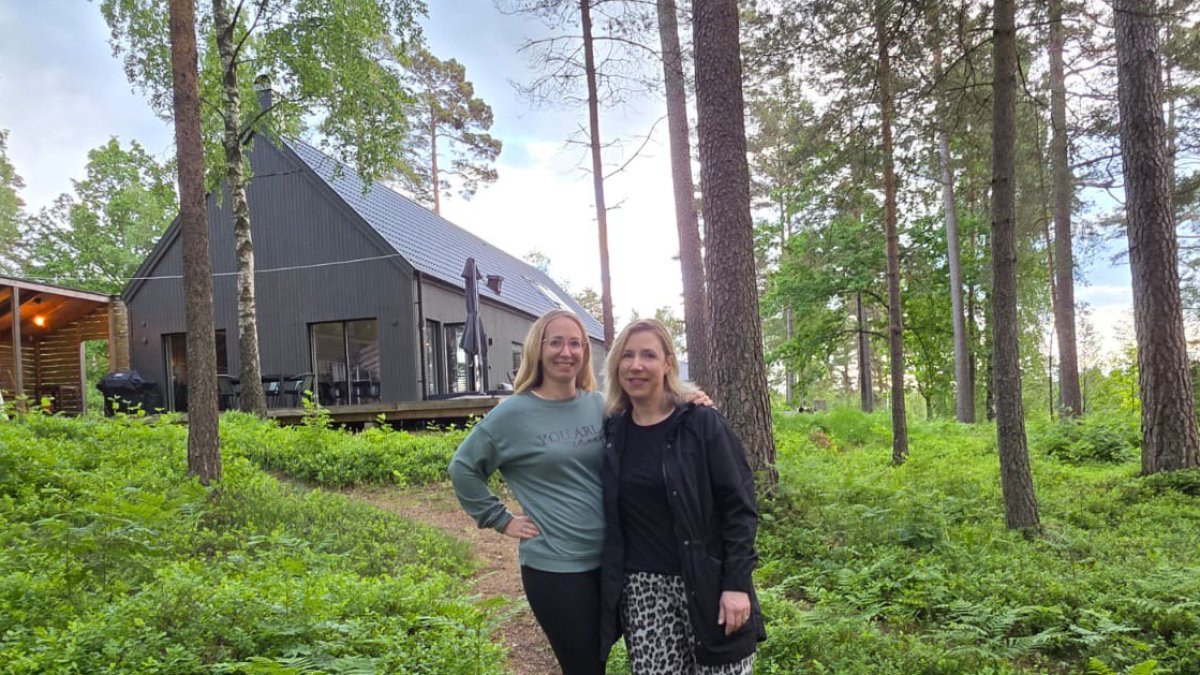
Gazing out across a jetty to a forest by the lake, while dipping my toes in the water, I feel calmer than I have done in weeks. I have come to the countryside near Borås, Sweden, around an hour’s drive or bus ride from Gothenburg, for an ADHD retreat. It promises coaching on overcoming burnout alongside group work on some of the challenges faced as a woman living with ADHD. This type of escape is becoming more popular. Global platform BookRetreats lists dozens of retreats for neurodivergent women like me, with many featuring executive-function workshops and stress-reduction techniques. Shorts It’s my first time trying one since I was diagnosed with ADHD, and I am hoping to learn more about emotional regulation, connect with like-minded women and come away with a few techniques to help combat burnout. The retreat is run by Michaela Thomas, a clinical psychologist and coach who assessed me for ADHD last year. Michaela is Swedish, but she now lives in the UK. This is also her first time running a retreat. Sweden, with its long summer days (Gothenburg has over 18 hours a day of sunlight in June), pine forests, charming red houses and abundant lakes, feels like the perfect setting for it. I am one of seven women at the retreat, including Michaela, and most are in their forties, like me. Our wooden house (a Sommarstuga, or summer house) in a forest overlooking a small lake perfectly encapsulates the Swedish countryside of my imagination. It’s simply furnished with a stylish, contemporary kitchen, wooden floors, a small wood-burning stove and sofas. We all get our own bedroom, but share a bathroom. The sauna and hot tub add a touch of luxury. A scenic backdrop of a lake and a forest had a calming influence on Georgina Like many fortysomething women, I sought an ADHD diagnosis after my children (in my case two out of three) were diagnosed as neurodivergent and I realised how many of our traits overlapped. Getting a diagnosis at the age of 47 was life-affirming. It helped me look back on my younger self, the one who frequently got told off for not paying attention, talking too much or not trying hard enough at school, with more compassion. I am one of almost 2.5 million people with ADHD in England, based on an estimate published by the NHS. In March 2026, new referrals for an ADHD assessment were up by 29.5 per cent compared with March 2025, according to NHS figures. This rise is driven partly by increased awareness, including through social media, and the fact that there is a growing body of research about neurodiversity. The number of women taking ADHD medication increased more than 20-fold between 2010 and 2023, according to a study by the University of Oxford. My symptoms – mainly difficulty focusing, forgetfulness, trouble with day-to-day organisation (having children at three different schools sends my brain into a meltdown when it comes to keeping on top of inset days, term times and emails) – have been exacerbated by hormones. I’ve learned that, for many women, perimenopause can be a time when ADHD symptoms come to the fore as oestrogen levels spike and plunge and dopamine levels also fluctuate, which can impair attention, memory and emotional regulation. I am still, however, learning about ADHD. So, when Michaela, who used to work in occupational health and psychology for the NHS before founding her consultancy The Thomas Connection, mentioned she was holding a retreat for women with “busy brains”, it immediately appealed. Michaela Thomas (pictured) taught participants strategies for emotional regulation, such as regular meditation I often struggle to switch off and, with tight work deadlines, two teens and a pre-teen at home, I hoped to reset in Sweden. Over four days, we learned more about the sorts of activities that can help us to regulate our emotions, from dancing to meditation. Michaela focuses on three coaching principles – pause, play and purpose. We used group activities from writing to visualising our “happy” place to help define our values. We used “play”, which includes painting, dancing and sharing stories, to help tap into energising activities and pause to focus on acceptance and affirmation. We concluded the retreat by writing a “permission slip” – a chance to give permission to ourselves to accept and celebrate who we are and highlight what we learned and will take home with us. Mine included pausing before making a decision and forgiving myself for making careless mistakes. In between the activities, there was time to swim in the lake, wallow in the hot tub and relax in the sauna. Unfortunately, we didn’t have the best weather, but still managed to enjoy some Swedish sausages from the firepit. Lauren O’Carroll, a coach for parents with ADHD raising neurodiverse children, lent her expertise at times by discussing some of the ways she works with families. She also helps Michaela to run the retreat by cooking and providing ad hoc support. It’s comforting and validating to be surrounded by women who I can relate to. They are women who appear to be professionally successful – our group includes a GP, teacher and HR professional – but who often struggle with simple day-to-day tasks. I learnt, for example, that several of them are also hopeless with directions and using Google maps. And that a number of them also have autistic children, like me. I find the group work quite illuminating, but it’s the one-to-one interactions that are most enriching. The other women are all from the UK, like me, but many have travelled and lived overseas, too. Hearing about another participant’s trip to the Himalayas, where she met a group of monks who helped her to find calm, and, during a walk through the forest, learning of how another mum is raising her disabled child, are thought-provoking moments of connection. I come away feeling rested and ready to face the challenges ahead. I hear Michaela’s words “take a moment to yourself” as I go about my day, and, rather than the usual mad rush to put a load of washing on and spend hours replying to emails, I run a long bath instead. Spending four days away from the pressures of day-to-day life made me feel more in control and helped me to realise I’m not alone. How to do a retreat The writer was a guest of The Thomas Connection. BA flights from Heathrow to Gothenburg start from £54 each way. An Uber from Gothenburg airport to Borås takes around one hour and costs around £72. Michaela offers a number of retreat options, starting at £147 for one-day group sessions. For more information on the next retreat in Sweden, sign up to her newsletter thethomasconnection.co.uk/newsletter. The next Swedish retreat is likely to be around £1,500pp. More information vastsverige.com/en/
I was diagnosed with ADHD aged 47 – this Swedish retreat made me feel less alone
Full Article
Original Source
Read the full article at Inews →KhanList aggregates and links to publicly available news content. We do not host full articles from third-party sources. Always verify important information with original sources.