
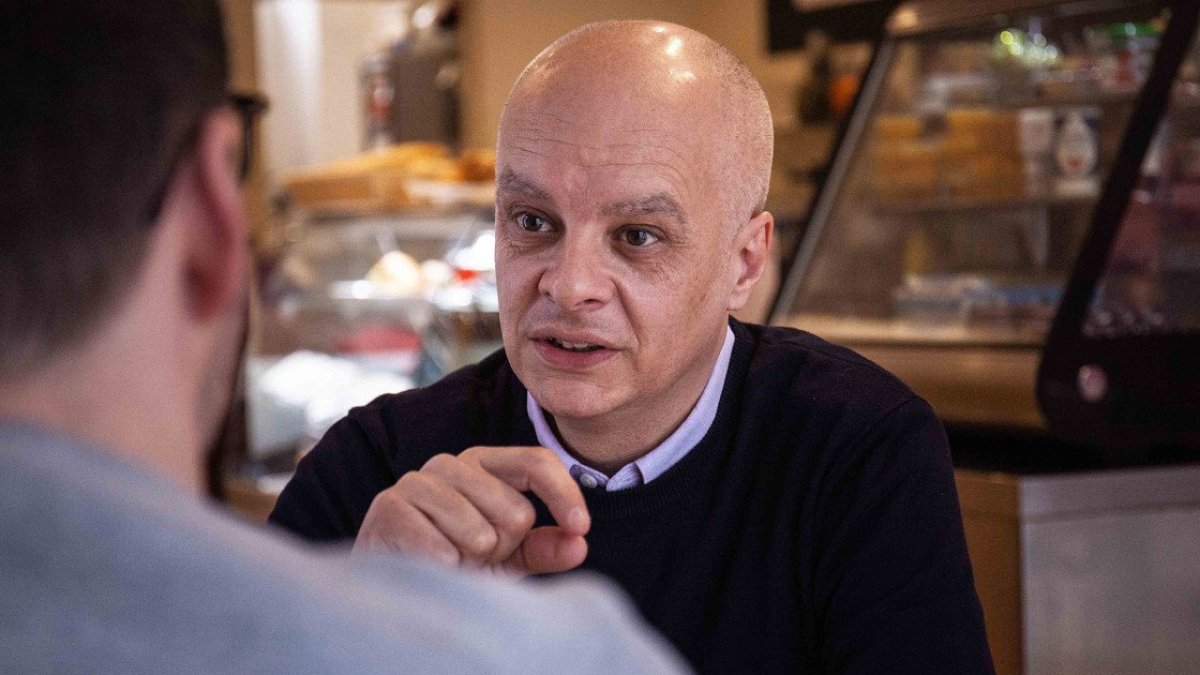
Nigel Bromage was a 15-year-old schoolboy growing up on a Birmingham council estate in the 1980s, when some men came to his school gates and changed the course of his life. They handed him a “Birmingham against the IRA” leaflet showing a young mother trapped in a bomb explosion. The call to action said, “If you think this is wrong, do something about it”. Bromage thought he’d do something positive, and fight extremism. If he joined these activists, there were also free gig tickets, which were appealing to a bored teenager, and when the group found out that his mum was dying of cancer, they took him to hospital, helped him pay the bills, and bought him food. He didn’t know, until it was too late, that he was being radicalised by the British far right. For more than 20 years, Bromage was a leading member of several far-right groups, and co-founded Combat 18, an openly neo-Nazi group, devoted to violence and white supremacy. The number “18” in its name stands for the first and eighth letters of the alphabet (A, H), representing Adolf Hitler. He joined demonstrations and marches, and spent time in prison for violence and disorder. Shorts He got a reality check in 2000, when he saw 15 members of his group in Birmingham city centre attacking a black man, whose wife and children were standing close by at the bus stop. He found himself intervening and getting the victim and his family into a cab. Something clicked – “I came to my senses,” he says – and he saw, once and for all, that he was spreading only violence and hatred – none of the patriotism he’d signed up for. His extremism had cost him his marriage, and he was bringing only misery into the world. It was dangerous to leave the group because they knew so much about him – “it’s like leaving a gang,” he says – so he fled to London to hide in places he didn’t think the far right would look for him. A year later he went back to the Midlands and tried to make amends and tackle his “deep shame”. He underwent training with Prevent [the government’s early-intervention initiative designed to safeguard vulnerable people from being drawn into terrorism or radicalisation]. He also founded Small Steps, which provides training to reduce extremism. Bromage at various neo-Nazi gatherings, plus a letter he wrote to the US branch of the white supremacist group, Church of the Creator, with the slogan, ‘It’s great to be white!’, signed ‘your racial brother, Nigel Bromage, England’ He also started Exit Hate, a charity which offers free support to people wanting to leave extremism, and for families whose loved one has been radicalised. Bromage says he is inundated by people in need of support, and he often works 12-hour days. New data published by Prevent in August 2026 showed a record number of people have been referred to the government’s anti-extremism programme in England and Wales, with a 39 per cent rise over the last year, including a 42 per cent rise in referrals for extreme right-wing ideology. Of 5,315 referrals, 3,600 (68 per cent) were white, 949 (18 per cent) were Asian, 401 (8 per cent) were black and 365 (7 per cent) were listed as “other”. “Since 2016, we have steadily seen an increase in people reaching out to us,” says Bromage. “If someone had sat me down and talked to me about the dangers of involvement, how all extremism is wrong, and simply gave me a space to talk, I would have listened, and I wouldn’t have wasted nearly 20 years of my life. But while I can’t turn the clock back, we can help others and reduce extremism, one person at a time.” Here, Bromage explains what he wants people to know about extremism in Britain today. The comfortable middle classes can get radicalised too “It can be anybody,” says Bromage. “Many people we’ve worked with have been well-educated and are middle class but are lost. There are no stereotypes anymore. People can be of any background or could be going through a difficult time – issues in the family, redundancy, bereavement, domestic violence, the list goes on. It’s not like people wake up and decide they support Adolf Hitler just like that – they find some support and comfort and community in the far right. They get groomed, and it’s done in a carefully planned way.” The far right is an appealing ‘safe space’ “The far right offers something that society needs to offer,” says Bromage. “A safe space to talk, a place to be listened to and a sense of belonging. The antidote to extremism is safe, welcoming places to find community and conversation, and to have the reality of extremism explained to those who are vulnerable. We also need a return to strong communities where people look out for each other. The far right talks about this community, but in reality, it isn’t there.” Young people arrive for a protest between the English Defence League and anti-Nazi demonstrators in Manchester in 2009 (Photo: Paul Ellis/AFP) The difficult and dangerous reality is that extremists are great at recruiting new members. “They spot vulnerability, and act on it,” he says. “When I think about my own involvement, I was a lost 15-year-old in a very difficult place – my mum had cancer, and I needed help, and the far right offered it to me. They opened a door via my hatred for the IRA, but it was the support they gave me, the feeling of belonging and, if I am honest, the outlet for my rage at seeing mum dying. Today I see that it was just so hateful, but then I didn’t.” Arguing with an extremist makes it worse “In seeking to do the best you can for a loved one,” says Bromage, “it’s important to understand that often offering alternatives to their views will not work. They may become angry and defensive, and this can sadly result in extremists seeing families as the enemy, which simply drives people to the extremists even more.” Their real family quickly becomes seen as “woke” and ignorant, and the group is then seen as their true family. “Concentrate on keeping the family together, highlighting how it’s a safe space, where no one will judge people and how it will always be there. This is crucial for long-term support, and this will assist people to leave, as they will know the family is the rock they can come back to.” Supporters of far-right anti-migrant activist Tommy Robinson assemble for a demonstration in London last year (Photo: Guy Smallman/Getty) Bromage says that because of his involvement in the far right as a teenager, his friends walked away from him, teachers wanted nothing to do with him, and youth workers and police didn’t know how to deal with him. That only left him lonelier and open to greater radicalisation. However tough and painful it might be, it’s important to stick by friends and loved ones, no matter what they might say. This might prevent extremists from taking advantage of their isolation and manipulating them further. “Listen. Find out why they’re angry. What are their triggers? Offer them that safe space. You might be able to help save them.” Signs of radicalisation include: Isolating themselves from family and friends Talking as if from a scripted speech Spending more time online Unwillingness to discuss their views, because they are right A sudden disrespectful attitude towards others Talking about “us” and “them” Increased levels of anger, in general, against the media, politicians, different communities Increased secretiveness, especially around internet usage New tattoos of numbers or symbols you’ve never seen before Talking in support of individuals and groups who are anti-Muslim or racist If you’re worried about someone being radicalised (and it can happen at any age), it’s always better to get support. “Involvement in any form … brings with it heartbreak, family splits, mental health issues, and trauma,” says Bromage. “It can be traumatic to have been involved in hatred and violence like this. It can take years in some cases to move beyond the effects of that. Every case is different, but today people do not have to go through this alone.” If you’re affected by the issues in this article, talk to Act Early – a UK counter terrorism and safeguarding resource with a 24/7 helpline on 0800 011 3764. More information can be found here. You can also talk to Exit Hate. The group is not the police – there is no risk in contacting them, they can offer non-judgemental advice and support.
I was a neo-Nazi for 20 years – here’s what people get wrong about extremism
Full Article
Original Source
Read the full article at Inews →KhanList aggregates and links to publicly available news content. We do not host full articles from third-party sources. Always verify important information with original sources.