
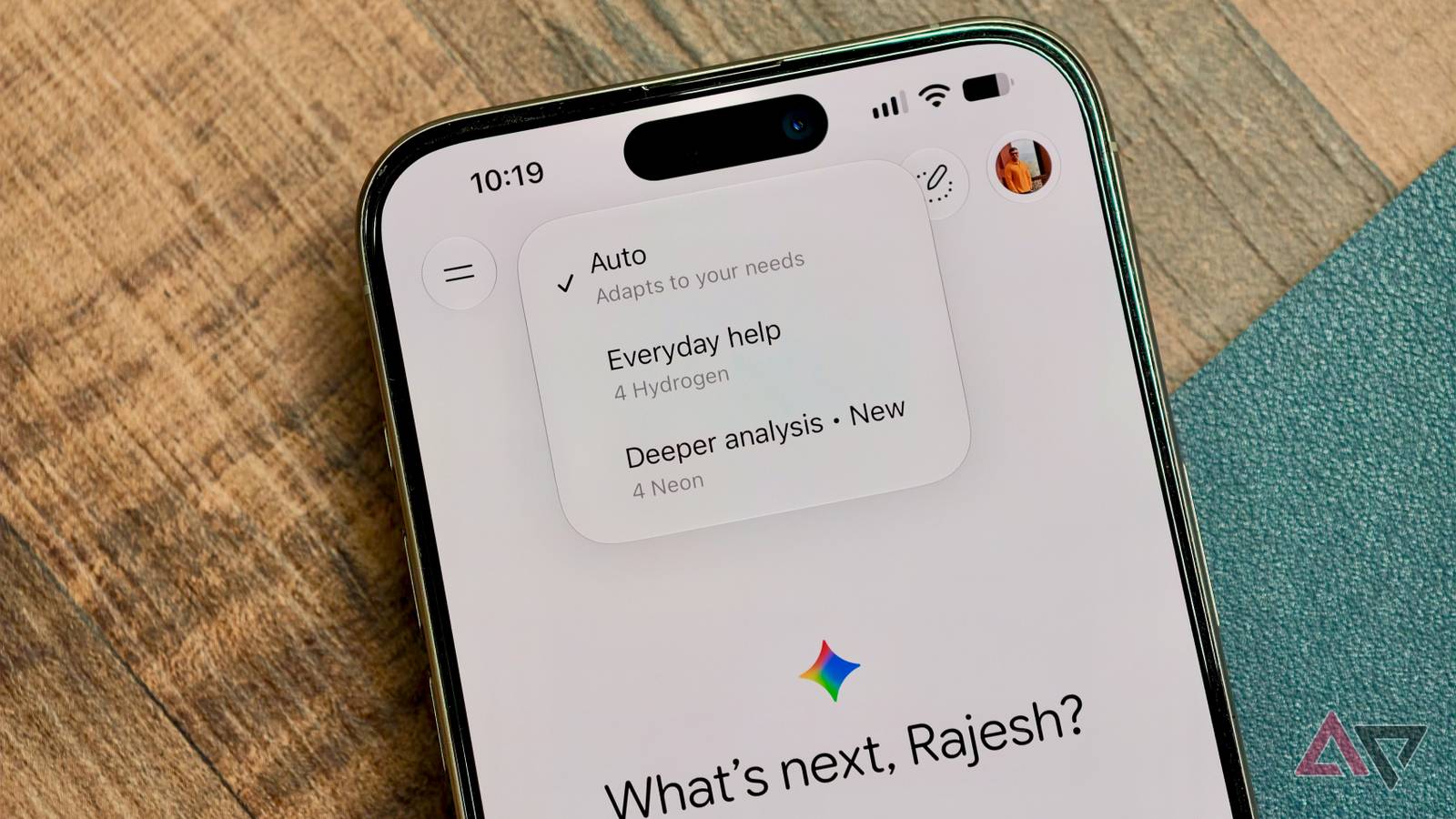
Published Nov 25, 2026, 10:06 AM EST I've been writing about Android since 2011, with a focus on device reviews, Samsung and Google Pixel hardware, Google’s apps and services, and Gemini AI. Throughout my writing career, I've reviewed several Android phones and attended major consumer tech events like MWC and IFA. Carrying both a Samsung or Pixel flagship and an iPhone as daily drivers gives me deep insight into how Android works and how it compares to iOS. I also closely follow Google’s AI efforts, exploring how Gemini fits into Android and the wider Google ecosystem. I have been writing for Android Police since 2021, covering news, how-tos, and features. You can find my previous work on Neowin, AndroidBeat, Times of India, iPhoneHacks, MySmartPrice, and MakeUseOf. When not working, I tend to mindlessly scroll through X, play with new AI models, or go on long road trips. You can reach out to me on X or drop me an email at rajesh@androidpolice.com. Google's new Gemini models are finally worth getting excited about, even if trying its best model still requires an expensive subscription. But Google, being Google, has chosen a confusing naming convention — which one is its flagship model, after all? There's Argon, Carbon, Hydrogen, and Neon. Their names tell me nothing about which arrived first, which is faster, or which Google wants me to use for everyday work. And no, I do not have the time to go through Google's lengthy launch post for each model to figure this out. Four elements, no obvious order Trying to make sense of Google's periodic-table naming convention Argon, Neon, Carbon, and Hydrogen are all part of Google's Gemini 4 family. But the element names do not explain how they relate to one another. Argon was the first to debut in the Gemini 4 family, with Google unveiling it on Sept. 30 and expanding access a couple of weeks later, on Oct. 13. At that point, it felt like Argon was Google's frontier AI model built to take on the latest models from Anthropic and OpenAI. Carbon followed with broader availability on Nov. 10, then Hydrogen on Nov. 12, and Neon on Nov. 18. Going by the release pattern, Neon is the newest of the four, but Google still recommends using Carbon for complex projects. Likewise, Hydrogen arrived after Carbon but targets speed and efficiency. Think of it as Google's option for quickly carrying out everyday tasks. If you want to play around with Google's latest AI models and aren't sure where to start, go with Neon. Google positions it between Hydrogen and Carbon. It's available in the Gemini app, where you can use it for writing, analyzing uploaded documents, researching topics, and completing tasks. As for Carbon, it is great for tasks that require extended research and verification, including complex scientific research and software problems. This should give you a good idea of what each model does in the Gemini 4 family: Hydrogen for speed, Neon for more demanding everyday use, and Carbon for your hardest projects. So, what about Argon? Argon is Google's flagship model The missing element Argon was the first model in Google's Gemini 4 family. When Carbon became broadly available on Nov. 10, Google still recommended Argon for most software engineering and knowledge work. However, in a subsequent lineup explainer, the company highlighted Carbon, Neon, and Hydrogen, skipping Argon. Still, you'd be forgiven for thinking that Argon is Google's current flagship AI model. But that's not the case. Even Hydrogen scored 51 on the Artificial Analysis Intelligence Index at its High thinking setting, compared with Argon's 50, further muddying its place in the lineup. Thankfully, you don't have to understand this mess. Google's current documentation makes it clear that Argon will leave Antigravity on Nov. 30, 2026. After that, Neon will become the default model for eligible users whenever they start a new conversation. Model What Google positions it for Argon Deep reasoning across complex coding, research, and professional work Carbon The hardest extended projects, demanding debugging, and open-ended research Hydrogen Fast everyday assistance, coding, and tasks involving tools Neon A balance of deep reasoning and speed across coding, analysis, and knowledge work Essentially, Carbon and Argon target more demanding work than most everyday requests, including complex projects and codebases. While Argon launched as Google's flagship model, Carbon targets even harder problems, and Neon fills the role of a more practical everyday model. Carbon isn't necessarily more token-efficient: Google says it uses more tokens than Argon to explore problems thoroughly and verify its work. Your subscription only tells part of the story Availability is another mess With a ChatGPT or Claude plan, you get access to the latest models on the day of their release or within a few days. But with Google, that's not the case. Plus, knowing which model you want to use does not necessarily mean you can use it. With Gemini, you also need to check the app and, in some cases, whether your subscription is paid or a trial. Even if you are a paid Google AI Pro subscriber, you cannot select Carbon in the Gemini app. Google reserves that option for Ultra subscribers. Pro users are limited to Neon instead. The company only got around to expanding Carbon access to paid Pro subscribers in Antigravity on Nov. 23. So, the same Pro subscription gives you Carbon in Antigravity but not in the Gemini app. Google also only just got around to bringing Gemini 4 Neon to the Gemini app for Google Workspace users, as Logan Kilpatrick confirmed. All this means that a model being available in the Gemini app doesn't guarantee it reaches personal and work accounts at the same time. Antigravity also differentiates standard Pro trials from paid subscriptions. Standard free and promotional Google AI Pro plans receive lower quotas and access to limited models. All these differences make choosing the right Gemini subscription another task in itself. Gemini needs a clearer formula Google has finally given me Gemini models that I want to use. Now it needs to make choosing between them easier. I should not have to read a launch post, follow an executive on X, and compare subscription plans just to figure out which model fits my task. With Google making Gemini more capable, it now needs to make the lineup easier to understand, so I can spend more time using its models and less time figuring out which one to pick.
I want to use Google’s latest Gemini models, but choosing one is homework
Full Article
Original Source
Read the full article at Androidpolice →KhanList aggregates and links to publicly available news content. We do not host full articles from third-party sources. Always verify important information with original sources.