
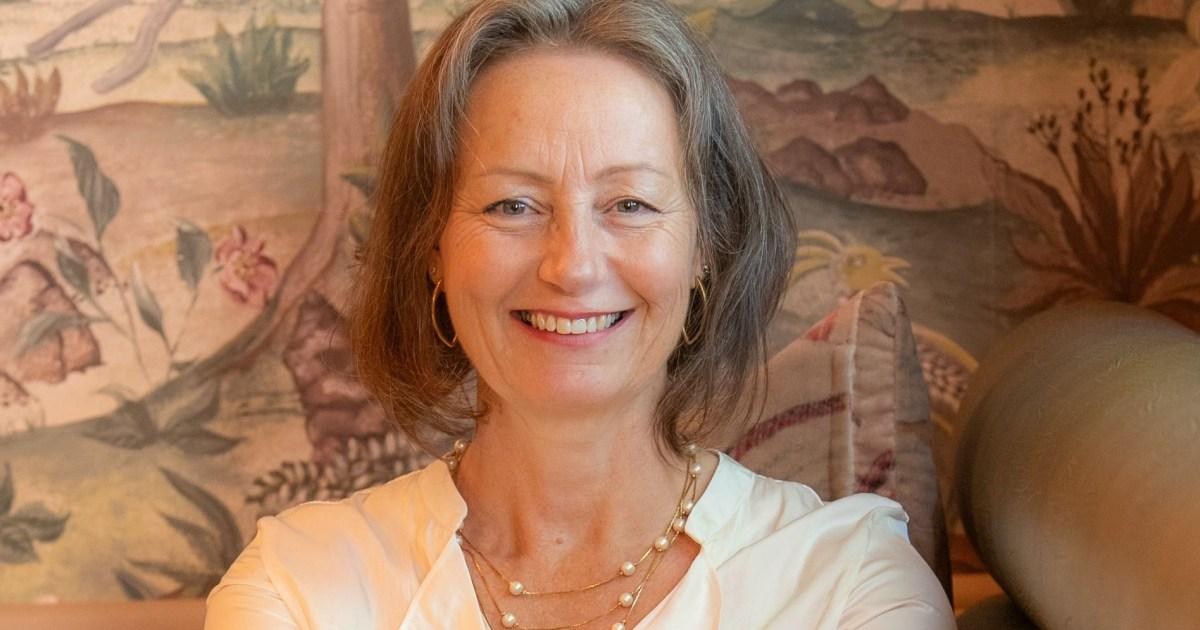
Eve is campaigning for ‘Terms & Conditions of divorce’ to be included on the back of all marriage certificates (Picture: Nicky Bamber Photography) Eve Stanway spent the whole of 2018 feeling incredibly frightened. Her husband had told her he wanted a divorce, and she was blindsided – not just by his announcement, but by the amount of administration and bureaucracy she then had to wade through. ‘Everybody kept talking about the finances’, Eve tells Metro. ‘But I couldn’t work out what I needed to do. ‘I had one friend who’d been through a divorce and she’d explain it, but it was like the words just hit my ears and fell to the ground. Every part of me was in distress.’ These days, Eve is no stranger to divorce proceedings. The 57-year-old works as a Divorce & Difficult Conversations Coach – and now, she’s campaigning for ‘Terms & Conditions’ to be included on the back of all marriage certificates. As she explains: ‘Not many people know what a marriage actually is.’ ‘The information should be given to couples before they marry,’ says Eve (Picture: Nicky Bamber Photography) Tanya Dodo is a Consultant Family Law Solicitor at Setfords. She explains that a marriage isn’t just about romance, it’s a financial partnership: but many people don’t understand the legal and financial consequences when they sign the marriage certificate. Specifically, not enough people know that – in the event they no longer wish to be married – a divorce doesn’t resolve anything, financially speaking. Instead, a couple needs to get a financial court order, which means, among other things, that in contested cases they’ll each need to make full disclosure of their finances and assets in court. Tanya Dodo is a Consultant Family Law Solicitor at Setfords (Picture: Tanya Dodo) Ask Metro Use AI to go deeper into the stories you care about – powered by Metro and trusted publications. Tanya explains that it doesn’t matter whose name an asset is in; a court has the power to divide them as it sees fit. In Eve’s line of work, she doesn’t meet many people who know much – or any – of this. ‘With my campaign, I want couples to understand what marriage means for their money, their home, their pensions and their responsibilities to one another – and to understand that, in the event the relationship terminates, arrangements will need to be made for all of those things’ Eve says, simply. Learn more about Eve's proposed divorce T&Cs The below points are what Eve would like to see addressed on the back of marriage certificates: Divorce does not automatically end financial claims. Financial responsibilities can continue after separation and divorce. Prenuptial and postnuptial agreements are useful to have. Couples should understand their purpose and limitations and have independent legal advice. These conversations can reveal financial expectations that might otherwise remain unspoken. Keeping property, savings, businesses or pensions in separate names does not mean they will remain exclusively theirs. You may have to declare everything in a financial statement called Form E. Assets owned before marriage and inheritances are not always protected from claims. This matters when someone brings a home into the marriage or intends to preserve assets for children from an earlier relationship. There is no guaranteed 50/50 outcome. Each person’s circumstances and needs, including those of their children, can affect the settlement. Assuming an equal split can create unrealistic expectations about housing and financial security. Paid work and unpaid care both count. Earning more does not automatically entitle someone to a larger share. Couples should understand how childcare, homemaking and career sacrifices are recognised before making those decisions. Responsibilities towards children continue. Parental responsibility, child maintenance and arrangements for children should be explained, including the distinction between financial support and time spent with each parent. Eve also believes there should be a brief explanation of the divorce process in England and Wales: • You must have been married for at least a year before applying. • Either person can apply, or both can apply together, without proving fault or needing the other’s agreement. • There is normally a minimum wait of 20 weeks from the court issuing the application before applying for a conditional order. • After the conditional order, there is normally a further minimum wait of six weeks and one day before applying for the final order, which legally ends the marriage. • The process normally takes at least seven months. Finances and arrangements for children are addressed separately. There should also be a clear signpost, perhaps a QR code, to the official guidance at www.gov.uk/divorce, says Eve. ‘The information should be given to couples before they marry, and remain available on the certificate should they need it,’ Eve concludes. The impact of tying the knot without knowing the full implications can be debilitating. ‘I don’t think anything could have ever, in a million years, have prepared me for how frightening and utterly overwhelming the process of divorce would be,’ says Nina Francis. ‘I lost everything – myself, my sense of identity, my purpose – and then I was being asked, in a horrible state of overwhelm and grief, to make life changing decisions about things I had never encountered and didn’t feel I understood. Who knows what a Form E is?! It was petrifying. It was horrendous and overwhelming and non-stop, says Nina (Picture: Harriet Croft Photography) ‘Then there’s the shame – the shame that I, as an educated, diligent and integrity-led person was struggling and not knowing what to do,’ Nina continues. ‘I had a degree, I was studying for a Masters and I have since gone on to achieve a PhD, but this crippled me. It was horrendous and overwhelming and non-stop.’ Eve can relate to Nina’s experience: ‘I had no certainty,’ she says. ‘I thought, during the marriage, that all the money my husband earned was his, and that he was very generously giving me a proportion to pay the mortgage while I looked after our children and worked part-time. ‘When we decided to separate, I was terrified of losing my home, of having to – and having to tell my kids – we were rehoming the dogs. ‘I was terrified of having to – and having to tell my kids – we were rehoming the dogs,’ says Eve (Picture: Naomi Koji-Paton of Koji Cam) ‘I was terrified because I didn’t earn enough money and I didn’t know how I was going to support myself. I was terrified of showing the children that I was scared all the time. ‘I didn’t realise that, in actuality, his money was mine too – and had been all along.’ Colette Bane, Family Partner at Knights, is wholeheartedly supportive of the idea of having T&Cs on the back of marriage certificates. ‘The sooner parties know what they’re signing up for, the better,’ says Colette. ‘There aren’t many contracts we enter where we don’t know what will happen when we try to end it. Marriage shouldn’t be any different.’ Colette Bane is a Family Partner at Knights (Picture: Colette Bane) Lesley Thomas, Founder of The Money Confidence Academy, divorced from her former husband in 2003. Thanks to Lesley’s existing financial knowledge, she went into their marriage with her eyes wide open. She brought a property and other assets into the marriage, and she wanted to be clear about how these would be treated if the marriage ended. ‘For me, that wasn’t about being unromantic or expecting the marriage to fail,’ she tells Metro. ‘It was about being practical and having an honest conversation about something that could have significant consequences for both of us.’ Had I not understood the financial implications of marriage, I would have felt more vulnerable, says Lesley (Picture: Lesley Thomas) Lesley sought advice from a solicitor and a legal agreement was put in place; as a result, her divorce was considerably smoother than it could have been. ‘He was happy and I was protected,’ she explains. ‘Having clarity around the finances meant there was one less difficult issue to deal with at an already emotional time. Had I not understood the financial implications of marriage from the outset, I think I would have felt far more vulnerable.’ Nina is now working as a family mediator. She’s happily engaged and looking forward to building a new future, but she’s approaching marriage very differently compared to the first time. ‘We talk at length about the ways in which we will be legally and financially tied,’ she says. ‘This does not take away any of our love and commitment to each other, but it does protect us.’ Eve also believes that her campaign will protect people from financial abuse. ‘These T&Cs would have helped me so much,’ says Eve (Picture: Naomi Koji-Paton of Koji Cam) Colette tells Metro that manipulation and gaslighting centred on the misconceptions around divorce can be rife. ‘I’ve seen awful messages with one party pressuring the other into staying, saying if they leave they’ll be homeless as the separation is their “fault” for breaking up the family and the Courts will punish them for that – entirely untrue, but if that’s all someone has to go on, it can feel very true,’ she says. Economic abuse is a form of domestic abuse and involves someone controlling their partner’s money and finances. According to a 2024 IPSOS survey, one in seven women experienced economic abuse from a current or former partner in the previous 12 months, equivalent to 4.1 million women. ‘I have acted for clients who have closed their individual accounts upon marriage as they have been led to believe bank accounts must be held jointly during the marriage,’ Tanya says. ‘All their savings and income are then funnelled into a joint account, which the spouse then spends without reference to them. Learn more about Eve Eve Stanway is a divorce coach specialising in supporting fathers and families, psychotherapist, and bestselling author. For more information, visit www.evestanway.co.uk/guide. ‘I also often encounter clients who are convinced to take out loans and credit cards in their spouse’s name, for the same reason.’ Ultimately, Eve describes her campaign for marriage T&Cs as something that would make ‘the most profound difference’ in the lives of the people she works with. ‘At one of the hardest times of your life, when you’ve discovered somebody’s had an affair or doesn’t want to be married to you, you’d actually have something that says, “Here’s what your next steps are”,’ she explains. ‘It would have helped me so much. It might have made me pay a bit more attention to the finances during our marriage – I would have known that it wasn’t me living off my husband. ‘And it would have given me something tangible when the divorce I didn’t ask for started to happen.’ Do you have a story you’d like to share? Get in touch by emailing jess.austin@metro.co.uk. Share your views in the comments below. Deals of the Day The Orlando holiday deal Disney fans shouldn't miss We're adding this discounted NEOM gift set straight to basket Want an LED face mask for less? This Black Friday deal could save you hundreds This teeth whitening sale could save you up to 64% before Black Friday These Simba Black Friday deals are too good for tired shoppers to ignore Arrow MORE: I thought I’d finally met ‘Mr Right’ — then I discovered his secret family Arrow MORE: I asked my boyfriend to get sexy with food — he pulled out a hotdog Arrow MORE: ‘I went to a ladies’ night and I’m no prude – but I was shocked by what I saw’ The Hook Up Metro's hottest newsletter, with juicy stories and tips for spicing things up in the bedroom. 18+
I want divorce T&Cs to be added to the back of marriage certificates
Full Article
Original Source
Read the full article at Metro →KhanList aggregates and links to publicly available news content. We do not host full articles from third-party sources. Always verify important information with original sources.