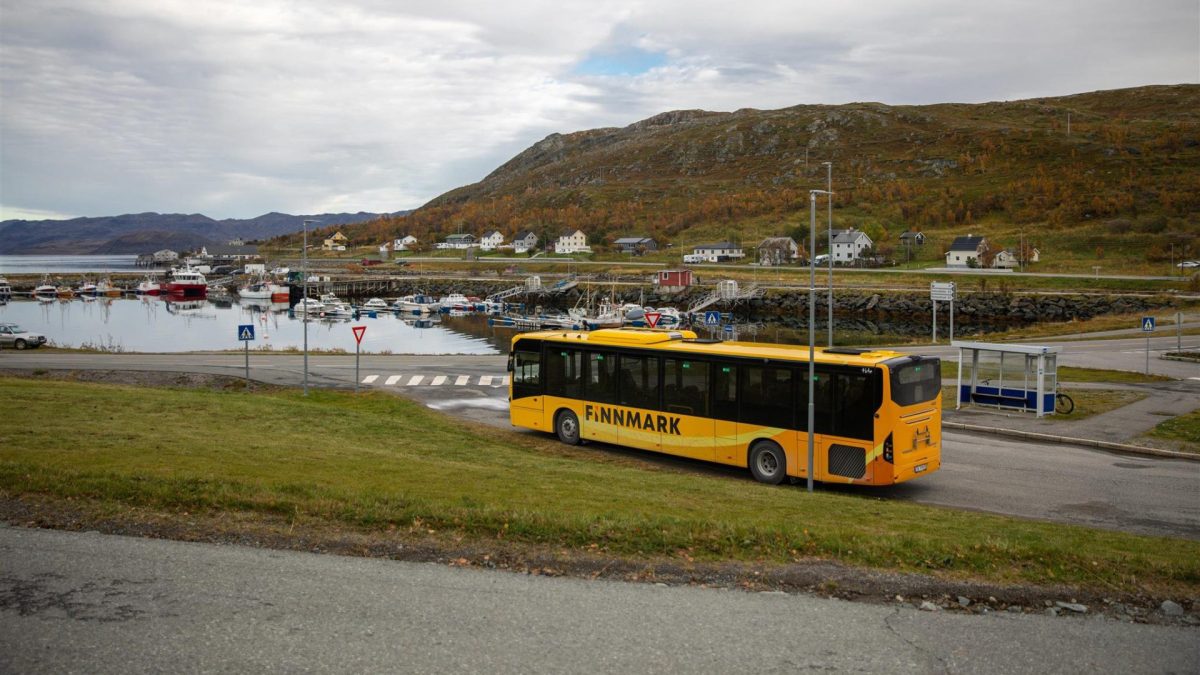
Stepping off the plane at Kirkenes Airport, I’m hit with disarming warmth. In Arctic Norway, summer has arrived. Snow has melted to reveal sandy beaches, temperatures are creeping above 15°C, and reindeer are grazing on grassy hillsides, leaving their winter lifeline of lichen sun-bleached and forgotten. As the Arctic mellows, I’ve come to travel across Finnmark, Norway’s northernmost county, using a summer-only bus pass. For £75, I’ve secured a Snelandia Summer Ticket, granting seven days of hop-on, hop-off travel. I’m under no illusion that the Arctic is cheap – this is my fourth consecutive year of visiting, and in winter I’ve splurged a small fortune on Aurora, snowshoeing and reindeer tours. This summer trip is an exercise in budgeting as I carefully connect sporadic timetables across theVaranger coastline. Leaving the Thon Hotel in Kirkenes, I activate my scannable ticket in the Snelandia App. Within minutes, I’m aboard a bright-yellow bus, weaving through green tundra. Whoever designed these roads didn’t believe in moving mountains; Tarmac ribbons around rocky mounds, wisps of snow peeking out from granite crevices above. Finnmark is Norway’s northernmost county (Photo: Sunniva Tonsberg Gaski) My first stop is Neiden, the heartland of the indigenous Skolt Sámi. The bus stop is opposite Åtte Årstider Lodge, where I’m staying tonight. Neiden centres around the ancient salmon-fishing grounds of Skoltefossen waterfall, where, by late June, fishermen emerge and onlookers gather. The ancient technique involves throwing the net, then pulling ropes to ensnare the fish in a drawstring contraption. “It’s called käpälä – like a bear’s paw,” explains Claus Arild Bergersen, whose grandmother was Sea Sámi and who has spent his life fishing the inlets. There are traces of cultural heritage throughout Neiden’s forests, including the open-air Skolt Sámi Village, barely minutes from Skoltefossen. “Many adults have realised they have Skolt Sámi roots and started learning the language,” says Chiara Niemenmaa-Seri, from the Ä´vv Skolt Sami Museum. For an £8 entry fee, the museum is an emotive journey through Skolt Sámi traditions and history, with exhibits including preserved canoes and maps depicting the dissection of Indigenous lands in the 19th and 20th centuries. From Neiden, it’s a 130km ride to Vadsø, where again, I’m practically dropped at the doors of my hotel, Scandic Vadsø. Against a sleepy backdrop of coffee shops – and an antique dealer rearranging stock at Det Hvite Hus – the town is a surprising surf spot. Finnmark Surf is driving the movement, coaching adults and children to crash through the freezing waves, but I decide to stay dry, walking along the pristine waterfront instead. The town of Vardø. Binocular-wielding birdwatchers congregate in the lobby of the Vardø Hotel (Photo: Christian Roth Christensen) Between Vadsø and Vardø, I face my first logistical dilemma: I’m intrigued by the Partisan Museum in Kiberg, but there’s a five-hour wait for another bus if I disembark. I decide to go for it and hitchhike the final leg instead (although I discover later that I could have taken a private tour from Vardø, for £83, including transfers and the cost of the £8 museum ticket). The exhibition here tells the story of how Kiberg’s villagers fled from invading Germans in 1940, seeking shelter and military training in the Soviet Union before returning to liberate Finnmark through guerrilla warfare. Today, Kiberg residents continue to celebrate the bravery of their forebears. Trond Henriksen, the grandson of decorated partisan Trygve Eriksen, has renovated his ancestral home nearby and now offers an accommodation, birding and boat tours package with his wife, Heidi. “It is my paradise,” he says with a smile. I continue to Vardø, where binocular-wielding birdwatchers congregate in the lobby of the Vardø Hotel. Fishermen shuttle tourists to spot puffins on the island of Hornøya, but quiet corners of the town promise magical encounters for free. The village of Bugøynes. In the 1980s, the village was hit by an invasion of king crabs, released from the Russian coastline in a Cold War experiment gone wrong (Photo: Photon-Photos/Getty) Under the peachy gleam of the midnight sun, I watch an Arctic tern – the world’s longest migratory bird – ruffling its feathers on a rooftop ledge. My route ends with a blissful two days in Bugøynes, staying at Hedvig House, which overlooks a white-sand beach. This coastal village is surrounded by hiking trails, including a 5km route snaking through the rocky valleys and vantage points of Ranvika Bird Sanctuary, home to about 10,000 kittiwakes. Fittingly for a place nicknamed “Little Finland”, Barents Sauna Camp is a 20-minute jaunt away, with a private beach to brave cold plunges in the sea. “Bugøynes isn’t a place you drive by,” laughs Trond Høiberget, the owner of local tour operator Visit Bugøynes, “it’s a place you have to decide to come to.” This statement is layered, as the village has seen its fair share of unexpected arrivals. In the 1980s, Bugøynes was hit by an invasion of king crabs, released from the Russian coastline in a Cold War experiment gone wrong. Turning misfortune on its head, Bugøynes repackaged its fishing economy and began offering crab tours. Crabs soon became part of the village’s identity, and the factory recently began attaching QR codes to crustaceans for export. When scanned, these codes link to the stories of who caught each one and where, allowing customers to “meet their fisherman” from oceans away. Fishing in Bugøynes. Crabs are part of the village’s identity (Photo: VisitBugøynes) At Egnebuloftet, a restaurant on stilts above the lapping waves, I splurge £70 on a platter of five crab legs, bread and relish-drizzled lettuce. After days of penny-pinching, it feels ironic, but satiated by sweet crabmeat and bread slathered with butter, I’m not complaining. Budgeting for the Arctic is a matter of selectively spending on the experiences that matter to you; in my case that’s an indulgent meal, while for someone else it might mean a private tour. Accommodation is always a considerable expense, especially for solo travellers; with rooms costing £150-£200 a night, groups get the best deals by splitting the bill. Summer offers a big opportunity to save on activities, though; rather than spending hundreds on husky sledding and aurora excursions, I’ve hiked, swum, birdwatched and sunbathed for free.But it’s the bus pass that offers the best value: travelling 500km for less than £80 is a bargain – and the freedom to explore on a whim is priceless. Booking it Norwegian and Scandinavian Airlines fly from the UK to Kirkenes via Oslo. Snelandia’s one-week Summer Ticket costs 990 NOK (£75) and is available 1 June-21 August. More information Visit Norway: visitnorway.comNordNorge: nordnorge.com
I used a £77 bus pass to explore Norway’s Arctic coast – it was a bargain
Full Article
Original Source
Read the full article at Inews →KhanList aggregates and links to publicly available news content. We do not host full articles from third-party sources. Always verify important information with original sources.