
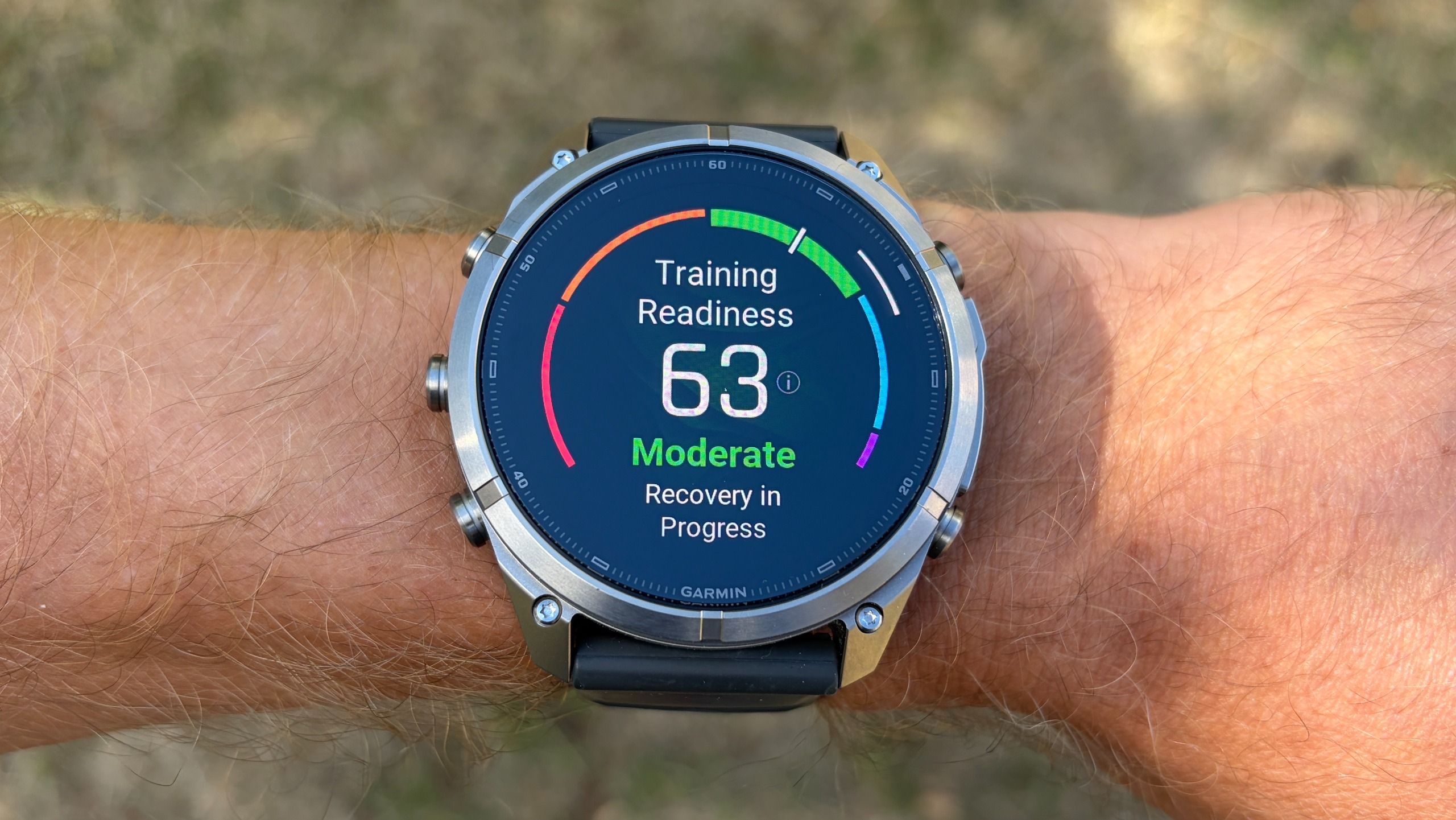
(Image credit: Future) Apple is expected to launch new models of both the Apple Watch and Apple Watch Ultra at today's “Surprise and Shine” event, and according to Bloomberg’s Mark Gurman, a new readiness app is set to be a key new feature on the watches.Readiness scores are nothing new for wearables and are a key feature of screenless wearables like the Oura ring and Whoop 5.0, along with the best Garmin watches. Adding the holistic health metric to the Apple Watch is a great move in my opinion — I check the score regularly myself on my Garmin Forerunner 970 to help get a picture of the state of my body.It’s not a perfect metric and as ever with the stats on wearables, a readiness score is just a guideline, not something to stick to rigidly, but if confirmed it would be a useful addition to the Apple Watch.What is readiness and how is it measured? (Image credit: Future)Simply put, a readiness score indicates how prepared you are to handle the day ahead of you, based on health metrics measured by your wearable.It’s sometimes called a recovery score and with many watches and trackers the focus will lean towards how ready you are to train in particular, so you can understand how hard to push in a workout.The key stats generally used by a wearable to determine readiness are how well you’ve slept — both last night and over the past couple of weeks — the intensity of your recent activity and workouts, and heart rate stats like heart rate variability and your resting heart rate.Heart rate variability (HRV) in particular is an important metric, because it’s often used as an indication of the stress on your body. Deviations from your normal ranges can indicate that you’re not well recovered, or are even getting ill.Get instant access to breaking news, the hottest reviews, great deals and helpful tips.Past Apple Watch models have measured all the key stats needed for readiness, but didn’t measure your heart rate continuously outside of workouts to save battery life, which reduces the accuracy of the stats that would underpin a readiness score.The Apple Watch Series 12 and Apple Watch Ultra 4 are rumored to be getting a continuous heart rate monitor, which would tie in with the launch of a readiness score if true.At the moment you can get readiness scores from apps like Bevel and Athlytic on the Apple Watch, but I’ve tested these and the lack of continuous heart rate monitoring does throw up some inconsistent results.What are the benefits of a readiness score?I use readiness scores as a handy one-stop shop that bundles a lot of data into one easy-to-understand data point I can use to check in on my body.When I first started using the readiness score on Oura and Garmin devices, I realised I don’t really care exactly how I slept, or what my individual HRV scores were, I just want to know if I’m in good shape to tackle the day, and that’s how readiness works.You can still dive into all the individual data points if you want, but the convenience of one score you can see quickly in an app or on your watch face is great for busy mornings. (Image credit: Future)Trends in your readiness score can be great indications of underlying problems too. If I feel like I'm sleeping well and training normally, low scores can be a sign I’m getting ill. This is especially handy as a parent of two young kids who seem to make it their mission to bring as many germs into the house as possible.When I’m deep into marathon training and feel a little tired all the time, a high readiness score gives me confidence that I’m actually adapting well to training, and I find that aiming to get a high score promotes good habits like maintaining a consistent bedtime.I don’t completely upend my plans if a low score comes up, but I might take things a little easier on my run if I see my readiness is in the red in the morning.While it’s not a perfectly accurate score, which I’ll come to, I have found that trends in my Training Readiness score on my Garmin over many years have been a reliable indicator of where my body is at, and that’s useful info to have on your wrist.What are the drawbacks of a readiness score? (Image credit: Tom's Guide)Readiness scores reduces a lot of data to one single score, and if the data underpinning the stat is flawed, then your readiness score can be too.Wearables are not perfect with regards to sleep tracking in particular, and with Garmin I have to bear in mind the watches tend to overestimate time asleep and account for that when looking at my score. (Image credit: Future)The Apple Watch is one of the better sleep trackers I’ve tested for accuracy, but does tend to give high sleep scores in my experience, which might in turn inflate your readiness score.It’s worth checking in on the stats underpinning any readiness score occasionally to see if anything rings false, and in general I think it’s better to look at trends in your data from a device rather than a score on any given day. One very low readiness score might not mean much, but a few days of your score dropping could well be a sign something is wrong. (Image credit: Future)If the Apple Watch is getting a continuous heart rate monitor then this might reduce battery life too. That said, many wearables still manage to offer this feature while having long battery life, so hopefully the new watches will at least maintain the battery life of the Apple Watch Series 11 and Apple Watch Ultra 3.Perhaps a bigger drawback to readiness scores is that they can mess with your head a little. It’s important not to let them dictate your day too much and worry about a low score — you don’t need to be at 100% readiness to smash your workout or a busy day at the office.Perhaps a bigger drawback to readiness scores is that they can mess with your head a little.I’ve run some of my best races on low-readiness days and actually usually don’t wear my watch the night before a marathon now, because I don’t find that data helpful on race morning.Like all the data on your wearable, it’s a tool or a guideline that can help at times, but if it’s not proving helpful or actually even adding to your stress, then I think it’s always best to just ignore it.As an example of that, Roger Bannister slept poorly and then worked a shift in a hospital the morning of the day he ran the first sub-four-minute mile. He wasn't sure if he'd even run, and if he'd had a watch telling him his readiness was low, maybe he wouldn't have. Data is useful, but don't let it be the boss.Follow Tom's Guide on Google News and add us as a preferred source to get our up-to-date news, analysis, and reviews in your feeds. More from Tom's Guide‘I wear an Apple Watch every single day, and I never knew you could do this.’I wear an Apple Watch every day, and this is the free app I use all of the timeForget running — I added thousands of steps to my day using this simple trick Nick Harris-Fry is an experienced health and fitness journalist, writing professionally since 2012. He spent nine years working on the Coach magazine and website before moving to the fitness team at Tom’s Guide in 2024. Nick is a keen runner and also the founder of YouTube channel The Run Testers, which specialises in reviewing running shoes, watches, headphones and other gear.Nick ran his first marathon in 2016 and became obsessed with the sport. He now has PBs of 2hr 25min for the marathon and 15min 30sec for 5K. Nick is also a qualified Run Leader in the UK.Nick is an established expert in the fitness area and along with writing for many publications, including Live Science, Expert Reviews, Wareable, Coach and Get Sweat Go, he has been quoted on The Guardian and The Independent.
I use readiness on my Garmin watch every day — here’s why I'm excited about it coming to the Apple Watch
Full Article
Original Source
Read the full article at Tomsguide →KhanList aggregates and links to publicly available news content. We do not host full articles from third-party sources. Always verify important information with original sources.