
Published Sep 4, 2026, 8:00 AM EDT Jade Bryan is a Feature Author at Android Police with over a decade of tech reviews and news reporting experience, stretching back to the Symbian era and the early days of Android. He covers the breadth of the mobile industry, specializing in operating system deep-dives, app testing, and hardware analysis. In his spare time, you can find him tinkering with his Android devices and wearables, seeking ways tech can improve daily life. He also enjoys playing MMORPGs, traveling, or feeding stray cats and dogs. I've spent the past few months switching and testing keyboards on my Android devices. During that time, one thing became clear: There are better keyboard alternatives to Google Gboard. Gboard doesn't suck at all, and I've been a faithful user for over a decade, which proves it. Its development, however, has been painfully slow. It is also missing genuine enhancements and fixes I've wanted for years, including an easy opt-out from privacy controls, a true offline mode, and seamless multi-language typing. I've been testing FUTO Keyboard for a couple of weeks now, and it is miles ahead of Gboard and other options at critical points. Simply put, I wish I had ditched Gboard for FUTO sooner on my phones. Why I ditched Gboard Google still wants your telemetry Gboard has received improvements over the years, including better voice dictation and Emoji Kitchen. The dual-language setup and in-keyboard translation tools are great. The problem is that Gboard has largely remained a pipeline for data collection. On top of that, a single toggle or easy option for a fully offline mode that stops sending user data to Google is still nowhere to be found. These shortcomings became the main reasons I started looking elsewhere. While I found Samsung Keyboard to be better overall, it comes with the massive friction of only working on Samsung Galaxy devices. Tight integration with Google services is convenient, but it also means Google's servers can access everything I type. Worse, that likely goes well beyond basic typing patterns and dictionary data. Setting up Gboard enables these tracking features by default, and because most people never touch those toggles, Google gets a massive pool of data. I understand Google collects data to improve its models, but it is frustrating that there is still no painless way to opt out. I also keep hitting a wall when typing in local dialects. The words I add to one language dictionary do not carry over to another language keyboard. I have to train Gboard on those terms all over again, even though they already sit in my other keyboard languages. Why I switched to FUTO Swipe typing that actually works It didn't take long to find a replacement that checks those boxes. It isn't as mainstream as Microsoft SwiftKey or Samsung Keyboard, but I finally understand why early adopters, including readers on Android Police, keep raving about it. FUTO is open source and operates completely offline for both typing and voice input. That alone should satisfy privacy and security purists. From an everyday perspective, though, FUTO offers far more than that. It earned its reputation through fluid, accurate swipe typing, and daily use proves the hype is warranted. The swiping accuracy easily matches SwiftKey, while gliding feels natural and responsive. Alongside ClearFlow, FUTO recommends the KASROZ layout if you rely heavily on thumb gliding. Although it initially made my head dizzy, getting used to the key placement took some patience. After muscle memory kicks in, it outperforms a standard QWERTY for gliding efficiency. It also supports neat micro-gestures, like quick flick actions, navigation keys, and instant cursor dragging, that work reliably or even better than the competition. You can customize FUTO with a handful of preset themes or create and install your own styles. The built-in selection isn't quite as extensive or rich as Gboard or Samsung Keyboard, but it offers plenty to work with. Smarter on-device learning Granular control over local models FUTO picks up local dialects and unique vocabulary quickly, thanks to context-aware predictions that evaluate the surrounding text. Everything happens locally on your hardware, so it doesn't matter whether you have an active internet connection. That is a massive perk for people who rely on SMS daily like me, since keyboard prediction and autocorrect never require mobile data. FUTO also allows you to customize the underlying voice and language models. You can pick from smaller, lighter models that suit older hardware or lighter workloads. There are also larger multi-language models, though they require more processing power and storage space. I appreciate having those options available instead of being forced into fixed cloud models with zero user control. Training the model takes little time, and it adapts even faster if you type or use voice dictation at a large volume throughout the day. Where FUTO falls short The clipboard is a mess FUTO is not without flaws. Language support is still playing catch-up, which is something to keep in mind if you rely on unique or secondary languages. Being open source helps, as you can manually import community dictionaries and custom language models. The catch is that downloading and loading those files into FUTO requires extra legwork. I lean toward typing rather than dictation, but if you rely on speech-to-text, FUTO won't blow you away. Gboard remains far more accurate and fluid for voice input. I run into frequent transcription misses on FUTO, though native speakers sticking to supported languages will have an easier time. Managing the clipboard in FUTO is another headache. You can pin items, but you cannot freely rearrange them like you can in SwiftKey. Temporary clips also get mixed up with pinned snippets in the same hub, turning simple pasting tasks into a chore. Gboard is comfortable, but FUTO is hard to put down FUTO still needs plenty of polish, but I would still pick it over Gboard's tiny incremental updates and aggressive data harvesting. For multilingual typists and dialect hoppers, FUTO does an incredible job of adapting to personal typing patterns on the fly. I still want to see a clipboard overhaul including cross-device syncing, along with an easy way to back up or migrate saved personal dictionaries. But even with those rough edges, the buttery keyboard swiping, uncompromising privacy, and entirely local processing are indispensable.
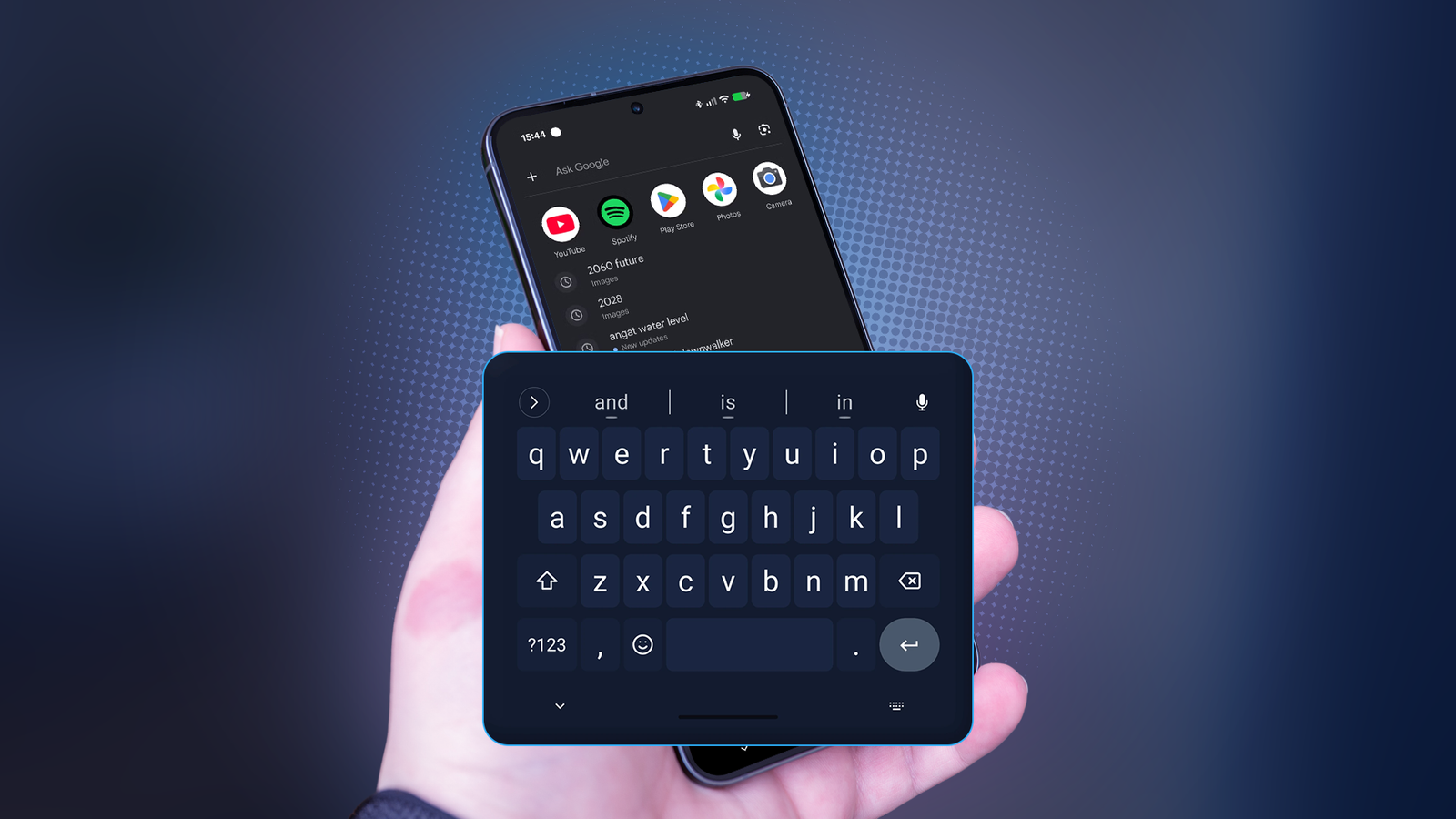
I type thousands of words daily; this keyboard app beats Google Gboard by a mile
Full Article
Original Source
Read the full article at Androidpolice →KhanList aggregates and links to publicly available news content. We do not host full articles from third-party sources. Always verify important information with original sources.