
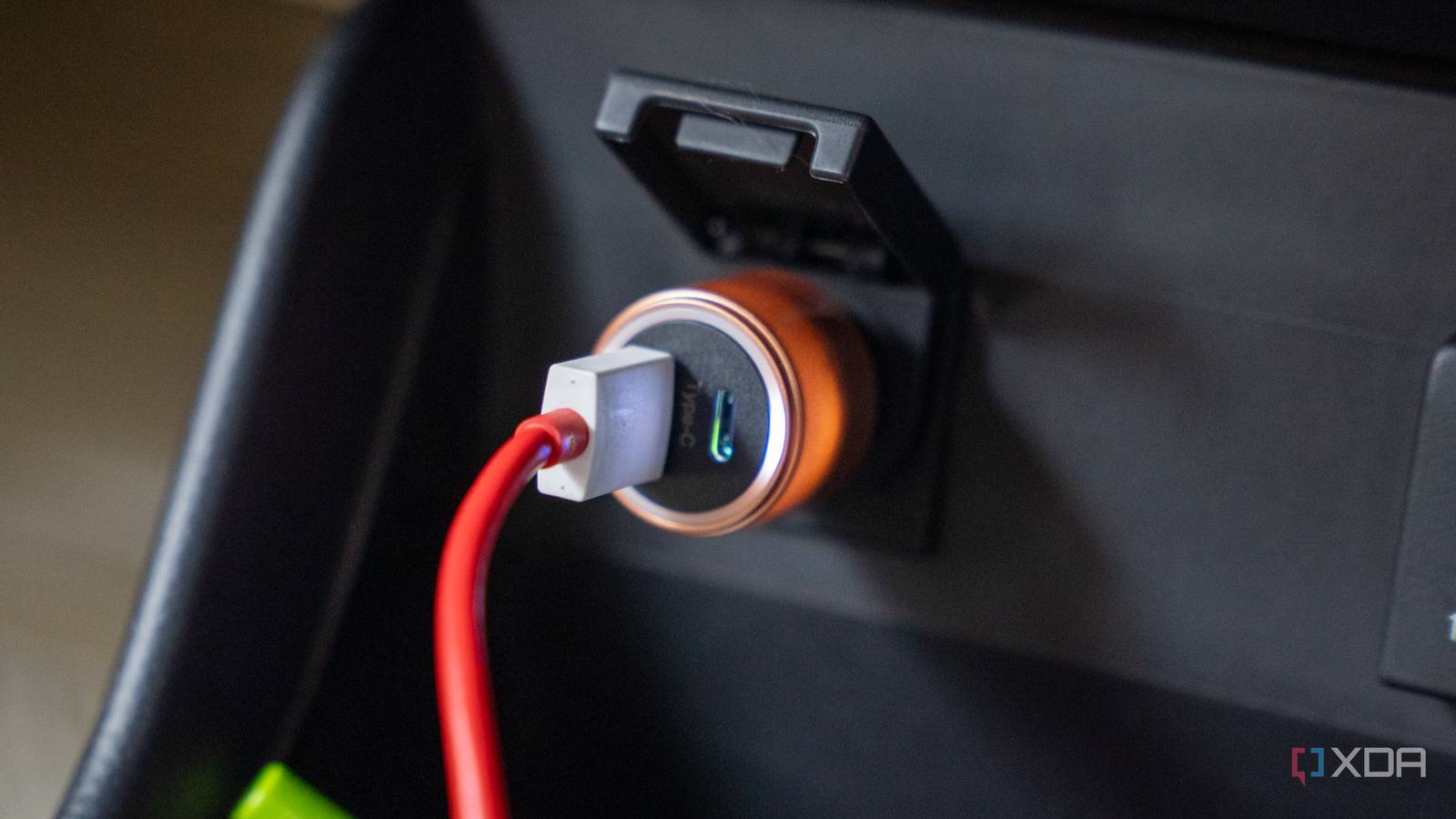
Published Nov 19, 2026, 2:00 AM EST Dhruv Bhutani has been writing about consumer technology since 2008, offering deep insights into the personal technology landscape through features and opinion pieces. He writes for XDA-Developers, where he focuses on topics like productivity, networking, self-hosting, and more. Over the years, his work has also appeared in leading publications such as Android Police, Android Authority, CNET, PCMag, and more. Outside of his professional work, Dhruv is an avid fan of horror media spanning films and literature, enjoys fitness activities, collects vinyl records, and plays the guitar. Charging my devices wasn't always a problem. But lately, with phones getting more powerful or my need for ultra-quick charging, my car's USB socket can no longer keep up. Most built-in USB ports are designed for basic charging and offer relatively low power output. It might keep my phone topped up, but if I'm streaming audio and using navigation over Android Auto, the charging speeds won't keep up. And if you care about charging things like a laptop in your car, it's an absolute no-go. Rather than settling for slow charging, I've managed to figure out a workaround that was staring me in the face. I started using a 100W USB-C car charger plugged directly into my car's 12V socket. It turns a port that I barely used into a more capable charging station, though the charging speed depends on the car’s socket rating, the charger, the cable and the device. My car's USB ports can't keep up with my charging needs A 100W 12V socket adapter lets me charge everything from my phone to my MacBook The biggest reason I started using a high-speed USB-C car charger is simply because my charging needs have changed. For one, my phone uses more power but can also be charged quicker than what the car's USB port supplies. Moreover, I regularly have a laptop, wireless headphones, power banks and other USB-C accessories with me. Unless you have the most modern car on hand, which I do not, the USB ports built into most cars are mostly meant for smaller devices. They're useful for connecting a phone to the infotainment system or keeping it charged during a commute where you're not doing much with it. That's where the 12V socket steps in. A dedicated 12V to USB converter taps into the car's electric bus and outputs to modern USB standards. For example, a charger supporting USB Power Delivery can negotiate the appropriate charging levels with the connected device, allowing it to supply much more power than a conventional USB port. In my case, I use a 100W USB-C charger, which is more than enough to make the socket useful for everything from the latest smartphones to laptops. On more than one occasion, I've plugged in my MacBook to charge up its battery. I no longer need to carry a wall adapter or find a power outlet at a cafe if I'm out and about for the day. The same concept, of course, applies to anything else you might want to charge. Think things like power banks. I frequently carry one when I'm out for the day, particularly if I'm going to spend most of the day out. If I forget to charge the power bank, I can easily charge it up at full speed using this 12V socket adapter. A faster charger can make a big difference when using your phone on the go Things to look for in a 12V USB-C car charger Credit: Credit: Another scenario where the 12V socket USB adapter comes in surprisingly handy is when I'm using my phone for multiple purposes. Between Android Auto, maps, mobile data use and Bluetooth streaming, my phone can run hot and heavy. Where my car's built-in USB socket couldn't keep up, the 12V socket adapter can easily keep pace. It goes without saying that this setup is more flexible than a built-in socket. I've previously owned a 60W charger before I upgraded to my current 100W adapter that can keep pace with my laptop. There are faster options available too should you need something even more powerful. The point is that you're not locked into one charging scenario or even one device. Most of these 12V socket adapters include multiple USB ports, though usually only one can output at the fastest speeds. However, even when divided amongst multiple ports, the socket adapter would still output more power than the standard USB port. When picking up one, there are a few things to consider. Most important is USB-C Power Delivery support. If you're planning to use the charger with a number of different devices, negotiating the right amount of power is important. A charger that supports the Power Delivery standard can easily negotiate that with whatever device you connect it to. You'll also want to make sure that you pick up a charger with the adequate number of ports. My recommendation is to opt for something with at least two USB-C ports, allowing you to connect your phone and an additional accessory. That said, if you use an always-plugged-in dash cam, a charger with a third port might not be a bad idea. The easiest upgrade your car's charging setup needs The 12V socket is one of those features that has been in cars for decades but most of us have ignored it. However, even in 2026, it can be surprisingly useful. Using the 12V socket to add faster, more modern charging to my car is a cheap fix for an everyday problem. You don't need to change your infotainment system or make any expensive changes to the car. Just pick a new 12V socket USB charger, chuck it in the car and that's all it takes. It turns the socket into a proper charging station, good enough to power up anything from phones to laptops, drones or power banks. AINOPE car charger The AINOPE car charger can deliver 36W of power via QC 3.0 to compatible devices. Additionally, it also comes with a USB-C port with PD support for up to 36W of power. This particular car charger is available to purchase in three different colors and it also comes with a pull ring that makes it easier to pull out.
I turned my car's 12V socket into a 100W USB-C charger, and I'll never go back to slow charging
Full Article
Original Source
Read the full article at Xda-developers →KhanList aggregates and links to publicly available news content. We do not host full articles from third-party sources. Always verify important information with original sources.