
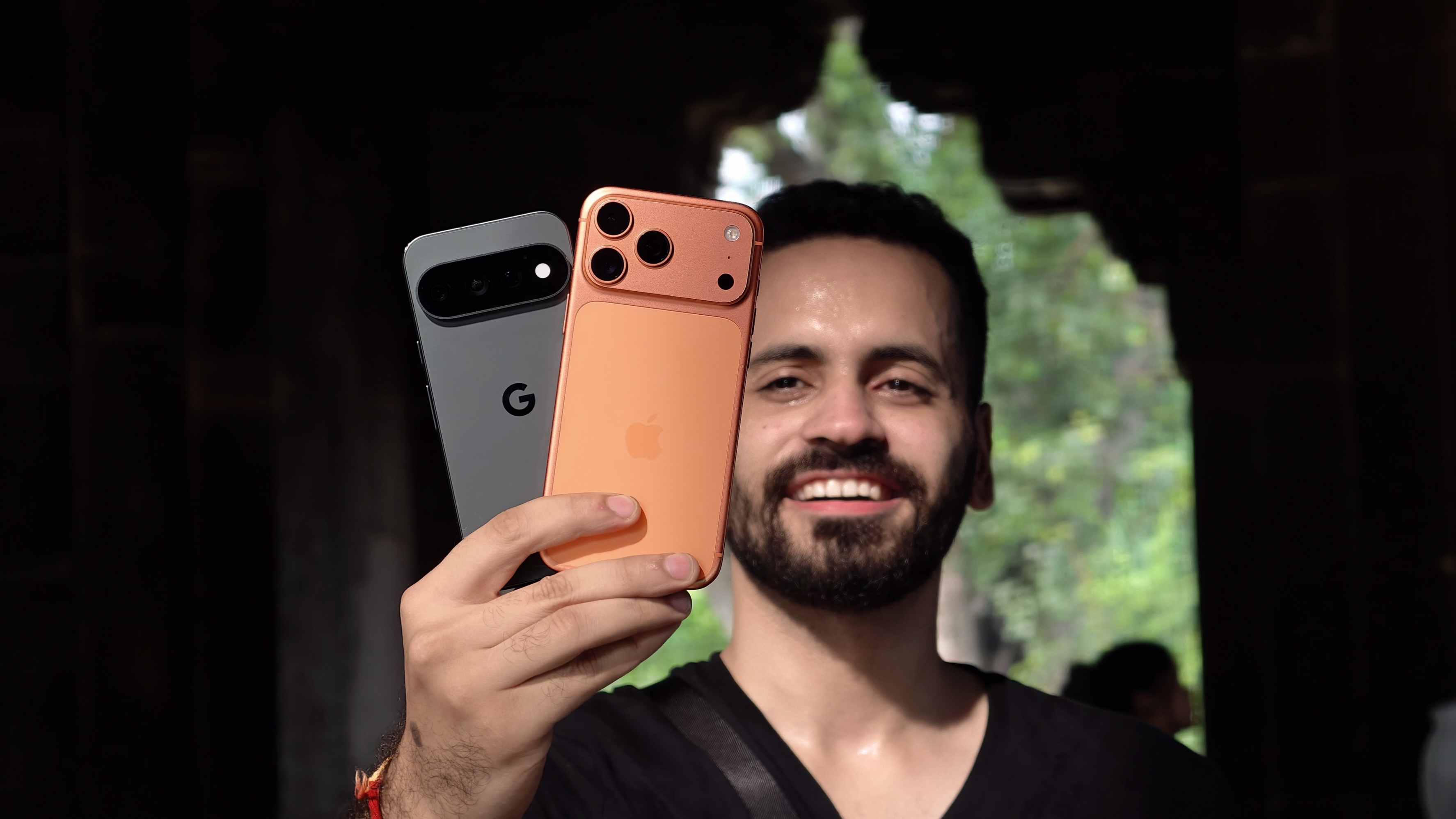
Google is promising “incredible camera upgrades” with its new $1,099 Pixel 11 Pro, but with a rumored iPhone 18 Pro likely debuting on Wednesday, I wanted to see how the phone’s photography shapes up against the iPhone 17 Pro. Google touts a few enhancements that could make a difference, including better dynamic range on its wide camera and 30% higher light sensitivity on its zoom sensor. And those boosts could improve photos, even if the 11 Pro’s camera hardware is largely similar to last year’s 10 Pro — featuring a 50-megapixel wide lens, a 48-megapixel ultrawide and a 48-megapixel telephoto with a 5x optical zoom. Apple’s iPhone 17 Pro also has a mighty camera system even after a year on the market, with 48-megapixel wide, ultrawide and telephoto cameras. The telephoto camera has a 4x optical zoom that can achieve an 8x magnification with Apple’s software. Google Pixel 11 Pro’s camera system includes a 50-megapixel wide lens, a 48-megapixel ultrawide and a 48-megapixel telephoto with a 5x optical zoom.Andrew Lanxon/CNET The two phones also offer their own versions of color profiles to help you add your creative style to the photos rather than relying on the default looks. However, for this comparison, I resorted to default processing across the lenses. Google tends to brighten the shadows, whereas Apple leans toward a more natural tone. I took both phones around Delhi to see how they perform in a variety of environments, including a few beautiful monuments in Lodhi Garden that provided plenty of well-lit and shadowy areas to see how Apple and Google’s best phone cameras show these places off. While phone photography can vary in all kinds of environments and is subjective, here’s how I felt each phone performed in capturing fine details and colors. Google Pixel 11 ProApple iPhone 17 ProMain50-megapixel; 1/1.3-inch sensor with OIS; 25mm48-megapixel;1/1.28-inch sensor with OIS, 24mmTelephoto48-megapixel; 1/1.95-inch sensor with 5x optical zoom and OIS, 120mm48-megapixel; 1/2.55-inch sensor with 4x optical zoom and OIS, 100mmUltrawide48-megapixel; 123-degree field-of-view48-megapixel; 120-degree field-of-view Main camera Left: Pixel 11 Pro image. Right: iPhone 17 Pro image. In overcast conditions, Apple’s colors look more accurate to the scene, but the Pixel 11 Pro better exposed the overall frame. It delivered a better dynamic range, and if you look at the leaves on the trees, you’ll find that Google was able to capture more details in the shadows. The iPhone 17 Pro Max shot looks less lively in comparison. Left: Pixel 11 Pro. Right: iPhone 17 Pro. Both phones take decent portrait shots, but nothing like what you’d get from a Vivo, Xiaomi or Oppo’s Ultra models available in international markets. Those phones are still leagues ahead. In these shots, the Pixel 11 Pro has a pink-ish hue, but I still prefer it over the iPhone because my skin tone looks more natural here. The Apple portrait shot looks too processed for my taste. While these were shot on the main camera, Google is finally allowing Portraits to be taken using its telephoto camera. Left: Pixel 11 Pro. Right: iPhone 17 Pro. Both phones are capable of taking macro photos. The Pixel 11 Pro captured more textures on the flower petal while focusing on the water droplets. In comparison, the iPhone shot looks smoother, but I like Apple’s bokeh here. It looks more pleasant. Left: Pixel 11 Pro. Right: iPhone 17 Pro. I chose this frame because it transitions from dark to light and features a distant subject. The difference in colors is more apparent in 2x digital zoom. Apple leans on the warmer side, while Pixel has a comparatively cool color temperature. Both phones were able to capture a good amount of detail and retain the clarity at 1x. Telephoto camera The Pixel 11 Pro offers 5x optical zoom, whereas the iPhone 17 Pro offers 4x optical zoom. A black cat in a dark environment with backlight is one of the challenging scenes, but I couldn’t get the exact same frame because my furry friend decided to change its pose. Left: Pixel 11 Pro at 5x zoom. Right: iPhone 17 Pro at 4x zoom. The Pixel 11 Pro managed to capture more details and comparatively accurate colors. The cat’s yellow eyes are sharper on the Google phone, while you can also see the details on its fur. The iPhone, on the other hand, struggled with clarity — you do see the cat and the bricks, but I feel like the Pixel was able to make out more distinct details like the cat’s nose and the different shades of color on the building. Left: Pixel 11 Pro at 5x zoom. Right: iPhone 17 Pro at 4x zoom. I put my friend in a similar frame, and both phones captured the skin tone well but had some sort of halo effect — possibly from the light source behind my subject — that made the shot look unnatural. In terms of colors, the iPhone got my friend’s hair color right, while the Pixel’s cooler tone changed the shade of green. Left: Pixel 11 Pro at 5x zoom. Right: iPhone 17 Pro at 4x zoom. I prefer the Pixel 11 Pro shot in this comparison because of better contrast and more accurate skin tone. If you look at the building, you’ll notice that the iPhone 17 Pro photo is less sharp and doesn’t have the same amount of detail, including the texture in the green and pink parts of the monument. It is more pronounced in the Pixel shot. Ultrawide camera Left: Pixel 11 Pro ultrawide camera. Right: iPhone 17 Pro ultrawide camera. In ultrawide angle too, the Pixel 11 Pro continues to better expose the shadows in darker areas of the photo. It is comparatively brighter, too, and I’d pick it over the iPhone shot. I’ve included the 1x shot here for context — the colors remain consistent across main and ultrawide cameras on both phones. Left: Pixel 11 Pro at 1x zoom. Right: iPhone 17 Pro at 1x zoom. The photography experience For what I value in a photo, I preferred Google’s Pixel 11 Pro over Apple’s iPhone 17 Pro in most of the scenes I tested. I felt the Pixel 11 Pro’s photos had more contrast, brighter visuals, and I felt like it delivered sharper results in zoom shots. All of this equated to more lively, social media-ready shots. I will caveat that I am not a fan of the Pixel 11 Pro’s camera app nor the Google Photos app — I find menu options like Camera Looks are buried in the viewfinder, and the Google Photos app puts too much emphasis on resurfacing throwback photos, especially when I’m in the middle of finding something different. It is cluttered and distracting. Apple’s iPhone 17 Pro is still a very good option. I feel it offers a more accurate representation of the scenes I captured, even though I prefer the photos the Pixel 11 Pro created. I like how Google’s phone created brighter scenes, even if that was through more digital processing. As we look forward to the iPhone 18 Pro, I hope Apple’s next phone steps up its zoom photos — perhaps with a bigger telephoto sensor — to better compete against the zoomed photos I captured with the Pixel 11 Pro.
I Took the Pixel 11 Pro and iPhone 17 Pro Around Delhi, and I Know Which Phone Camera’s the Best for Me
Full Article
Original Source
Read the full article at Cnet →KhanList aggregates and links to publicly available news content. We do not host full articles from third-party sources. Always verify important information with original sources.