
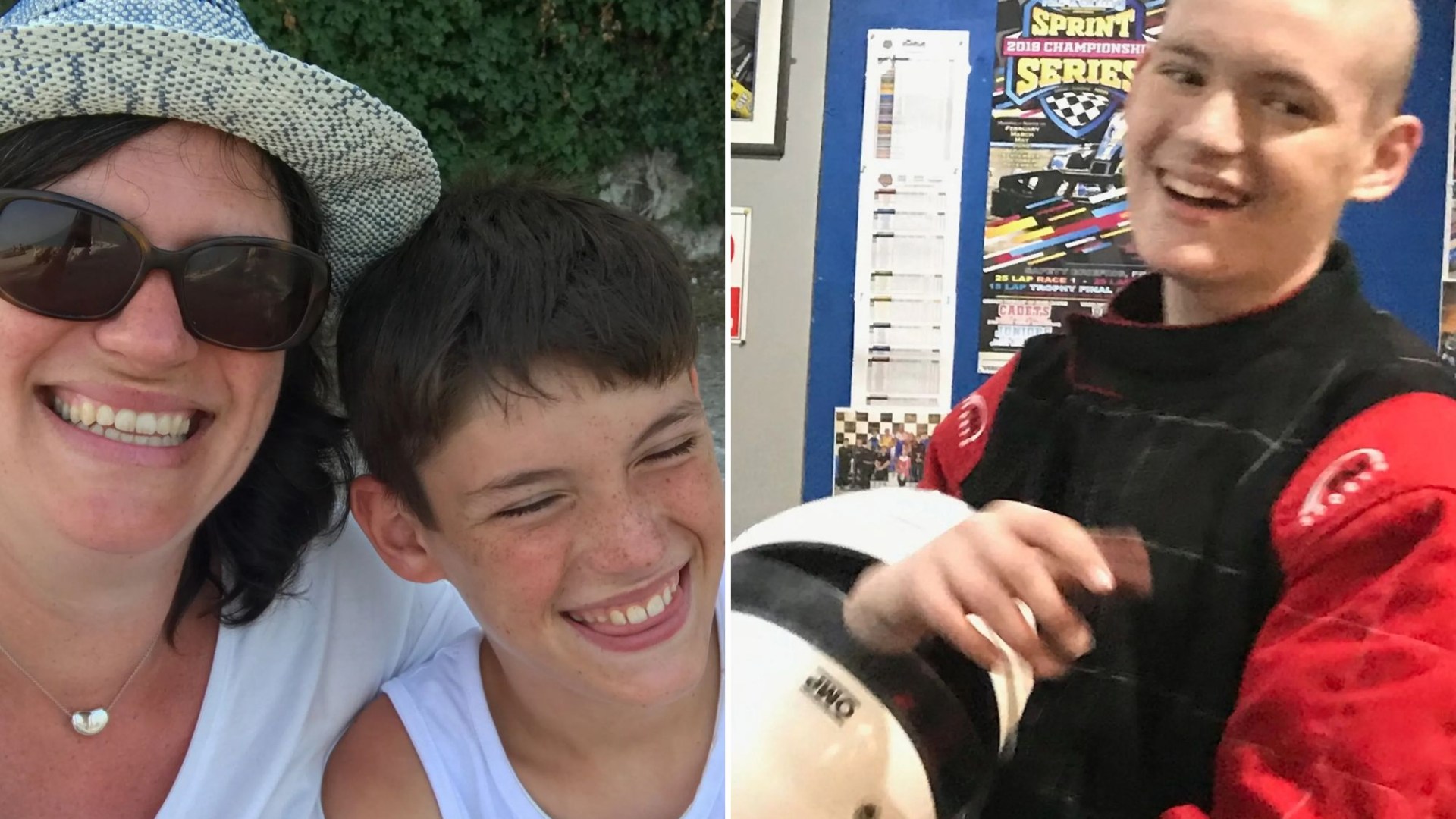
A MUM has told how her son’s tiredness, which she assumed was just from “typical teenage changes” was actually a symptom of a rare cancer. Louise Bennett, 50, tragically lost her son Fred at 14-years-old, just nine months after he was diagnosed with cancer of the blood and bone marrow. Fred Bennett sadly died from a rare cancer at just 14 years old, nine months after being diagnosed Credit: SWNS His mum Louise, pictured here, assumed his symptom of tiredness was just because of teenage changes, but it turned out to be a sign of the cancer Credit: SWNS At first, Fred simply seemed tired and “off his food” and his parents thought this was due to “typical 13-year-old changes and the end of the school year”. “”He had recently broken his shoulder in an ill-advised rugby tackle so we thought he just needed rest,” Louise, from Rugby, Warwickshire said. Sign up for the Health newsletter Thank you! But when his glands began to swell, his parents suspected he might have glandular fever and took him to the GP. The teen was then given a blood test, in July 2019, which sadly revealed that he had acute lymphoblastic leukaemia (ALL). His mum said: “Within hours [of the blood test], we were in A&E being told that it was leukaemia. “He was immediately transferred to Birmingham Children’s Hospital to begin his treatment.” ALL is a rare type of cancer that affects the blood and bone marrow which usually develops quickly and needs to be treated straight away, the NHS say. It’s most common in children and young people, especially those aged four and under. Most read in Health Symptoms usually appear over the course of a few weeks and include feeling tired or weak, bleeding or bruising easily or for no reason and swollen glands. Others include a high temperature, getting ill a lot, loss of appetite, shortness of breath and pain in the bones or joints. Fred’s parents suspected he had glandular fever but a blood test revealed it was actually leukaemia Credit: SWNS Louise, a mum-of-two, is now urging other parents to be aware of the symptoms of childhood cancer after the tragic death of her son. After his diagnosis, Fred began a three-year treatment plan of chemotherapy but sadly, he still had leukaemia in his bone marrow after his first six-week course. Speaking about what happened in his treatment plan next, Louise said: “He was moved onto a stronger course of treatment but this was still not effective. “Early in 2020, as his leukaemia was refractory he became eligible for CAR T-cell Therapy, a new form of treatment that used the body’s own cells. “Even though there were complications along the way, including a seizure and a positive Covid diagnosis, we continued to be hopeful that this treatment would work where chemotherapy had failed.” But sadly, Fred died shortly after he received the CAR T-cell therapy in May 2020. His mum said: “They proved to be no match for the leukaemia, which suddenly picked up speed and overwhelmed him. “It all happened so quickly that he never knew he was dying.” Fred underwent chemotherapy and T-cell therapy, but it sadly did not get rid of the cancer Credit: SWNS What is Acute Lymphoblastic Leukaemia (ALL)? Acute lymphoblastic leukaemia (ALL) is a type of blood cancer that starts from young white blood cells called lymphocytes in the bone marrow. Adults and children can get it but it is most often diagnosed in younger people. It’s very rare, with around 750 people diagnosed with the condition each year in the UK. Many symptoms of ALL are vague and non specific. It may feel like the flu as symptoms are caused by too many abnormal white blood cells and not enough normal white cells, red cells and platelets. Symptoms can include: Feeling tired or weak A high temperature Bleeding or bruising easily or for no reason Frequent infections or taking longer than usual to recover General weakness A loss of appetite or losing weight without trying Joint or bone pain Breathlessness Looking paler than usual Swollen glands A swollen tummy It is a genetic change in the stem cells that causes immature white blood cells to be released into the bloodstream. However, it’s not clear what causes the DNA mutation to occur. The main treatment for acute lymphoblastic leukaemia is chemotherapy, and usually steroids as well. Treatment with a targeted cancer drug might also be used as well. Some people will need a stem cell transplant. About 65 per cent of patients aged 15 to 39 will survive their leukaemia for five years or more after their diagnosis. If you are aged between 15 and 24, your prognosis might be better. But for those aged 40 and over, only around 25 per cent will survive their leukaemia for five years or more after being diagnosed. Source: Cancer Research UK Fred was just 14-years-old when he died and had only received his cancer diagnosis nine months prior. Louise said that she had been aware of the signs of meningitis and sepsis – both potentially deadly illnesses – but she is now highlighting the importance of knowing childhood cancer symptoms too. She said: I didn’t know anything about childhood cancer in terms of what to look for. “I had memorised all the symptoms of meningitis. I knew about sepsis. “I actually sent my husband a list of sepsis symptoms the day before we took him to the GP because that was in my mind. “But a cancer diagnosis was completely off our radar.” The Children and Young People’s Cancer Association (CCLG) says around 1,900 children aged 0-14 are diagnosed with cancer in the UK every year, and cancer remains the leading cause of death from disease among children. Meanwhile, a study published in the British Journal of General Practice found that a child’s risk of developing cancer is comparable to the risks of other childhood conditions such as diabetes, epilepsy and bacterial meningitis. According to the CCLG, parents should look out for three patterns in their children – persistent symptoms, progressive symptoms and clustered symptoms. Fred’s mum is now raising awareness about signs to look out for in relation to childhood cancer Credit: SWNS Louise knew all the symptoms of meningitis and sepsis, but she said cancer was just off her radar Credit: SWNS What to look out for with these patterns: Persistent symptoms – symptoms that don’t go away as expected or keep coming back Progressive symptoms – symptoms that get worse, become more frequent or change over time rather than improving Clustered symptoms – symptoms that appear together as a group, rather than a single symptom on its own. Speaking about childhood cancer, Dr Sharna Shanmugavadivel, a paediatric emergency medicine doctor, said: “While childhood cancer is uncommon, it is important that families understand it is not as rare as many people may think. “Unfortunately, childhood cancer can be difficult to recognise because many symptoms, such as headache, vomiting or changes in behaviour, are also common in everyday childhood illnesses. “Rather than focusing on a single symptom, we are encouraging parents and carers to look out for patterns of change in their child’s health that may need investigating. “If symptoms don’t go away after two weeks or something doesn’t feel right, trust your instincts and see a doctor.” Comment now
I thought my son, 13, was just tired at the end of the school year – months later he died of silent cancer
Full Article
Original Source
Read the full article at Thesun →KhanList aggregates and links to publicly available news content. We do not host full articles from third-party sources. Always verify important information with original sources.