
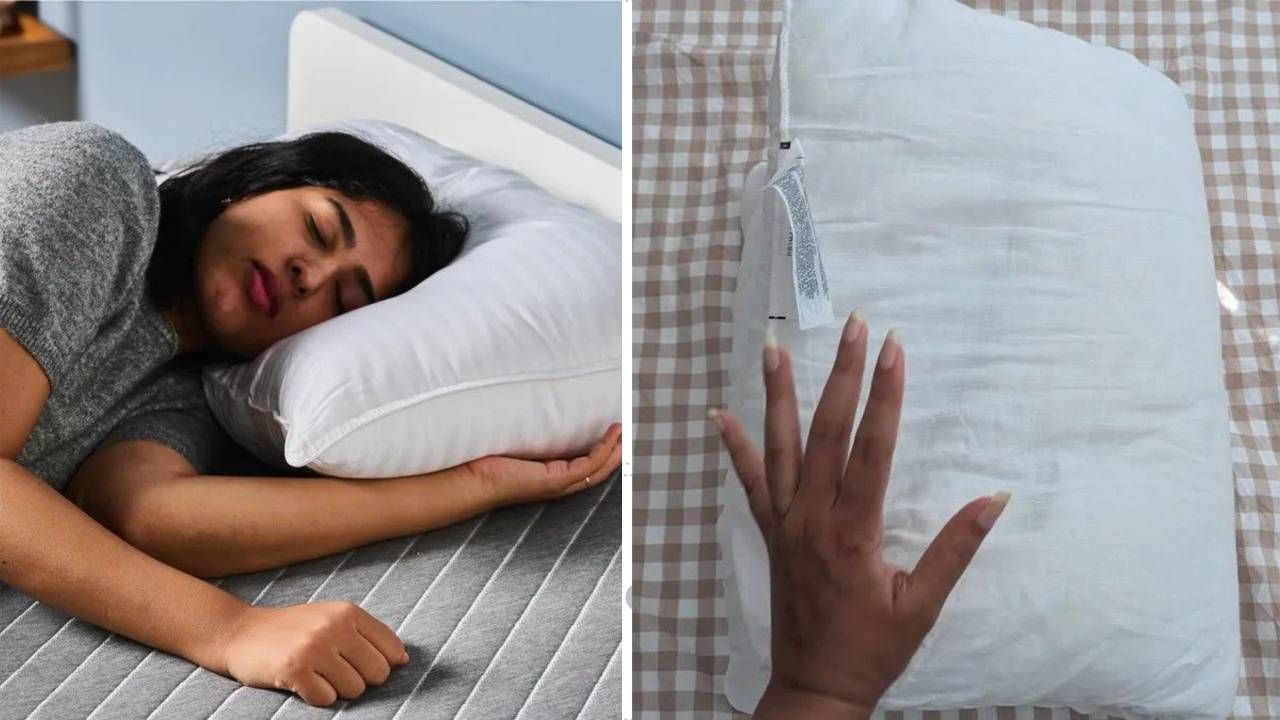
For me, a good night's sleep lays the foundation for a productive work day. But lately, I've been tossing and turning at night and my sleep quality has taken a direct hit. I had a hunch my pillow might have something to do it, so I decided to perform a simple test that instantly tells you whether your pillow needs replacing or not.Sure enough, my pillow failed this basic 30-second test.A pillow that has lost its support and shape will force you to wake up multiple times a night to replump and reshape it. Long-term, a pillow that has lost its support can throw your neck out of alignment, causing morning aches and pains and poor posture.Here's what the 30-second test involves, how to perform it yourself, and what the results mean for your pillow and the quality of your sleep.The 30-second test explained (Image credit: Future)The 30-second pillow test is a simple way to find out if your pillow is supportive enough to hold your head, neck and shoulders in alignment with your spine while you sleep.A pillow with an even fill distribution and good support will not fold easily. Instead it will snap back fast. This pillow is good for sleeping.An unsupportive pillow, on the other hand, will not only fold, but also take time to spring back to its original position. This pillow needs replacing asap.Get instant access to breaking news, the hottest reviews, great deals and helpful tips.How to perform the 30-second pillow testRemove the pillowcase or any other protectors.Lay the pillow flat on a hard surface.Fold it completely in half and hold it closed for 30 seconds.Now release the pillowIf it stays folded or springs back sluggishly, the support has gone and your pillow is no longer fit for purpose.If it snaps instantly back into shape, it’s still good for sleeping on.Why my pillow failed the 30-second test (Image credit: Future)After several nights of broken sleep, I figured that it's time to put my pillow to the test. For reference, my microfiber pillow is over two years old and has overall lost its initial plushness. I laid it out on a flat surface and folded it in half. To my surprise, my pillow folded almost too easily, like a book.Unlike newer supportive pillows, which instantly snap back, mine took longer to return to its original position. On further inspection, I figured that the filling inside was bunched up and uneven, giving a still-folded effect right in the middle. This made me realize that it's high time to replace it with another.Why unsupportive pillows need replacingA sagging or unsupportive pillow compromises your spinal alignment.In order to correct your posture, your neck ends up bending unnaturally, straining the muscles— the major reason behind morning neck pain.It can also lead to frequent wake-ups and tossing and turning, as it happened in my case, where I was constantly trying to find the right sleeping position.If you're someone who already struggles with snoring, sleeping on an unsupportive pillow can also make your symptoms worse.Other signs your pillow needs replacing (Image credit: Getty Images)While experts recommend changing your pillow every one to two years, you can do it sooner if you notice any of these secondary indicators.Clumping up of the filling is a strong indicator of a lack of support. Pillows with poor support can lead to those random 3 a.m. wake-ups because your head and neck fall out of alignment, and you wake to replump the pillow.Another common sign is the yellowing of your pillow. This is due to a buildup of your sweat, body oils, drool and dead skin cells, which seeps through the pillowcase. Over time, this can create the perfect breeding ground for dust mites and bacteria, even resulting in a musty, bad smell.And no, washing your pillow might not solve the problem, especially if you've been using it for a long time.A constant need to re-fluff or plump your pillow also shows that it is not fit to provide you with the required comfort.What to look for in a new pillow Image 1 of 1 (Image credit: Future) As a professional bedding tester, I'm aware of the fact that finding a comfy pillow among a sea of options is tricky.The key is to first understand what your sleeping position (side, back and stomach) is and then choosing the right pillow loft to support it.Pillow loft is basically the height of your headrest. Lying on a pillow too low or too high for your sleeping position, once again, puts your neck muscles and spinal alignment at risk. This is why it's important to choose the right pillow for your sleeping position. (Image credit: Future)Side sleepers require a high to mid-loft pillow (4 to 6 inches) which effectively bridges the gap between your ear and your mattress.Back sleepers need a low-loft pillow which is high enough to support your head, but keeps your chin in a neutral position.Stomach sleeping is the least recommended position, but if it's a force of habit, you need a low-loft, soft pillow, which prevents any further strain on your neck muscles.If your priority is long-term durability and support, look for pillows made of materials like latex and high-quality memory foam, known to provide responsive comfort consistently.Still confused? We've curated the best pillows guide, which includes options for every sleep position and concern.Check your pillow tonightIf you've been waking up several times during the night or struggling with morning neck pain, it's a good idea to check if your pillow is at fault.All it takes is 30 seconds of your time. Simply fold your pillow, hold it for 30 seconds and observe how long it takes to return to its normal position.This simple fold test can reveal if your pillow lacks the support you need to have an uninterrupted night's rest.
I thought my pillow was fine until I tried this 30-second test to see if it needs replacing
Full Article
Original Source
Read the full article at Tomsguide →KhanList aggregates and links to publicly available news content. We do not host full articles from third-party sources. Always verify important information with original sources.