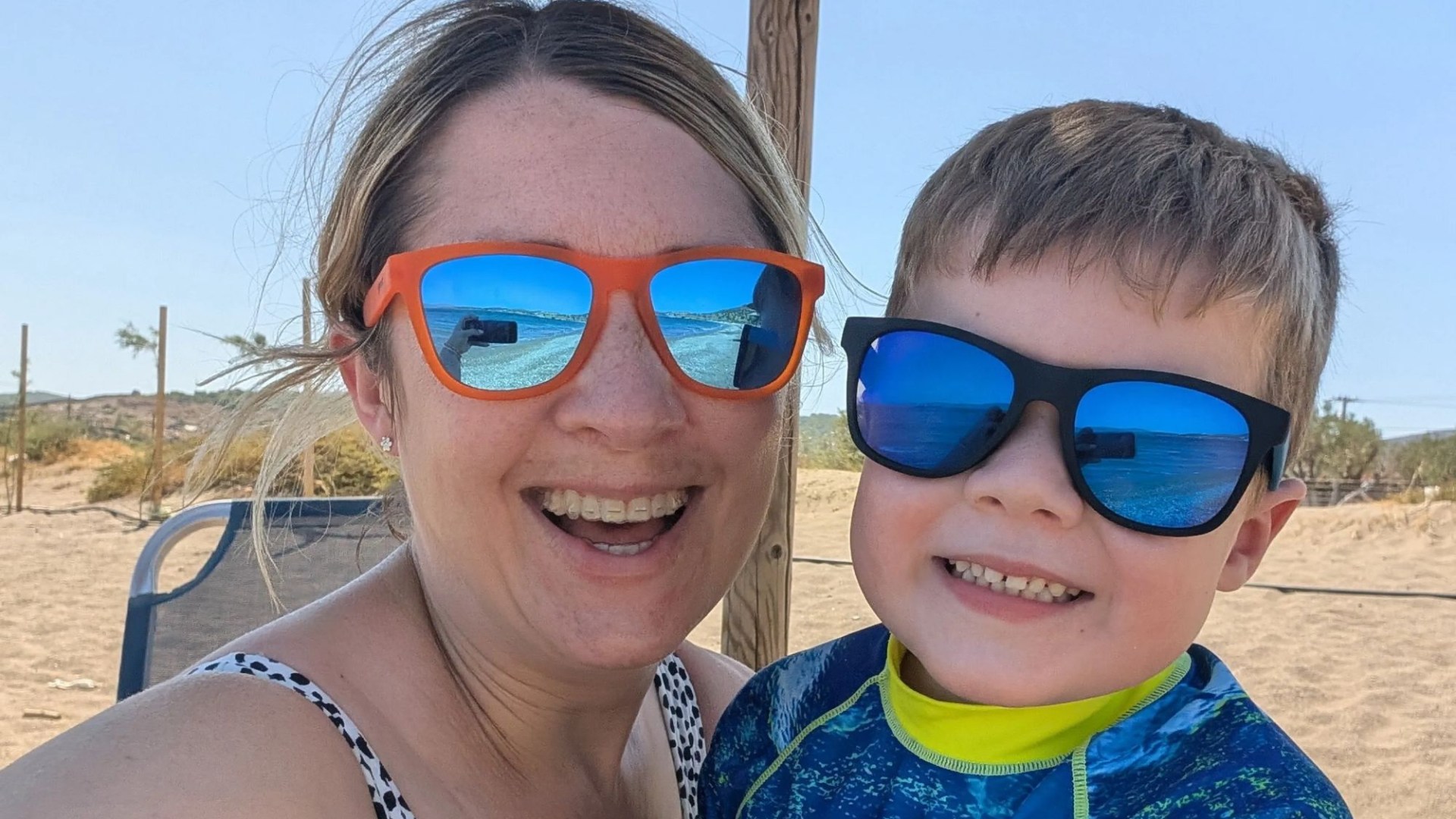
WHEN Cat Davies’ son Henry started acting “wobbly” and laughed in a strange way she brushed it off as just a funny episode. The healthy three and a half year old had not suffered any major health issues previously. Cat, first noticed Henry was laughing in a strange way and struggled to stand up properly Credit: SWNS but just weeks later she discovered it was a secret sign her three-year-old was having a stroke Credit: SWNS “I thought it was pins and needs or he was being silly,” Cat, 38, from Crowthourne, Berkshire, said. But just weeks later, in late 2025, she discovered the heartbreaking reality behind his behavioural change – Henry had suffered multiple strokes. Sign up for the Health newsletter Thank you! “Henry was playing with his cousin, and I noticed him starting to laugh in a strange way,” said Cat, an IT change manager. “He was just being a bit weird and wobbly, but I just assumed they were being silly. “It only lasted one or two minutes, so I just disregarded it.” Cat said she noticed one or two more moments like this, but they stopped so quickly that she didn’t think twice about them. However, a couple of weeks later, everything changed. “I was putting him to bed and reading him a book,” she said. Most read in Health “He started to laugh weirdly, but the book wasn’t funny. “Then he tried to stand up to reach a plane that was hanging from the ceiling. “He was wobbly and he couldn’t stand up. At first I thought maybe it was pins and needles or he was being silly. “But then I noticed his whole right side was weak, and I saw his mouth had drooped to the right, too. “He couldn’t talk, he just started making weird grunting noises. “That’s when I recognised the signs of stroke. I shouted to my husband ‘I think he’s having a stroke.’ Henry’s right side of his face was weak and he began making grunting noises, Cat said Credit: SWNS “We called 999 and we were taken to a local hospital and then transferred to Southampton hospital.” Henry underwent 23 tests in 24 hours, including multiple MRI scans, blood tests, and tests on his heart. The doctors confirmed Henry was experiencing TIAs – transient ischaemic attacks, otherwise known as ‘mini strokes’. TIAs are caused by a temporary disruption in the blood supply to part of the brain. The disruption in blood supply results in a lack of oxygen to the brain. “They didn’t know what caused them,” Cat said. “I didn’t even know children could get strokes, and I have quite a lot of medical knowledge.” “A consultant did say that chickenpox could have caused them. But he’d had that six months before and the tests couldn’t find any trace of the virus still in him.” Studies have found that contracting chickenpox can increase the likelihood of stroke in children between 0 and six months old after contraction. “He was due to get the chickenpox vaccine the week he got them,” she said. “You just can’t help but think ‘what if’. If we’d just got the vaccine quicker or not taken him to nursery that day, none of this could have happened.” Henry, now four, hasn’t experienced a stroke since diagnosis, and he is set to start school in September. However, scans have shown that the eight strokes he did experience have caused some brain damage. “You would never know what happened to him,” said Cat. “The scans showed that there is some brain damage on the left hand side of his brain. But it’s not a concentrated area, so it’s not knocking out any key function. “Right now, he’s not presenting any symptoms of brain damage. He’s happy and healthy. “You never know how it’s going to go as he gets older, he may have learning difficulties, but at the moment, it’s like it never happened.” The experience traumatised both Cat and Ian. Henry, now four, hasn’t experienced a stroke since diagnosis, and he is set to start school in September Credit: SWNS Don't delay... if you spot signs of a stroke dial 999 immediately A STROKE is a medical emergency, that’s why knowing the signs and symptoms is vital. It happens when the blood supply to the brain is cut off, killing off cells. The damage caused can affect how the body works, and the effects depend on where in the brain a stroke strikes. There are three different types of stroke: Ischaemic stroke – where a blockage, like a blood clot, cuts off the blood supply to the brain Haemorrhagic stroke – caused by a bleed in or around the brain Transient ischaemic attack – also known as a ‘mini stroke’, this is a big warning sign of a full-blown stroke. It’s similar to a stroke but symptoms are shorter lived. Every stroke is different but they can affect a patient’s ability to speak, move, think and feel. They can cause behavioural changes as well as emotional challenges. They can happen to any of us, regardless of our age. That’s why it’s important to educate yourself on the warning signs. The faster you get medical help and treatment, the more likely it is that the damage caused can be reversed and stopped in its tracks. There’s a handy acronym that helps identify the symptoms of a stroke. If you spot these yourself, or in a loved one, do not delay – dial 999 immediately, and tell the call handler you suspect a stroke. ACT Fast: Face weakness – can the person smile? Has their mouth or eye drooped? Arm weakness – can the person raise both arms? Speech problems – can the person speak clearly and understand what you’re saying? Time to call 999 – if you see any of these signs, get help. This test helps spot three key signs, but there are other symptoms to be aware of too. They include sudden weakness or numbness on one side of the body, difficulty speaking, sudden blurred vision or loss of sight, sudden confusion or memory loss, dizziness or a sudden fall and a sudden, severe headache. When it comes to a stroke, the bottom line is take these symptoms seriously. It may well be something more minor, but it pays to be alert and act fast. Not only could it save your life, but it could save you, or a loved one, from long-term, devastating side effects. For more information about stroke, visit the Stroke Association or the NHS website “We just felt lost. There was a delay between the strokes and diagnosis and we just had to put on an act that everything was fine. “I’ve had counselling, because I was totally traumatised by the whole thing. “One time I was driving into London and I saw an ambulance like the one we were in with Henry, and I just burst into tears in the car. “Anytime he’s a bit silly, I just get scared. Is there going to be another one?” The doctors told Cat and Ian that if Henry didn’t have a stroke for six months after the diagnosis, then the chances of him having another would drop significantly to about five percent. “So now we’re out of that window, which is a huge relief,” Cat says. Henry now takes aspirin daily as a blood thinner to reduce his chances of stroke further. “I couldn’t believe I didn’t know about this. About children having strokes. “And if I didn’t know about it, then I’m certain more people like me are unaware of the risks.” Cat – who has spoken openly with her son Henry about his strokes – searched online for children’s books that deal with the subject. “I couldn’t find anything. It was all ‘Grandad’s had a funny turn’. But it’s not about his grandparents, it’s about him. “So I thought I’d write one. “I wanted Henry to see a character like him, and I wanted other boys like Henry to experience that, too.” Cat had never written before, but taught herself by looking through Henry’s books and getting feedback from friends. She wrote in the evenings after work. “I’m quite a determined person. If I put my mind to something, it’ll get done. Pictured, Cat’s book ‘Harry’s Wibbly Wobbly Moments’ Credit: SWNS “I did it all myself. I wrote it, put it together, and self published it,” she says. The book ‘Harry’s Wibbly Wobbly Moments‘ is now available to buy on Amazon, and all profits are going to the Stroke Association and being used to buy items from the Paediatric Neurology department’s Amazon Wishlist. The Stroke Association’s Childhood Stroke Support Team provides practical information and emotional support to families whose child has a stroke. They also link people with other parents whose child has had a stroke for mutual support. “I’m not doing this to make money. I just want to help other children like Henry,” Cat said. “I posted the book in a Facebook group for parents who’s children have had strokes. One mum who bought it said her son pointed at the main character ‘Harry’ and said: ‘He’s like me.’ “It was a beautiful moment.” Cat will be signing copies of the book at a launch event at the Two Sisters Café in High Street, Crowthorne, on Saturday 1 August, 3.30pm to 5pm. Strokes affect more than 100,000 Britons annually — one every five minutes — claiming 38,000 lives. This makes it the UK’s fourth biggest killer and a leading cause of disability. Comment now
I thought my boy, 3, was just being silly when he laughed strangely but it was first sign of 8 terrifying strokes
Full Article
Original Source
Read the full article at Thesun →KhanList aggregates and links to publicly available news content. We do not host full articles from third-party sources. Always verify important information with original sources.