
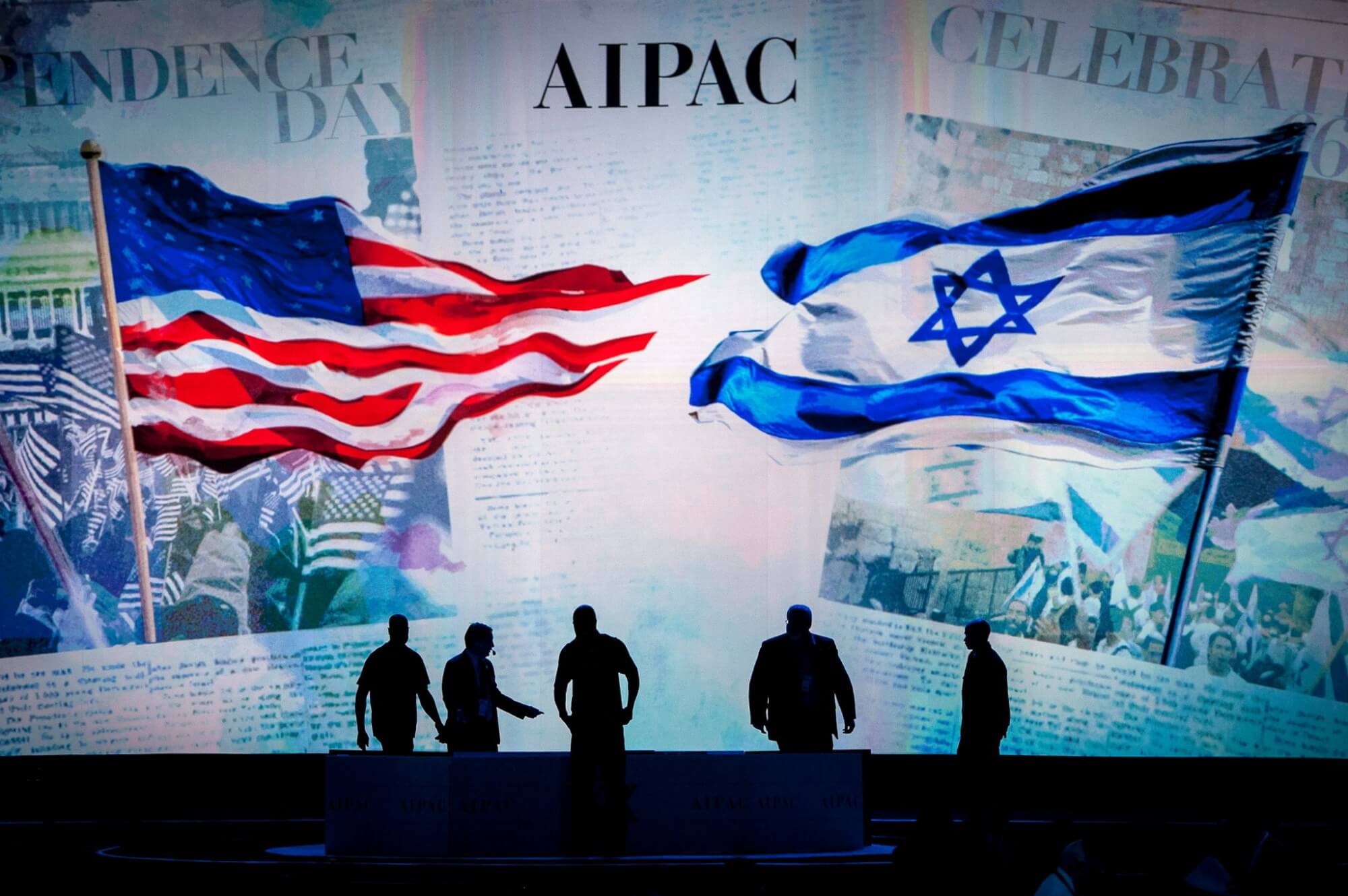
Mondoweiss celebrates its 20th anniversary this year. The website started as the personal blog of journalist Philip Weiss, who was covering the Israel Lobby when it was still a third-rail issue in the media. Mondoweiss U.S. correspondent Michael Arria caught up with Weiss to talk about the early days of covering groups like AIPAC, the political climate of the time, and what he thinks comes next for the Lobby. Michael Arria: You started doing Mondoweiss in 2006. This was a couple of years after Bush was reelected, and it felt like the attitude toward the administration was nosediving. There were deepening criticisms of the wars in Iraq and Afghanistan and growing skepticism of “forever wars” more broadly. Within a couple of years of you starting the blog, we see the ascent of Barack Obama, and one of the major reasons he beat Hillary Clinton in the primary is because he opposed the Iraq War, while she supported it. However, discussions of Israel or the Israelis were still, more or less, off the table. You were also doing this before social media, before sites like AIPAC Tracker. This information is all out there for people now. Can you talk about the climate around these issues when you first started writing about them, and how you went about finding information to report on? Phil Weiss: Thank you for this great question. Just to frame it, I want to state that we’re speaking, and behind us is the burning skeleton husk of AIPAC. My point of view: I think AIPAC is finished. We can argue about this or discuss how finished it is, how much money it has, but I think it’s finished as a political player. Yet 20 years ago, as you said, it was completely different. You mentioned Obama, and that was truly critical. As you say, he secured the nomination in 2008 because he was against the Iraq War and Hillary was for it, and that was basically what killed her candidacy. I remember when there were pop-up ads that automatically appeared on your website, and one that came up on the Obama campaign website was an ad for the book [The Israel Lobby and U.S. Foreign Policy] by John Mearsheimer and Stephen Walt. That appeared on Obama’s official site somehow as a pop-up ad, and it became a mini-scandal at the time. What is that doing on there? How did you allow this? He had to disavow it. So this book. That was exposing the Israeli lobby in less forceful terms than Eli Clifton and Ian Lustick’s book, but exposing the Lobby’s role in the Iraq War 20 years ago was absolutely forbidden. I remember Lawrence Wilkerson, who was Colin Powell’s chief of staff. saying that you had to have a brown paper cover on it to read it in Washington, but everyone was reading it. When Wilkerson was asked about the assertions in the book, he said, ” Yeah, I’ve read the book, and it’s got the blinding flash of the obvious. So that was the climate. Brown paper covers, absolutely verboten on the Obama website, and the blinding flash of the obvious. Another little anecdote from that era. Samatha Power, I believe, when she became Ambassador to the United Nations under Obama, had to do this meet-and-greet with members of the Israel Lobby, including Shmuley Boteach, the right-wing Rabbi who supports fascist policies. So that was her way to get this position in the Obama White House and it expresses just how right-wing the lobby was and how powerful it was. When Obama hired Hillary Clinton as Secretary of State, one of his aides went to Malcolm Hoenlein, then-chairman of the Council of Presidents of Major Jewish Organizations, a right-wing, pro-Israel organization, and asked him to find out whether Clinton would consider a job in the Obama administration. So, here you had this intermediary, and this was Obama’s connection to the Jewish community and Hillary Clinton. When I started blogging against the Iraq War, I remember an old editor of mine at New York Magazine said that Hillary Clinton had to support the Iraq War; she had no choice because she was representing New York, which has a large Jewish population and a large pro-Israel population. That was the climate. I’m bouncing around here, but my point is that the Israel Lobby was a factor in these kinds of decisions, and it couldn’t be discussed. The examples are endless. Around the time the Israel Lobby book came out, there was a Center for Jewish History panel, which Marty Peretz, the right-wing Zionist, led. I remember he introduced the panel and said, “This person is going to tell you how antisemitic the book is, and then [Atlantic editor] Jeffrey Goldberg is going to tell you how really antisemitic it is. Then Daniel Goldhagen is going to tell you how even more antisemitic it is.” They had branded this book as antisemitic, even though it was a fairly mild-mannered book. Jeffrey Goldberg spent a lot of that evening saying, ” This book is a crazy conspiracy theory,” and you could say the same thing about the ball bearings industry, in terms of its influence on Capitol Hill. I found that especially irritating because this was Jeffrey Goldberg. You made the point about social media. You’ve opened a lot of doors, so I’m going through every one of them in this answer. But yes, social media really did not exist. Our information about the Lobby was largely drawn from mainstream reporters, and Jeffrey Goldberg authored the most famous piece on AIPAC, published in The New Yorker in 2005. It didn’t mention Iraq at all, but it quoted Steve Rosen, an AIPAC official. Goldberg asked him how much power he had in Congress during a fancy dinner, and Rosen pointed at his napkin and said, “You see that napkin?” I can get 76 signatures from the Senate in under 24 hours,” or words very similar to that. So that was this landmark quote that Jeffrey Goldberg delivered to us, but then he’s saying the Israel Lobby is the same as the ball-bearing lobby. Bullshit! That piece gave us another famous quote from Rosen: “A lobby is like a night flower: it thrives in the dark and dies in the sun.” So, there was just tremendous corruption around AIPAC. They could continually assert, as the lobby has always asserted, that the American people love Israel and we’re pushing on an open door, and they’re not. They say the money doesn’t mean anything, and we don’t really mean anything because we’re just reaffirming the American people’s love and support for Israel, which was total bullshit and has now been exposed as total bullshit. Connected to that, the lefty blogs of that era were, in part, serving as a rejoinder to the mainstream media. However, in the case of the Israel Lobby, you were also up against progressive media to an extent. The Mearsheimer/Walt book that you mentioned- the Israel lobby and U.S. foreign policy- which, as you pointed out, started as a paper and I think was published as a book in August of 2007. There were many criticisms of that book from the left, including from people like Stephen Zunes. There were critical reviews on liberal websites. Noam Chomsky said he didn’t find the thesis convincing. Can you talk about some of those criticisms? Yeah, and I still have some animosity over this because, yes, the left has now moved on this matter, but back then I published an early piece. I published an early piece in The Nation on the Walt and Mearsheimer book, and I got some pushback on it before it could go to print. It was just verboten on the left to discuss American interests, which verged into American imperialism, in that view. And also, they would poo-poo the effect of the organized Jewish community as a political force. Community is a very important factor when discussing the lobby. As for Chomsky, saying the Lobby couldn’t influence policy, but it clearly influenced policy in the West Bank. Barack Obama said that building settlements in the West Bank ran counter to America’s interests and then promptly nullified his own position. America, the White House, again and again nullified its opposition to settlements because of the lobby. Now the discourse on the Iran War is open to this, and people like the Senator-elect Abdul El-Sayed can bring up Israel’s influence on that decision. You have people like Joe Kent, the former counterterrorism guy who resigned over this, saying that Israel dragged us into this war. You can mention all this now without being branded an antisemite. Certainly, the world has changed since ‘06. We’ve gone through all these little operas. We’ve watched the Iran deal get torn up by Trump, with Sheldon Adelson giving him all that money. Watching Obama fight Netanyahu and lose to Netanyahu on settlements as he’s running for reelection. Obama aide Ben Rhodes said, I had to call on Jewish donors after Netanyahu lectured Obama in the White House. I had to go to the pro-Israel donors and defend Obama, as opposed to saying, f–k Netanyahu. F–k Netanyahu would be the attitude now. In 2015, when Obama passed the Iran deal, he said there was only one country against it, and it would be an abrogation of my constitutional duty to side with Israel. We’ve gathered more information, and it’s a different country with a different discourse. When we first started talking, you mentioned AIPAC’s decline and that you thought they were dead as a political player. Since you started writing about them, their public face has changed a few times. Back when you started, they loved to point out they didn’t contribute to candidates. A little less than five years ago, they changed their strategy and created a Super PAC, which spends millions on elections. Right before the midterms, they announced that they’re going back on this, and I think, by extension, kind of admitting it was a failed strategy. They know their brand is toxic, and now they’re telling people to donate to candidates directly, as opposed to funneling it through AIPAC and potentially hurting the candidate as a result. What did you make of that shift? Also, I wanted to follow up on your earlier assertion that the organization is effectively dead. Why do you say that? Yeah, I think it’s dead. I’ll take a brief retrospective to answer your question and share an anecdote. One thing is that when you talk about these recent toxic failures in AIPAC, I totally agree with you. Still, we have to acknowledge what we have to say: this was a gargantuan force on the U.S. political landscape for decades, so it had an amazing run. It’s just incredible what they’ve done. I think J Street is the heir to AIPAC in some ways, which we’ll have to get to. But here’s an anecdote. I remember when [former Mondoweiss Executive Editor] Adam Horowitz and I went to the AIPAC conference every year, and they would narrow what we were allowed to see. I went three or four years, and my press pass became increasingly narrow. Just as it later became narrow with J Street, because they didn’t want us reporting on certain things. Adam and I were on one of these public nights, one of the roll call nights where they’re showing off all the political scalps they have, and Adam, who was sort of new to journalism at that point but loving it, was online, live-tweeting it and making snarky jokes. An AIPAC guy came over. A minder. Josh Block, who had worked for Ted Kennedy. He was a liberal. He came over, tapped Adam on the shoulder, and said, “Why did you write that?” Adam said, ” Well, it’s a joke.” We’re there debating free speech rights on the convention floor, but that’s how tight AIPAC had it. You go back to the central contradiction of AIPAC. The lobby was this massive organization. In his book Chutzpah, Dershowitz says that we’ve built an unrivaled political power, but the contradiction is this argument that America loves Israel. If they love Israel, why do you need to be a night flower and lobby people for the cause? They knew that it was a contradiction. They knew that the American people, if they were exposed to Israel, would not like Israel. They said their absolute mission was: there shall be no daylight between the American and Israeli governments. That is something they achieved. Ultimately, and essentially, they achieved that. They helped destroy the two-state solution, the opposition to American settlements. They helped get us into war, another astounding achievement. This small foreign government issuing any type of orders- not marching orders, but issuing advice to the American government about what to do- and it being heard; this culminated in Netanyahu in the Situation Room, right before the Iran war earlier this year. Israeli intelligence on Iran is more important than American ‘officials’ intelligence, and that’s been exposed, and I think it’s just part of the problem right now. Netanyahu has become absolutely toxic. Democrats can make it an issue and win. It’s part of the discourse now. Even the party elders, from Schumer on down, have folded their hands on it and say, “It’s a bridge too far.” They’re saying Netanyahu is a bridge too far. We don’t like Netanyahu. There’s a good chance Netanyahu will be gone, and that would serve them on some level. The whole Lobby now, I think, wants Netanyahu gone, is my belief. [Pennsylvania Governor] Josh Shapiro certainly wants him gone. [New York Governor Kathy ] Hochul wants him gone. I think [former Vice President] Kamala Harris, [former Chicago Mayor] Rahm Emanuel. They all want him gone. He’s poison. It’s arsenic. Politically, they want them gone. And there’s a lot of pressure on. The mainstream is going to be the liberal Zionist position, which J Street represents. Let’s talk about that, because I think people would push back on that a little. AIPAC has had to recalibrate, but they certainly haven’t stopped intervening in elections, while it seems like J Street is running out of lane. They’re not pro-Israel enough for the AIPAC/DMFI crowd, and they’re too pro-Israel for a lot of Democratic voters now. Maybe I’m too sanguine about the death of AIPAC. I just feel like right now they’re a burning husk because they’re so toxic. Their negatives are so high in polling, but let’s get to J Street and this question of them running out of lane. I completely agree they’re running out of lane, but we could have discussed how AIPAC was running out of lane 30 years ago, because they’re going against the two-state solution. How can they support the Israeli government? The reason that they were able to stay in that lane for 30 years after Oslo was that the American people weren’t paying attention. I think it’s now in J Street’s interest for the American people to stop paying attention. You’re right that the base is animated against Israel. I think broadly, not just on the Democratic side, but young Republicans have turned against Israel. And JD Vance said the other day in his tweet, his post-mortem on the election, that the Iran war killed us and policy has to change on Israel. Amazing. He knows that the Republican base hates Israel for the Iran war. That the Charlie Kirk crowd certainly hates Israel, and the Tucker Carlson crowd. They know why we’re in that war, and they know it’s Israel. So, how can J Street sustain itself? J Street states that it represents and endorses most Democratic Party members in Congress. It endorses most of the Democratic caucus. It represents the center of the Democratic Party policy-wise. I think they’re absolutely right on both counts. Even Schumer speaks to them on that. These will all be people who support a two-state solution. They’re putting their arms around the Abraham Accords. They run out of lane when this farce is exposed. The way it’s exposed as a farce is the ongoing genocide, human rights atrocities, war crimes, and apartheid. They want all that to go away. J Street never talks about Gaza. They want to have it both ways. They say they’re against atrocities on the West Bank, but everyone’s against them. Trump is against them. Even Netanyahu is a little bit against them because that political position has shifted so dramatically. You can’t be for them, so they’re going to be great on those settler atrocities on the West Bank. But they’re also going to praise AIPAC. [J Street president] Jeremy Ben-Ami is going to praise AIPAC whenever he can because he’s dragging those people in. He’s going to equivocate in weird ways about the Iran war because they’re dragging in the right wing. They don’t say anything about Gaza, really. They talk about the worst day for Jews since the Holocaust, October 7, 2020-23, this conflation of Zionism and Judaism. This reading of Jewish history is absurd. I think they’re smart. Ultimately, they love a Jewish state. That’s what they care about. They are just going to push this. They believe that a Jewish state is the answer to Jewish concerns about safety. They still believe that. How long can they sustain it? Four years? Five years? Two years? Ten years? I’m not sure. We are seeing a recalibration on this issue. We have Netanyahu and the Lobby pushing for an “end” to Israeli aid, which basically just means Israel pays for its own weapons and everything continues like usual. On election day, Trump actually mentioned this would happen soon. Democratic presidential hopefuls, such as Gavin Newsom and Rahm Emanuel, embrace this. At the same time, we are seeing this push for enhanced collaboration between the U.S. and Israeli militaries. This is part of the NDAA that’s making its way through Congress. Some Democratic Senators, including Van Hollen, are fighting to have the sections about Israel removed from that bill. Have you been following all these moves, and do you think setbacks for the Lobby could translate into shifts in actual U.S. policy? I do think some of it is all but meaningless because if there’s a war, they still get their weapons. These shifts obviously come from a defensive position, and they won’t be good enough, as you say, if the policy doesn’t change. How can the policy change? I don’t think any of us can say right now, but we’re seeing changes in the Democratic Party where some lawmakers are actually reflecting the base. JD Vance is going to try to echo his base. What this election demonstrated is that when an issue is thoroughly politicized, all the money in the world is not going to help you. I think we are going to see this issue politicized, and we don’t know in what way or shape, but I am optimistic about it being politicized. What does any of this potentially mean for Palestinians? The United States and the Lobby have been key in creating the policy. You break the Lobby. You break policy. You open up policy. You politicize policy. To quote the late, great Pope Francis, we’ve had a third world war fought piecemeal. I’ll shed tears if I just think of all the people who have lost their lives across the Middle East over the last 20 plus years from these policies, because of instability, aggression, persecution, apartheid. As long as the world superpower is supporting this rogue pariah state committing war crimes, there will be enormous suffering. Israel always says, ” We live in a bad neighborhood.” That’s the big line. We live in this terrible neighborhood. That’s why we have to be such thugs. But the thing is, they made it a bad neighborhood. It’s had awful consequences for people, including Israelis. Again, this is all speculation, but if we break U.S. policy on this, things can change. It seems like a dream now, but I think it can become a reality with the current discourse.
‘I think AIPAC is finished’: An interview with Mondoweiss founder Phil Weiss
Full Article
Original Source
Read the full article at Mondoweiss →KhanList aggregates and links to publicly available news content. We do not host full articles from third-party sources. Always verify important information with original sources.