
Published Aug 11, 2026, 12:00 PM EDT Abhinav pivoted from a career in banking to pursue his first love in writing. Even while working full-time, he continued contributing as an editor-at-large, a role he has held for more than 7 years. A lifelong tech enthusiast who has built three gaming and productivity powerhouse PCs since 2018, his passion for technology keeps him closely following the semiconductor industry, from NVIDIA and AMD to ARM. His MSc dissertation explored how artificial intelligence will reshape the future of work, reflecting his curiosity about the wider social impact of emerging technologies. Modern upscaling has a motion problem. A static image and a still frame can look stunningly close to native resolution, and with modern AI reconstruction, produce a sharp, detailed image that's almost indistinguishable from the real thing. However, the moment you introduce motion, that illusion can begin to fall apart. The problem with that is that gaming happens to be inherently motion-dependent. Combat, traversal, jumping, driving, flying at high speeds, or even simply turning the camera demand a level of temporal stability that even modern upscalers struggle to maintain. I noticed this a number of times while testing DLSS, FSR and Lossless Scaling across three of my favorite games, and holding the three under the microscope made me realize just how far upscaling still has to go. Nothing tests an upscaler's stability like a sim racer I started with Forza Horizon 6, where movement is literally the game I'd argue that there's no other game in my library that makes fast-moving objects, motion, and temporal stability more integral to the gameplay experience than Forza Horizon 6, which made it an easy candidate to test first. I ran the game with both FSR 4 and DLSS 4.5 (Preset M) on the Quality Preset alongside LS1 through Lossless Scaling. Nvidia was very clear in positing that DLSS 4.5 brings sharper antialiasing, less ghosting and better temporal stability, and, as can be experienced, it certainly delivers on much of that promise. Both upscalers from Team Green and Team Red render the game at roughly 66% the target resolution (which, at the time of testing was 1440p) before reconstruction enters the loop, so the comparison effectively is apples-to-apples. Clearly, however, the reconstruction is far from perfect. Anyone with a keen eye will notice some ghosting trailing behind the Porsche GT3 RS, while the pink foliage on the right side shows noticeable temporal smearing. As with all vegetation in the game, the trees also hint at the development of edge doubling. FSR 4 is softer when compared, but some moving elements look undeniably cleaner, particularly the guardrails and distant traffic. LS1 also seems to (surprisingly) manage good near-field sharpness, although the limitations become more obvious as the scenery evolves. Swinging through New York puts all upscalers through a wringer Spider-Man 2 is where artefacts come home to roost Perhaps the next game tested depends even more heavily on credible upscaling, because here, I'm constantly swinging between skyscrapers at ridiculous speeds and fighting foes in split-second key sequences. I'm talking, of course, about Marvel's Spider-Man 2, which might be one of the toughest tests of motion reconstruction depending on the nature of character mobility itself. Here, DLSS 4.5 makes the strongest case for itself, particularly by providing nearly no room for complaints. Fine details like webbing and distant geometry hold together even while swinging and gliding, with signage remaining as legible as can reasonably be expected without shimmer. This is particularly tall praise, especially considering the distant points in the skyline give a lot of opportunity for upscaling and reconstruction to fail in creative ways, as seen in the LS1 variant. Clearly, DLSS 4.5 does whatever DLSS can. FSR 4 struggles rather more visibly as the arms and the silhouette develop aliasing during movement, while the background becomes smeary numerous times during the gameplay. As is expected for FSR 4, fine background details and reflections look washed out, just like they did in my previous experiments with the upscaler. Ratchet & Clank: Rift Apart was the odd one out Transformer-based upscaling stumbles in a unique way here When I went in for the third test, I didn't quite expect Ratchet & Clank: Rift Apart to challenge DLSS 4.5 as much as it did when it came to motion and temporal stability, because, after all, it's mainly what Nvidia chose to focus on while unveiling the second-generation transformer model at CES 2026. Like the rest of the tested titles, it has the same hallmarks of having high-velocity traversal and combat chaos, so it made even less sense for the upscaler to excel in Spider-Man 2 and behave rather anomalously here. It is reasonable to assume that the game's unique, stylized art direction rewards spatial sharpness in a way that photorealistic art does not, and that explains why DLSS 4.5's reconstruction gives up its usual lead by the usual, significant margin here. The only plausible explanation that comes to mind for this is that the second-gen transformer may be trained on data that skews towards photorealistic visuals, but it's also worth noting that Nvidia has never disclosed what its training set actually contains, so it's an educated guess at most. With that said, the other two upscalers failed to demonstrate an edge over Nvidia's transformer model as well. LS1 produced the cleanest silhouette in a number of scenarios, but the price was a background that streaked harder than both FSR 4 and DLSS 4.5. It is certainly a surprising finding after a series of tests wherein DLSS 4.5 had emerged decisively victorious. But if I were to run a blind test on the three, I certainly wouldn't be able to make out the difference between the three on Ratchet & Clank. Every upscaler breaks the illusion somewhere As sophisticated as upscaling technology has become over the course of the last five years, every single upscaler broke the illusion somewhere, and that's something that cannot be denied. What instead becomes the question is the extent to which one is willing to accept the compromise, if one even sees them as such. Whether upscaling has ushered gaming into an era of compromises or opened an avenue of possibility wherein weaker hardware can deliver stronger performance has been a matter of debate, and that's a debate that this experiment does not settle so much as sharpen.
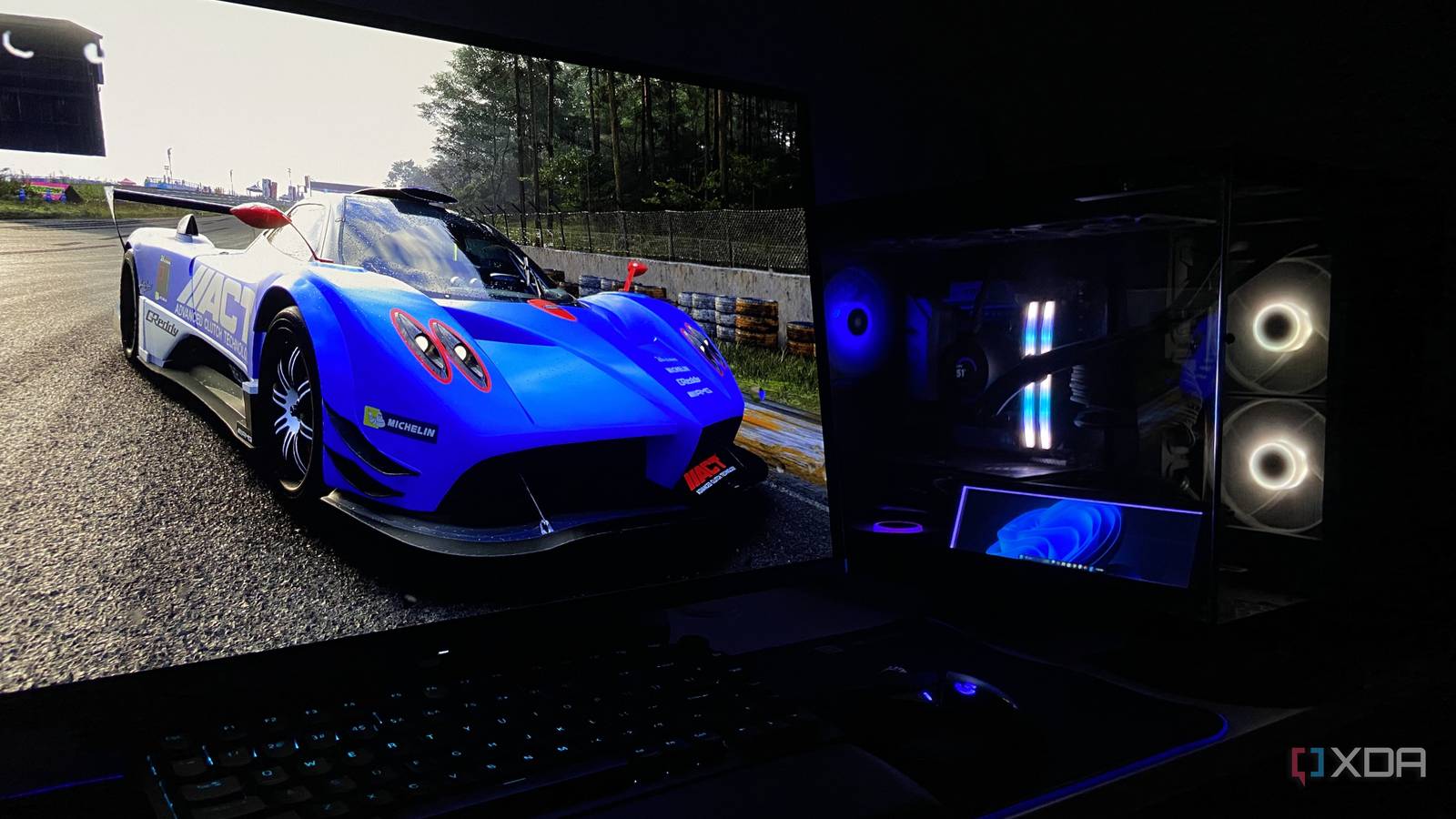
I tested upscaling on every game I play, and the illusion breaks the second you move
Full Article
Original Source
Read the full article at Xda-developers →KhanList aggregates and links to publicly available news content. We do not host full articles from third-party sources. Always verify important information with original sources.