
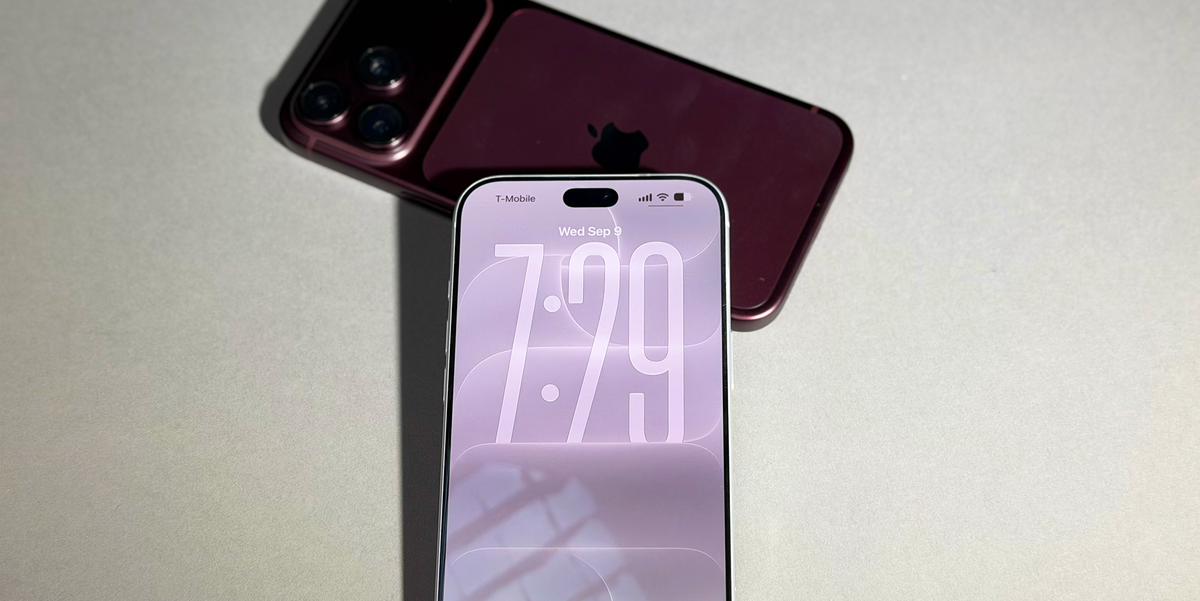
Our product picks are editor-tested, expert-approved. We may earn a commission through links on our site. Why Trust Us?Brett Williams6 min readAPPLE IS ALL about the premium experience in 2026. For the first time since 2019, the company only updated its Pro line of smartphones at its fall hardware keynote event.The iPhone 18 Pro and 18 Pro Max join the brand’s stable this year, leveling up the top-tier models while leaving the standard line in the 17 era. And yes, there is another, even more premium iPhone on the way, but the foldable iPhone Duo won’t be available until later in October. Some Apple diehards will doubtlessly wait until the Duo hits the scene. It is an undeniably cool device—in the brief time we had with it in hand at the event, we were impressed at its seamless transition between modes and just how many ways you can use the device.But for now, the 18 Pro is the star of the show. I tested an 18 Pro Max unit (which has identical specs to the smaller Pro, aside from display size and battery life) for almost a week to see how the new smartphone stacks up to the other iPhone models—and to give you a better idea if you should upgrade now, wait for the Duo, or hold off on this year’s slate entirely. Here’s what I thought.ProsCamera upgradesLonger battery lifeDynamic Island's improvement makes for easier multi-taskingConsMore expensive than last year's modelsOnly one screenThe iPhone 18 Pro’s DesignThe Pro line was reinvented last year, and it maintains the same silhouette (and sloped camera bump) for the 18. The phones are made of a “heat forged aluminum unibody design,” and the Pro Max boasts a 6.9-inch display, while the Pro is 6.3 inches. Internally, there have been some tweaks—the “vapor chamber” now covers even more area and there is a nano twin copper plate beneath the display to better manage heat produced by high-level computing.On the display itself, the Dynamic Island (the interactive spot at the top of the screen near the front-facing camera) has been slightly tweaked. The infrared (IR) camera, which was housed there before, has been shifted to a position behind the display. That allows for up to three functions in the upper portion of the screen. This was best demonstrated as soon as the NFL’s first weekend kicked off and my ESPN fantasy app kicked score updates there while I used other apps on my phone. Thankfully, my team dominated the matchup.Brett WilliamsThe iPhone 18 Pro’s Camera and PerformanceThe iPhone 18 Pro runs quickly and smoothly. Siri got an AI upgrade on iOS 27, and the tasks that I ran, from photo generation in the Image Playground app to voice commands for timers, were handled promptly. At this point, though, responsive performance should be the baseline for a premium smartphone.The biggest improvements to the Pro line came to its camera. Apple calls the rear three-lens array, by now a familiar staple of its premium phones, a 48MP Pro Fusion system (as it did for the 17 Pro), with an ultra wide and telephoto lens with the capability for 8x zoom. But the glow-up comes through enhanced control, both at the point of capture and in the Photos editing experience.There’s a whole customizable suite of new settings to take photos for both the standard experience and the Portrait Mode, including shutter speed and light balance.Photo settingBrett WilliamsPortrait ModeBrett WilliamsThe camera has a new capability to control the aperture (the opening of the lens which allows light to come through to the sensor), which allows for more control over depth of field and focus. I’m no pro photographer, so I wasn’t exactly manipulating the scene like a master, but the effect was most clear when I trained my camera on a light source. Just check out the burst effect in this pair of shots, captured with the aperture at the lowest and highest settings:Set at f/1.48Brett WilliamsSet at f/4Brett WilliamsDon’t worry if you’re not the photo-savvy type, either—the camera will also automatically select the ideal aperture setting based on the conditions. You can toy with the tools manually, or totally ignore them and still get great shots with the automatic settings. Many of those pro controls are also available for video capture as well.Once you’ve captured your photo or video content, there are more options to edit than ever—including three that take advantage of Apple Intelligence. The Clean Up tool, which removes background figures from photos (and was one of my most-used features on the iPhone after taking engagement and wedding photos this year), is even more effective. I’ve made peace with weird smudges in the background of my edited photos using iOS 26, but it’s better by a wide margin now with iOS 27.Before using the Clean Up toolBrett WilliamsAfter the edit. This was much more effective than the previous version.Brett WilliamsYou can also use the Extend tool to expand the frame beyond what you captured, and Reframe to shift the position of a photo’s subject. I did this with my dog, when she was sick of posing for me after a day’s worth of picture taking. This is a bit more subtle, but can make a difference if your original pic is just a bit off.Brett WilliamsBrett WilliamsThese AI features don’t feel insidious—but they are manipulating images. If you’re concerned about reality and proving that what you’ve captured is real, you can verify your photos as being the real deal in the age of AI. It’s a simple setup—just toggle your settings for your camera, and you’ll add additional metadata that Apple says “functions like an unalterable timestamp.”There are also new video editing tools, too. Users have more control over the audio mix, giving power to isolate dialogue and music. You can also record in the standard video setting, then convert to Cinematic mode afterward for higher quality.These are the major highlights, but there are even more, deeper-level features within the content capture suite. Whether you’re the type of smartphone user who wants total control or you’re happy to just point and shoot, there will be something novel in the 18 Pro.The iPhone 18 Pro’s Battery LifeApple claims its handsets have made major leaps in the battery department, one of the most crucial qualities in a smartphone. On paper, the company says the iPhone 18 Pro can handle up to 36 hours of video playback, while the Pro Max can manage 45 hours.I didn’t exactly take the time to sit by myself watching video clips on a loop, so I can’t speak directly to those numbers—but the power increase was noticeable from my last device, a 17 Pro that had begun dying before a full day’s use. Using the 18 Pro, I averaged about eight hours of screen time for the week (mostly spent scrolling, texting, and taking photos and video) and I consistently finished the days with more than a quarter of my battery still intact. Part of this increase was also likely thanks to the jump up from the Pro to the Pro Max, but the difference was obvious.Along with the battery gains, fast charging also gets a boost. Apple says the Pro phones juice up about 50 percent in around 15 minutes via cable. Just before getting ready to take my dog out before bed one night, I realized I was running low. I plugged in for 10 minutes as I got myself together and put her leash on—and by the time I took the phone off power, I had an extra 10 percent.Should You Buy the iPhone 18 Pro?As always, my recommendation to anyone who’s thinking about getting a new iPhone is relatively straightforward. Unless you absolutely need the most cutting-edge iOS device on the market (last year, that would’ve been the iPhone Air, this year, the iPhone Duo), your decision is simple: Do you value your wallet, or your overall experience?If you don’t need to save cash, invest in the best camera possible on the newest device. That’s likely going to be the most important tool for you, since most people only use their phones to take pictures, videos, and perform basic tasks on apps. And with planned obsolescence, you’ll likely wind up saving some money in the long run by picking the latest device, which will continue working for longer if you want to hold on to your phone for the full extent of its lifespan.That’s not to say that the 18 Pro models are a small investment. Apple raised the starting price by $100 for both, putting the floor for a brand new iPhone at $1,199 and $1,299, respectively. That’s a big gap between the $799 that an iPhone 17 from last year will cost you—but remember, you do also presumably get an extra year of lifecycle with the newer device.For me, the camera upgrades are that enticing. And as cool as the Duo looks, I’d guess that for most people, the Pro units will be the better option in terms of usefulness (and managing pure sticker shock). This might not be the sexiest option this year, but once most people get their hands on the 18 Pro and start snapping pics, they’ll be sold.ProsCamera upgradesLonger battery lifeDynamic Island's improvement makes for easier multi-taskingConsMore expensive than last year's modelsOnly one screenBrett Williams, NASM-CPT, PES, a senior editor at Men's Health, is a certified trainer and former pro football player and tech reporter. You can find his work elsewhere at Mashable, Thrillist, and other outlets.
I Tested the iPhone 18 Pro. Here’s What I Thought.
Full Article
Original Source
Read the full article at Menshealth →KhanList aggregates and links to publicly available news content. We do not host full articles from third-party sources. Always verify important information with original sources.