
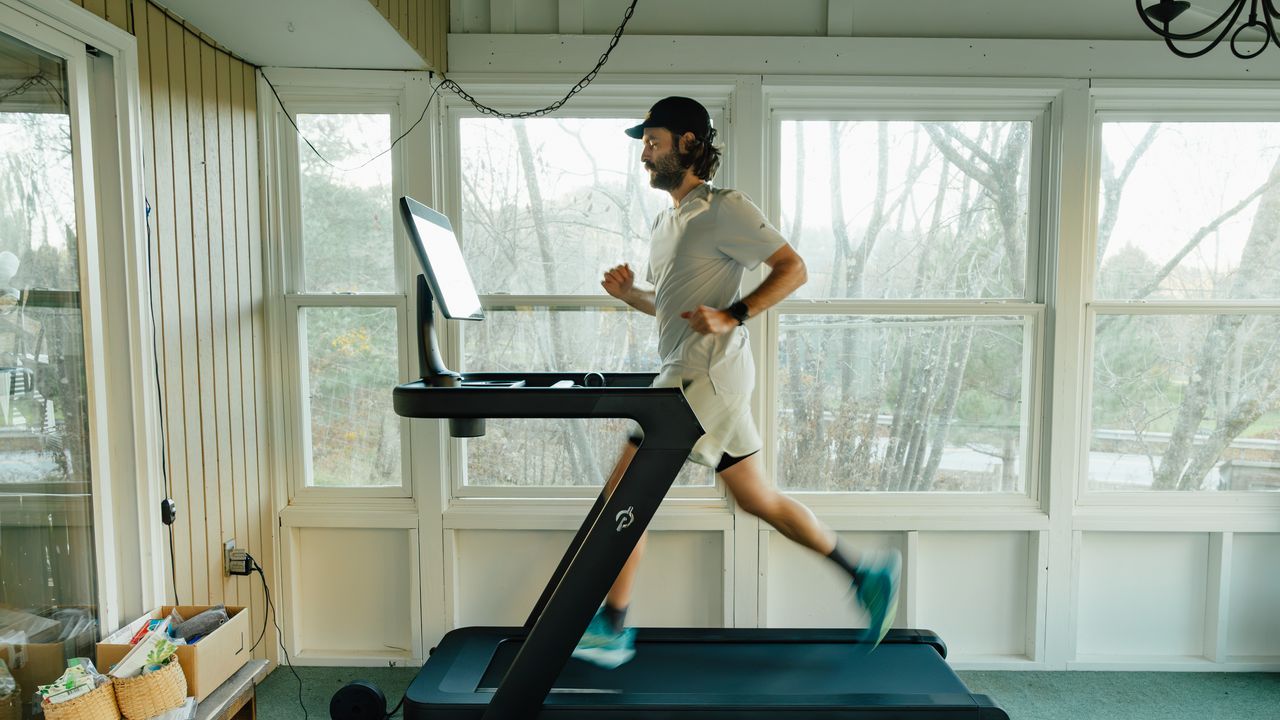
In my mind and, I think the minds of many others, Peloton has always been a stationary bike brand. The Bike, after all, was its first product, turning the Peloton name into a catch-all term for at-home cycling that we now hear everywhere, from broadcasts of the Tour de France and Giro d'Italia to television sitcoms. (A running gag online is that Peloton's upscale, soothing video workout content is worlds away from The Office's Dwight Schrute leading a group of stationary riders off an imaginary cliff.)Nevertheless, Peloton actually has been making treadmills since 2018. The first Tread delivered the same proposition as the Bike: premium hardware that looks good enough to bring out of the basement, as well as access to interactive, instructor-led runs and HIIT classes on a big, immersive screen. Over the years, Peloton has brought improvements to that first Tread: larger screens, voice controls, AI-informed movement tracking for form analysis and coaching.The new Tread Flex, however, heads in a slightly different direction. It has a simpler belt, simpler speakers, a smaller screen. It's $1,300 cheaper than the next step up, and $4,500 cheaper (!) than Peloton's slat belt-equipped Tread+ Vision. Its affordability isn't even its main selling point, however, because the Tread Flex has a nifty final trick: it folds up to save space.Could these space and money-saving tactics make the Tread as popular as the Bike? Well, I run nearly every day, and ever since a tester Tread Flex showed up at my door, I've been doing it indoors much more frequently. In my experience, here's what makes Peloton's latest worth considering.The Tread Flex is very mobile© 2026 Tanner BowdenTreadmills tend to have a problem that stationary bikes don't: the nicer they get, the bigger they get. Premium models have larger motors and roomier running platforms. In short, they're heavy. (The Tread+ Vision is a hefty 460 pounds.) The Tread Flex is 170 pounds less, and that's crucial to its ability to fold up, because that feature wouldn't be much of a selling point if it felt like adding a power clean to the end of every run.In reality, stowing the Tread Flex is quite easy. You just lift up the running deck from the end and push it forward until a hydraulic cylinder locks into place. There's a pin clip to lock it. To drop it down, you push forward on the deck and then on the hydraulic support, then walk it back. At about 45 degrees, the hydraulics take over completely; you can go put on your running shoes while a gentle thump lets you know the deck is back on the ground.Folding up the Tread Flex drops its area from about 16.5 square feet to half that. (The Tread+ Vision is around 19.25.) Just as importantly, I've discovered, is that lifting the deck brings the machine up onto a set of locking wheels. I've kept mine in a designated corner, but it's so easy to move that it wouldn't be much hassle to wheel it out and lower it for every workout, if your space required it. Get your cardio out of the way, then get your cardio out of the way.With treadmills, less is more© 2026 Tanner BowdenOkay, so folding and moving a treadmill might be a pain if you're using it every day. But I suspect if you're running that often, you're doing some of it outside. I live less than an hour away from the Canadian border, and run on roads and trails five or six times a week all year round. Good layers get you pretty far, and there's a reason why run clubs continue to boom while SoulCycle-adjacent Mile High Run Club closed all its studios this year.Treadmills are for something else. They're for a warm-up prior to lifting, or for bootcamp-style HIIT workouts that combine sprinting intervals with weight intervals. The prioritization value of time spent doing these doesn't seem to align with the space investment a treadmill requires if you don't have a pool house or big garage. (I have a sun porch-slash-mudroom where I keep firewood and ski boots in the winter and a napping couch in the summer.)This is how, I think, the Tread Flex makes the ultimate proposition as the ideal home treadmill. A treadmill doesn't replace a usual running routine; it adds to it. On Monday I do my usual seven miles down the road and back on the river trails; on Tuesday I let Andy Speer kick my ass with sprints and kickstand deadlifts. (And, sure, when it's -10° and blowing in late January, I might run inside, now that I have the option.)The Tread Flex is still a premium treadmill© 2026 Tanner BowdenNone of the above would matter as much if it came at the cost of quality. I've run on hotel treadmills that sound like your grandma's washing machine and feel similar to how they look, i.e., stomping around on hollow plastic. The Tread Flex may not have the cushioned slat belt the Tread+ Vision has, but it's definitely not that.What it does have is a spec that's right in line with top-notch treadmills. Its max speed is 12.5 miles per hour (a 4:48 mile, in runner's units), a 12.5% max incline grade (but no decline), and a 20-inch by 59-inch running surface that, though not cushioned, feels good to run on. The swiveling screen is nice and big at 21.5 inches, with HD resolution and a touchscreen interface. I particularly like how adjusting speed and incline is done with rolling knobs, which feel much better—and more natural—to engage with than buttons when you're gasping at threshold pace.On top of that is Peloton's interactive experience: You can take live classes where you can pit yourself against others and get kudos from the instructor. The pre-recorded catalogue includes thousands of classes for yoga, Pilates, and meditation, in addition to strength and the running, cycling, and rowing the company makes machines for.The Tread Flex also provides personalized training plans, smart pacing guidance based on where you're at, automatically adjusting incline for classes, and of course leaderboards and an entire ecosystem of badges and achievements to earn, if you're into all that. For $50 per year, that is.Oh, and did I mention it's a good-looking machine? It's sleek; an attractive, soft-edged Z with a minimal screen instead of a board of colorful buttons. Nobody's throwing around the word "console" to describe this thing. That's good; home gym setups deserve different consideration than gym rigs. If images of Crunch Fitness flash through your head every time you glance into the corner, something has missed the mark.© 2026 Tanner BowdenSo, is the Peloton Tread Flex Worth It?Where Peloton's Tread Vision treadmills are clearly high-end, the Tread Flex toes the line against mainstream consumer models. Its features match up with some of the most popular machines, and its price, while at the higher end of the spectrum, does too. But the Tread Flex gets there with more style, and with Peloton's huge ecosystem of live and archived class content.So, if we're looking at other treadmills out there, my quick answer is yes. The Tread Flex is the utilitarian Peloton Treadmill, but it's still a Peloton treadmill.How you answer this question really requires asking yourself a series of other questions first. What do you want a treadmill for? How much do you want to invest? Do you want access to fitness classes—especially ones other than running—and are you okay with the $50/month subscription fee?Buy the Tread Flex if…Form factor and access to classes and content are non-negotiables. The Tread Flex might be Peloton's new entry-level treadmill, but it's far from a simple running machine. Flex refers to that nifty fold-up feature, but also to this treadmill's ability to integrate into an exercise program that also includes strength training, HIIT workouts, yoga, and on and on.As a runner who prefers to log miles outside whenever possible, I was encouraged by how much I enjoyed running on the Tread Flex. The classes are fun, and Peloton's instructors are real pros, but even in Just Run mode, the Tread Flex proved responsive and comfy. It's getting dark around 4:30 PM these days, and my daylight windows for running on the well-used roads around me have narrowed like a Death Star trash compactor. It's nice to know I can snag seven miles after sundown if need be.Buy another treadmill if…Well, if you aren't limited by space or cash, the Tread Vision and Tread+ Vision get you bigger screens, AI-enabled running form feedback and coaching, and a more cushioned, broader running area. If you just prefer running or walking on a treadmill to doing it outside, investing more heavily in a treadmill is worth considering (though the Tread Flex will still be great).The Tread Flex's real competition is the NordicTrack Commercial 1750, which you'll find recommended on just about every treadmill buying guide on the internet. The machines are similar in function and specs, but there are some differences. The NordicTrack's running surface is two inches wider and one inch longer; it has a slightly more powerful motor; it can decline to -3% grade; its belt is slightly cushioned; it has a built-in fan; and NordicTrack's class and entertainment platform, iFit, is cheaper at $39 a month.In comparison, the Tread Flex takes up slightly less space, has a higher max speed (12.5 mph over 12 mph), a steeper incline (12.5% over 12%), and a larger screen (21.5 inches over 16 inches). The rolling knobs to adjust speed and incline are nicer to use. My partner, who designs commercial and residential interior spaces, agrees with me that the Tread Flex is a better-looking machine.List price for the Tread Flex is $300 cheaper, but the NordicTrack seems to be perpetually on sale. So it might come down to looks, that 3% decline, or what class platform you'd like to buy into.© 2026 Tanner BowdenThe Specs
I Tested Peloton's New, More Affordable Folding Treadmill
Full Article
Original Source
Read the full article at Gq →KhanList aggregates and links to publicly available news content. We do not host full articles from third-party sources. Always verify important information with original sources.