
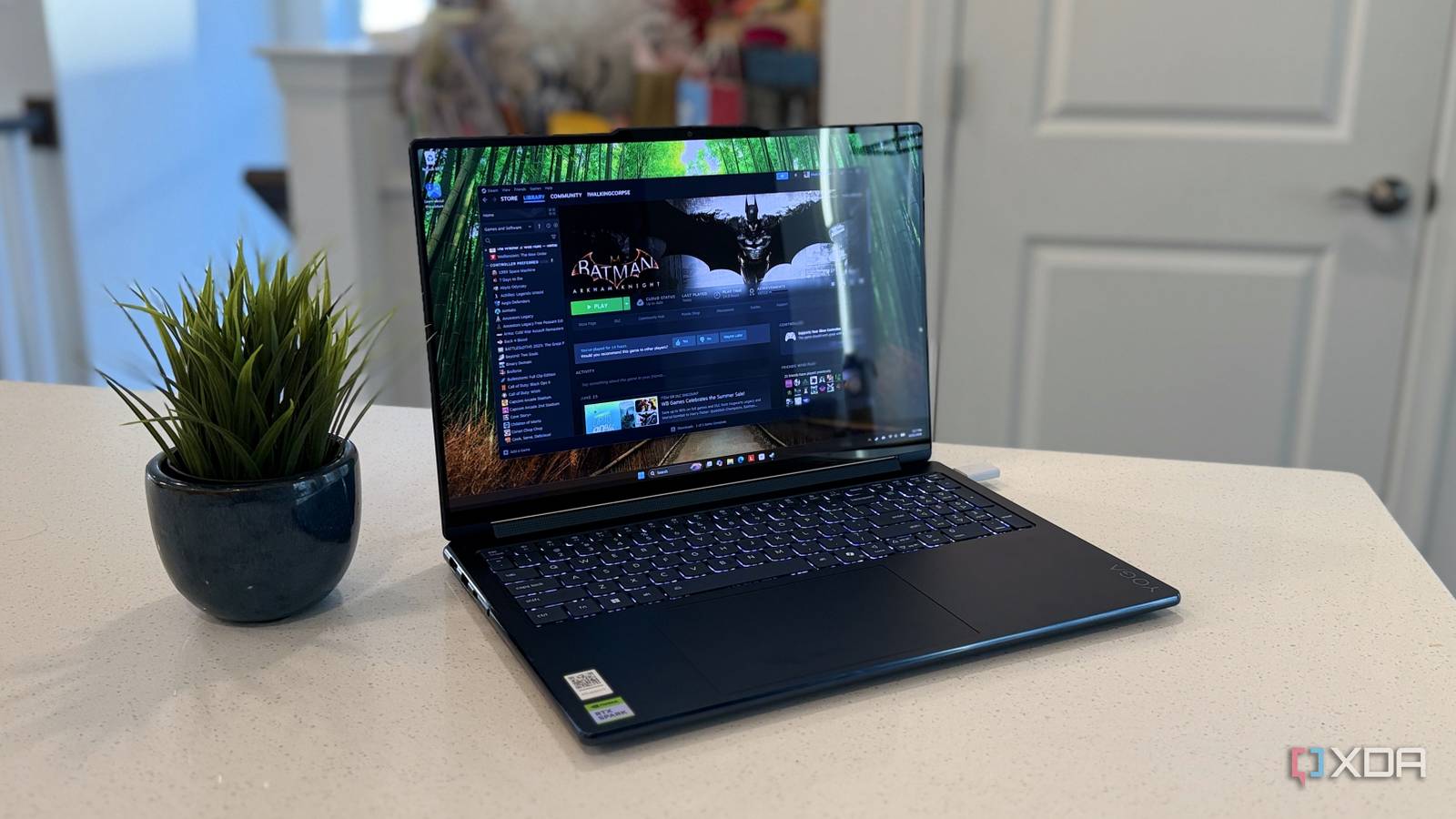
Published Oct 23, 2026, 8:30 AM EDT Maker, meme-r, and unabashed geek, Joe has been writing about technology since starting his career in 2018 at KnowTechie. He's covered everything from Apple to apps and crowdfunding and loves getting to the bottom of complicated topics. In that time, he's also written for SlashGear and numerous corporate clients before finding his home at XDA in the spring of 2023. He was the kid who took apart every toy to see how it worked, even if it didn't exactly go back together afterward. That's given him a solid background for explaining how complex systems work together, and he promises he's gotten better at the putting things back together stage since then. When Nvidia launched RTX Spark at Computex, Jensen Huang promised it would run "every single application that Windows has ever run." That's a bold claim, even for a chip meant to give Windows on Arm the boost it deserves, because games have always been the platform's weak spot. I already know it's going to be a beast for local LLM use, but that's not everything we use our computers for. I've already watched the laptop pass most of my anti-cheat tests, but I wanted to know how deep the back catalog really goes. So I dug through my Steam, Epic, Ubisoft, EA, and Xbox libraries, all 3,000 games or so, and picked one game from every year since 2006. Twenty-two games later, a few things went sideways. Just not the things I expected. I tested 22 games spread over 20 years, and all of them worked on Arm The 32-bit and DX9 era held up better than I expected I've played a lot of games over the decades, and I like being able to revisit some of my favorites every so often. That's not always easy, because dropped support for things like PhysX or other instruction sets means that the older a game gets, the harder it is to run on modern hardware. Emulators fix that problem by pretending to be the console or hardware in question, and that's kind of how Windows on Arm handles non-native apps and games. I picked a representative set of games from the last two decades, with as many different game engines, DirectX versions, and specific gotchas as I could manage. Yes, I ran three games from 2015, because Metal Gear Solid V uses a game engine that nothing else on the list has. The Witcher 3 turned 10 and got a major update, and Arkham Knight was so bad at launch it was taken off the market. If anything was going to stress the Prism translation layer, it was this list, and it didn't even shrug. Year Game Result 2006 Company of Heroes ✅ Runs (2006-era controls aside) 2007 BioShock (original) ✅ Runs 2008 Fallout 3 ⚠️ Runs. .NET error on first launch 2009 Mirror's Edge ✅ Runs. PhysX effects work, holds 62 fps cap; EA App re-sign-in 2010 Civilization V ✅ Runs (DX11, Mongol scenario) 2011 Portal 2 ✅ Runs, physics intact 2012 Far Cry 3 ⚠️ Runs. .NET error on first launch 2013 Tomb Raider ✅ Runs perfectly 2014 Alien: Isolation ✅ Runs 2015 The Witcher 3 ✅ Runs (next-gen, DX12 only on this install) 2015 Batman: Arkham Knight ✅ Runs 2015 Metal Gear Solid V ✅ Runs 2016 Doom ✅ Runs (Both OpenGL and Vulkan) 2017 Prey ✅ Runs 2018 Shadow of the Tomb Raider ✅ Runs 2019 Red Dead Redemption 2 ✅ Runs, launcher clean 2020 Cyberpunk 2077 ✅ Runs. RT Low, 2880x1800, no FG: 49 fps (DLSS Auto), 41.78 fps (DLSS Quality) benchmark; 35 fps gameplay 2021 Deathloop ✅ Runs (Game Pass); defaults to 1080p 2022 Elden Ring ✅ Runs, online with EAC and offline 2023 Alan Wake 2 ✅ Runs (Render Resolution on Balanced) 2024 Satisfactory ✅ Runs 2025 Doom: The Dark Ages ✅ Runs (Game Pass) I pulled some deep cuts from my gaming history here, but I probably could have gone back further. Every game I thought might have issues ran, even the demanding ones. The only minor hiccup was Microsoft's fault, with removing .NET 3.5 from Windows 11 on the build that Windows on Arm uses. A quick download from Microsoft later, and that issue wasn't an issue anymore. Both Far Cry 3 and Fallout 3 wanted that .NET version before they would install the DirectX files needed. Fallout 3 also has an issue with crashing on multicore CPUs, so the 20 cores on the Arm CPU in this laptop might have been an issue. It seems that when everything is emulated, that doesn't matter. I thought PhysX in Mirror's Edge would be a problem, but it turned out not to be. DirectX 11 games all ran fine, even the famously broken Arkham Knight. Sure, a decade of patches fixed that, not the Arm translation layer, but it just goes to show that the games I thought could be a problem weren't. Whether using obscure game engines or industry standards, the RTX Spark held up its end of the equation and things just worked. Note that the only games I really ran any benchmarks on were Cyberpunk 2077 and Shadow of the Tomb Raider. Both of these have good in-game benchmarks, and I wasn't looking for optimizing frame rates or anything in these tests. Most games ran well over 30fps at the 2880x1800 native resolution at the highest in-game settings I could set. Alan Wake 2 and Cyberpunk 2077 were the only two that were closer to the 30 fps mark, but each of those is a system cruncher, and I could have lowered settings to get a smoother experience. The few problems I had (mostly) weren't Arm's fault Windows 11 26H1 dropped .NET 3.5 but you can still install it Windows 11 26H1 dropped .NET 3.5, which made a few games nag about it on launch. Note that it didn't stop the games from launching, and the other prerequisites all installed as expected. Some other era-specific issues included games loading in windowed mode, like Company of Heroes, or Mirror's Edge requiring me to sign in to my EA account again as a license check, or Deathloop and a couple of others launching at 1080p or below, probably because they didn't recognize the hardware they were running on. None of this was Arm-specific, it's all Microsoft platform changes or the quirks of running older games. I expected more troubleshooting, to be frank, especially on the older titles. Far Cry 3 ran better on emulation than on my RTX 5090 desktop After I sorted out the .NET issue with Far Cry 3, I drove around a bit on an ATV and thought the frame rate was a little sluggish in the low 40fps range. As a sanity check, I installed it on my desktop PC, with an AMD Ryzen 7 9850X3D and RTX 5090, and put the same in-game graphics settings. At 1440p, I only got 28 fps, and it took dropping all settings to low to get over 50 fps average. I expected emulation to be the weak point, and these tests to show some semblance of losing performance, but I never would have thought that some games would perform better. Emulation cost less than I expected it to Even on demanding titles The Prism translation layer turns x86 into Arm64 instructions, and the 2025 update added AVX/AVX2 to the mix. That's crucial for modern game engines, and GPU-bound games lose little in the translation. CPU-bound games like the RTS genre or Satisfactory are supposed to lose more, but I didn't notice any struggle in the scenarios I tested. I'm sure they could suffer if there are a lot of units on screen, etc, but that wasn't the case in the half hour or so I tested each title. Things that I didn't expect to work actually did, like the PhysX effects in Mirror's Edge. I'd forgotten that when Nvidia removed support for 32-bit software on Blackwell, they added specific support for that game and a handful of others that would have otherwise needed to rely on CPU-based PhysX processing. Most multiplayer titles worked as well With a few big exceptions Elden Ring has Easy Anti-Cheat baked in, because multiplayer invasions could be rife for cheating. Or, at least, if you play with online set up. That worked well on RTX Spark, and I didn't notice any difference between playing on x86 or on Arm. That's not the only anti-cheat system that works, either, with Destiny 2 working, as is Fortnite, CS2, and Marvel Rivals. The big names missing from that list have all pledged to get their anti-cheat working on RTX Spark, so expect Call of Duty, Valorant, Delta Force and Battlefield to work at some point in 2027. At least, that's the plan. We all know timelines can shift, but the future looks good for Windows on Arm. Nvidia's 'every Windows app' has mostly held true for games Playing games from my back catalog has never been easier. I went into this expecting headaches, and finished my testing with a big grin from being able to play things that I've not played in years. It's not perfect, and the GPU cores are doing a lot of heavy lifting to prop up the relatively weak Arm cores, but things run. My controllers work. My gaming mouse works. Old games work. New games work. Everything works, except for a few multiplayer anti-cheat systems that are supposed to work at some point in 2027. And it's quiet while playing; sure, the fans ramp up, but it's not wind-tunnel-level noise like every gaming laptop. This could well be the everything laptop. It's just a shame component prices have made them more expensive than most people would want to spend. Lenovo Yoga 9n 2-in-1 CPU Nvidia RTX Spark N1X 18-Core or 20-core GPU Up to 6,144-core GPU The RTX Spark-powered Lenovo Yoga 9n is a powerhouse for gaming.
I tested a game from every year since 2006 on Nvidia’s RTX Spark, and Arm wasn’t the problem
Full Article
Original Source
Read the full article at Xda-developers →KhanList aggregates and links to publicly available news content. We do not host full articles from third-party sources. Always verify important information with original sources.