
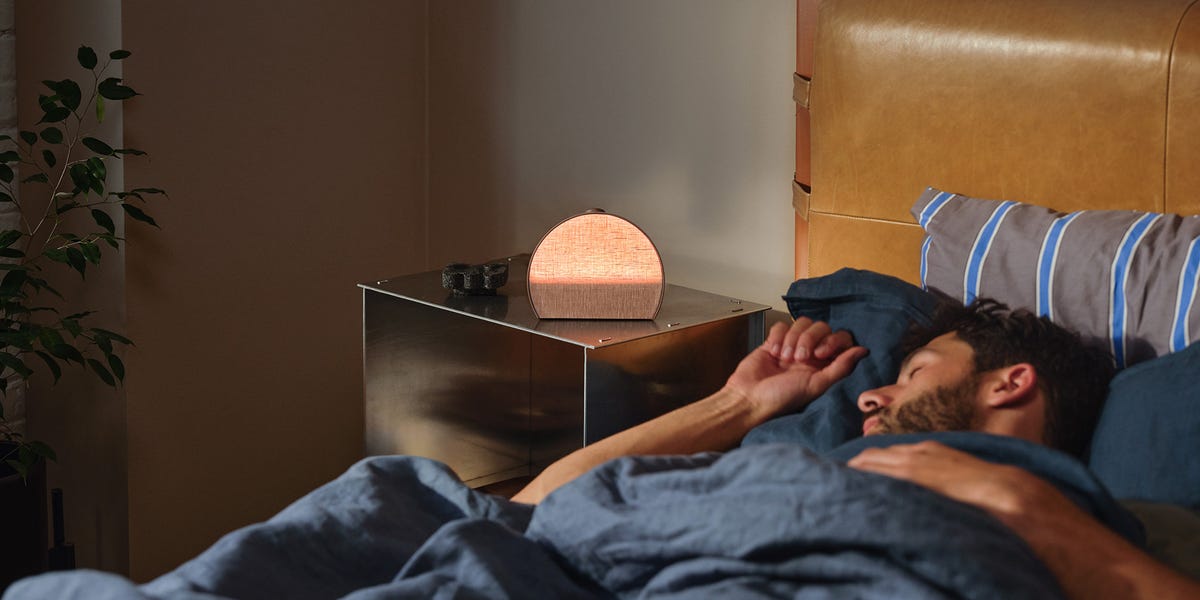
Hatch5 min readAs a bad sleeper—notoriously bad among my family and friends—I’m game to try just about anything in the name of better-quality rest. I, like Esquire editor Chris Hatler, have done the entire run-around of trying to get some decent shut eye. Cheap mattress to make me less anxious, expensive mattress to help my body rest—none of it has really worked except for my little sunrise alarm clock-slash-white noise machine.The main problem is that my white noise machine gets me to sleep, but it doesn’t help me track anything. I can’t exactly figure out what my problem is once my brain turns off. I have tried wearing my smartwatch or smart ring to bed. I absolutely hate it. As a side sleeper, the watch is so uncomfortable, and I find myself fixating on the feel of the ring just as well. If I had a few grand to spend on an Eight Sleep, the pinnacle of sans wearable biohacking and health-tracking sleep tech, none of this would be a problem. But, if you can believe it, writers don’t make what they used to. That means getting an affordable tracker that is not a wearable has been tough, and I don’t have any data that could actually improve my sleep habits or that could be shown to any sort of sleep specialist.The answer to my insomniac prayers—I would say dreams, but I can’t get good enough R.E.M. sleep for that—has come from a familiar company. Hatch makes that sunrise alarm clock I already used, and it has branched out into sleep tracking with a new “Sleep Clock” that purports to measure and quantify sleep based on the movements it measures while you sleep from its perch on your nightstand. If that sounds too creepy and sci-fi, it’s not. It’s basically how sleep-tracking apps have worked for about a decade now. But I think Hatch, by combining it with a sunrise clock, has found the perfect formula.ProsTracks sleep data without a wearableSunrise feature is a gentle way to wake upAmbient noises, podcasts, and audiobooks can be programmed for a wind-down routineStylishConsRequires a monthly subscription to access all featuresNeeds access to an app to control most of the settingsIt’s Tracks Sleep With SoundAdmittedly, I was worried that there were going to be cameras in this. When I was hearing murmurs pre-release, I thought it was going to be a “watch my every move,” situation. That’s not the case. It’s listening—for the rustle of the bed, sounds of tossing and turning, and differences in your breathing. It was easy to set up. It needs to sit level with your mattress and within four feet of your bed. Once you press the large button on the top of the device, it will turn on sleep tracking. It has to be activated manually this way, so you can freely move around your bedroom in the daytime without fear of being tracked. During setup, you’ll also be able to indicate if you’re sharing a bed with another person, or even a pet, so it won’t inadvertently track something like my cat’s nightly get up, go out, come back routine.Then, once it collects data for several days, it learns your markers, can start telling you how you slept, and starts to offer advice on how to create a better sleep routine. I’ve only had this about a week, and have been dealing with jet lag, but so far it’s main recommendation has been telling me to go to bed earlier. It’s like it’s in cahoots with my doctor...maybe my parents.While it doesn’t gamify your sleep by providing a score like the Oura ring—honestly that’s fine, because my body will tell me how well I did or did not sleep—it does encourage better habits with daily prompts. It can also tell how long it took you to fall asleep or spent doomscrolling in bed, and just seeing the raw numbers is enough to quantify things for a sleep specialist, should you need to go down that route.In the example below from my app, you can tell it was twenty-three minutes before I put down my phone and dozed off. It will begin to give you tips on what to listen to, what time to go to bed, what quality of rest you’re actually getting, and if it’s improving.Angel MadisonA sample of a recent nightly report of mine. (Now you see why I need this thing.)For $250, What Does It Do Besides Tell Me to Go to Bed Earlier? While I got the original Hatch to help me get out of bed, I’ve found over the past year that what I like most about it is how it helps me fall asleep. The smart alarm clock uses an app that’s filled with things like peaceful music, audiobooks, and podcasts designed to help you wind down. The features I use most are the ambient music tracks (obsessed with one called “French Stream”), and the color-changing light. After several months, my brain knows that when the lamp turns to the calming blue color, it’s time to go to sleep. I’ve thought about how this might just be an effective use of a Pavlovian response, which doesn’t matter because if I’m a lab rat, at least I’m one that gets better sleep.The star feature for all Hatch clocks is the sunrise alarm, which starts a gentle glow a few minutes before your desired wake-up time, so your body can more easily adapt to the idea of getting out of bed. On days when I’m extra restless, or wake up in the middle of the night, I try one of the pre-programmed meditations to help me get back to sleep.Angel MadisonMy customized routine with a suggested bedtime, rise time, and playlist.A Few Need-to-KnowsThe Hatch app requires a monthly subscription cost of five to six dollars, fifty dollars billed yearly. Each clock comes with a 30-day free trial, and after that, you can continue to use the clock without the app, but the functionality is much more limited (no custom sounds, no data tracking, light routines, and so on).It initially connects with your smartphone or tablet via WiFi. Once you’ve got your routine set up, you don’t need to fiddle with your phone or even keep it in the bedroom at night. The large button on the top of the clock controls the majority of the features, including turning it on and off, and the volume. In my experience, it’s easy to find with my eyes closed when I’m trying to hit snooze.I’ve still got work to do to improve my quality of rest, but it’s not like I don’t have the data to help myself. Years’ worth of bad habits die hard. But in the time I’ve been using the original Hatch, I’ve found myself a lot calmer about falling asleep, and by leaving the ambient noise on all night, it helps drown out noises from the nearby train and hospital that used to keep me up at night. The added features on the Sleep Clock make it even more valuable if you want to track your stats without having to put on a wearable every night.$250 at Hatch
I Tested a $250 Alarm Clock for People Who Hate Sleep Trackers
Full Article
Original Source
Read the full article at Esquire →KhanList aggregates and links to publicly available news content. We do not host full articles from third-party sources. Always verify important information with original sources.