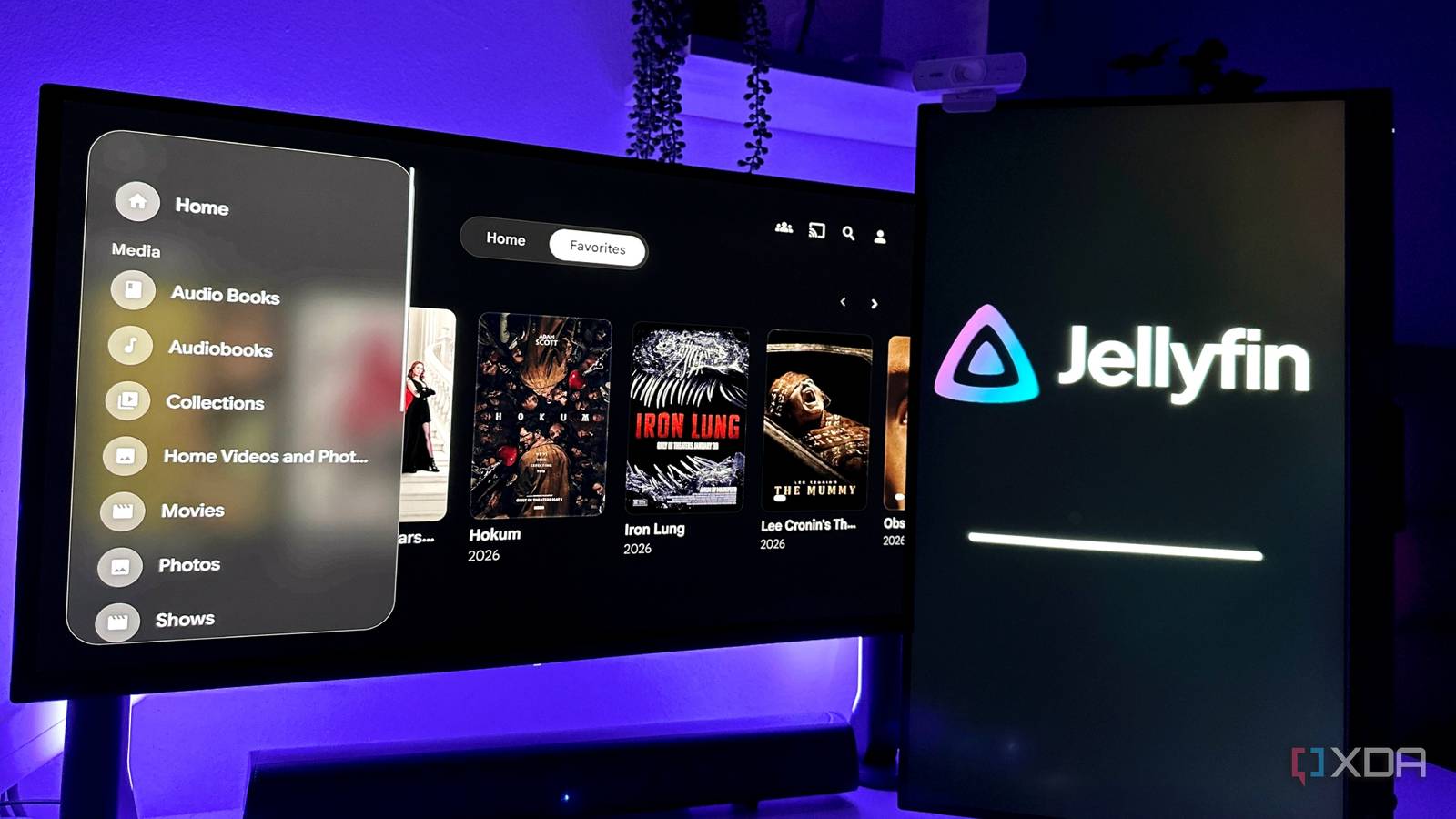
Published Jul 29, 2026, 3:00 PM EDT Gaming has been Samarveer’s greatest passion, and the Literature graduate in him takes immense joy in dissecting games for their themes, messages, and impact. Samarveer holds a deep appreciation of gaming, and considers the platform to be the most immersive and impactful across all media. He can be found engaging with gaming communities online, always ready to debate the finer points of ray tracing or itching to write an 8-page collegiate thesis on any game that impacts him emotionally. After years of using Plex, I caught the "true" self-hosting bug early this year and shifted over to Jellyfin for good. It took a while to truly get used to doing a lot of the busywork myself, but there's nothing quite like having your media library completely independent and under your control. It's Jellyfin's absurdly robust plugin library that really gives it its reputation, and the sheer amount of freedom it brings. Jellyfin plugins give users features that Plex either charges for or simply doesn't offer at all. Home Screen Sections is what you need if you miss Netflix A homepage that belongs to you Plex has always treated its home screen as something you can organize, but not redesign. It makes sense, too, since it's a commercially available product with a single company behind it across a multitude of platforms, operating systems, and devices. Jellyfin, on the other hand, isn't bound that way, so its plugins let you change any part of it you want. The Home Screen Sections plugin lets you decide which libraries appear first. While you're at it, you can also hide sections you rarely ever use (or that your friends do but you don't). Reordering rows and pinning favorites lets you build a homepage that you're happy to use every time you open the Jellyfin app. Installing this plugin genuinely made my server feel less like generic software and more like it was my media server. The Skin Manager plugin is personalization done right Nothing says open-source more than ridiculous amounts of customization One of the biggest reasons I've stuck with Jellyfin ever since moving to it is that it doesn't really force everyone into the same visual experience. The Skin Manager plugin lets you completely change the server's appearance with community-made themes, whether you want something cleaner, darker, more colorful, or even closer to Netflix. I've also used CSS code manually via the Branding page. I've set the server-wide look to a Plex-like theme with gold and dark hues for my partner, while on my own account, I've disabled server-provided custom CSS code, meaning I can drop my own lilac theme into my profile, while everyone else still sees the gold. CSS theming only fully reaches web-based clients that embed the Web UI — browsers, Jellyfin Media Player, the Android app. Native TV apps usually use their own UI or only partially support CSS themes or per-user CSS edits. Of course, you'd have your work cut out for you while browsing through different themes and skins, simply because being open-source and community-driven does mean that there are some rather unimpressive skins to scroll past, too. However, when you do finally find something that matches the rest of your living room setup like I did, the satisfaction is immeasurable. Plex offers a polished design, and we all know that, but it also severely limits our options. Jellyfin, on the other hand, lets you personalize the experience to a ridiculously granular level, making your server feel like something you've genuinely built with your own two hands. JavaScript Injector is how you can take total control Add features Plex would never allow This is where Jellyfin's open-source DNA really starts to shine. JavaScript Injector lets you load custom scripts that modify the web interface, opening the door to features that the developers never intended. One of my favorites adds a comment section beneath movies and TV episodes, turning the server into something friends and family can actually interact with instead of just stream from. The possibilities, however, go far beyond just comments. The community has built scripts that tweak layouts, improve navigation, automate interface changes, and generally make Jellyfin work exactly the way you want. You could even try your hand at a few vibe-coded scripts, depending on just how open you are to breaking your server for a while. We keep mentioning how Plex is polished, but it's also heavily controlled (rightly so — it's a product). Jellyfin's lack of tight control over the user experience is precisely why it's so exciting, and if you enjoy tinkering, the JavaScript Injector plugin unlocks a level of customization that Plex simply cannot compete with. A small upgrade, but it will feel surprisingly premium Media Bar is a plugin that hasn't radically changed my Jellyfin. And yet, it's a crucial, non-negotiable plugin I install on every single server I set up, simply because it makes the entire interface feel just a little more expensive. It adds an attractive information bar around featured content that gives browsing a polished, modern touch and reminds you of premium streaming platforms. The difference is subtle, but once I installed it, going back to the default layout will make your server feel unfinished. Media Bar does require a good theme, though. Select one, and then combine it with the plugin to make your server start looking like something you'd actually pay good money for. It's this plugin that really comes close to making Jellyfin look just as polished as Plex. Clearly, with the right plugin, theme, and skin, Jellyfin can look every bit as premium as Plex. HoverTrailer feels premium and saves you a ton of time Netflix-style previews without leaving Jellyfin When I was first recommended HoverTrailer, I couldn't find much of an interest in it. It wasn't until I began using it that I realized just how effective it could be in helping me decide what I want to watch as the plate of food threatens to go cold in front of the screen. Instead of opening every movie, just hovering over it plays its trailer, immediately helping me decide if I'm feeling up for its level of sound mixing, dialog quality, or action direction. There's always something about a Jellyfin server on a screen that makes it feel just a tad more lifeless than Plex, Netflix, or Prime. However, HoverTrailer really changes things and makes the entire library feel alive, especially on a big TV. HoverTrailer has also made discovering forgotten movies much easier. If I've got a movie I bought and ripped to my server years ago and have forgotten about, this plugin reminds me immediately why I wanted to watch it in the first place. By far its biggest advantage, however, has been apparent on movie nights. Every time I hover over something new I'm trying to make my partner watch with me, I don't have to switch apps, sit through the loading time between apps, or show her the trailer for the movie I'm trying to pitch to her. HoverTrailer simply plays the trailer right there in the Jellyfin interface itself. It doesn't help improve her pickiness, but it sure helps us decide what to watch faster. Jellyfin iOS compatible Yes Android compatible Yes Desktop compatible Yes Jellyfin is one of the best Plex alternatives you can get, and that's thanks to its open-source nature and powerful set of features. There are apps for basically every platform and it's completely free to run your very own server. Clearly, the best parts of Jellyfin aren't built in Plex has some very real and undeniable benefits over Jellyfin. The latter, too, one-ups Plex on occasion. Its biggest advantage is that Jellyfin does not have to stay the way it shipped. The community constantly builds new plugins, themes, and scripts, and through them, your media server keeps evolving. There's no waiting to see what the next update from a company will bring, hoping it looks or works the way you want. That's why I think considering Jellyfin "just a Plex alternative" is a disservice to what it really is. It's a platform you can mold the way you want. At a whim, I can make my interface cleaner, add more complex functionality, or even add festive themes depending on the calendar. No closed ecosystem can ever really replicate that, and that's why I can't see myself switching back to Plex anytime soon.
I switched from Plex to Jellyfin for the plugins, and my media server finally feels like it's mine
Full Article
Original Source
Read the full article at Xda-developers →KhanList aggregates and links to publicly available news content. We do not host full articles from third-party sources. Always verify important information with original sources.