
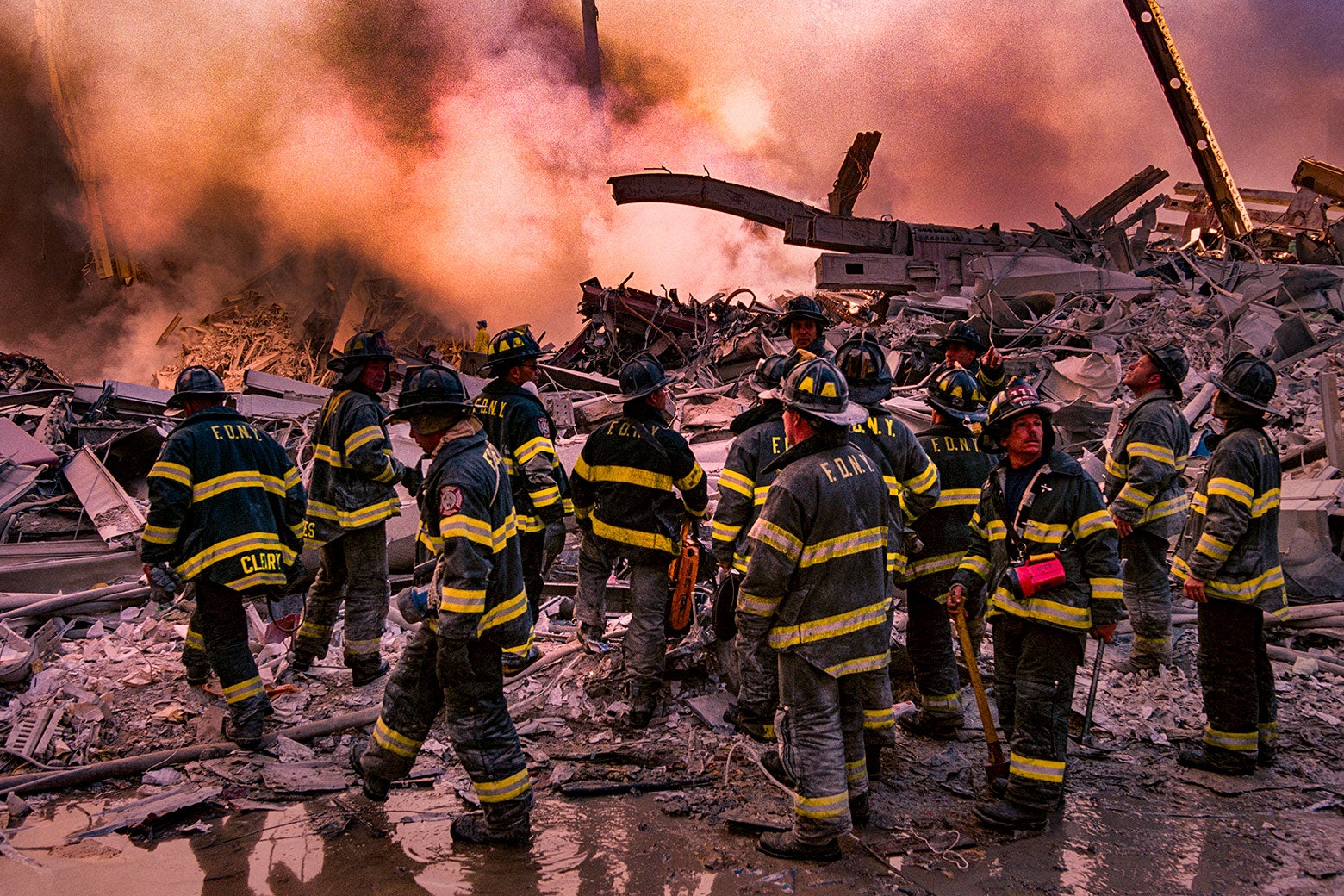
Medical Examiner Toward the end of the study, we received an email thanking us. Peter Turnley/Getty Images Sign up for the Slatest to get the most insightful analysis, criticism, and advice out there, delivered to your inbox daily. When I was 5, we’d often visit my grandparents on the weekends. Their small apartment filled quickly with my father’s siblings—my aunts and uncles—and their children, my cousins. The adults would engage in animated conversation, usually about current events, while we, the dozen or so kids, kept ourselves busy inventing games. Our favorite games unfolded beneath the dining table; at times, we transformed it into a bus, traveling to unfamiliar places, as we took turns playing different roles: the driver, the passenger, and the ticket officer. As I began to understand the relationships among so many people, I started to wonder about the extended family of the adults. It did not make sense to me that only children had aunts, uncles, and cousins. One day, I asked my father, “Do you have cousins?” “I had cousins,” he replied, looking at me in a way that told me I could ask no more. Over the next few years, I began to form vague ideas about the other members of our extended family. I was not sure whether they were bad people or whether something bad had happened to them. I knew there were others; I just did not know who they were or where they were. Another fragment of information appeared when I was not yet 8 years old. One day, I saw my older sister carefully burning the edges of a blank notebook. The scorched pages would soon be filled with stories of mass destruction of human life. “It’s for a class on the Holocaust,” she explained. “We’re learning about what happened to Jews in Europe.” Intrigued by this information, I borrowed a book about the Holocaust from the school library. When I brought it home, my mother asked me to return it immediately. She insisted that I was too young. I told her that the librarian believed it was appropriate for my reading level. My mother frowned. “You should not read it,” she said. “You need to be older to deal with this.” I insisted I could handle it, that I could withstand sadness. But I could not. I found a place to hide, where I could read and cry. I longed to speak to my mother about it, but I kept my feelings from her and stayed silent. I grew up to be a cognitive neuroscientist, and these memories resurfaced recently during my research on the transmission of trauma across generations. Following the 9/11 attacks, many responders spent extended periods at the World Trade Center site. Some witnessed the collapse of the towers, while others searched through piles of debris for human remains. In the years after, close to 20 percent struggled with post-traumatic stress disorder. My colleagues and I set out to learn how this PTSD had affected the children of these workers. What happens to a child who grows up with a parent struggling with the consequences of profound trauma, and what does it mean for the child’s well-being? Two decades after the attacks, we contacted these parents and asked them to connect us with their now adult children. We planned to assess both generations across domains of emotional, social, and everyday functioning. We anticipated logistical challenges and ethical complexities, including potential trauma reactivation and our inability to provide clinical care. What we did not anticipate was the hesitation we received from some parents. Although willing to participate themselves, they did not want their adult children involved. Some offered no explanation. Others said their children had nothing to do with the trauma of Sept. 11, that they preferred not to discuss it with them. A few were explicit: They wanted to protect their kids from their memories of the attacks. Hearing this, I began to question my own childhood experiences. Were my parents trying to spare me, as a young child, from learning about human atrocity, or was the Holocaust, and the damage it had done to our family, too difficult for them to confront? Research has consistently shown that parents often hesitate to share their traumatic experiences with their children. They seek to shield them from fear, from emotional burden, from a premature loss of innocence. Even after children reach adulthood, parents may continue to see them as needing protection, rather than as capable of confronting difficult truths. This pattern has been well documented among Holocaust survivors, many of whom believed that silence would allow their children to grow up “normally.” Yet children often sense the emotional weight regardless, even when the story itself remains unspoken. In our study, the children had lived through 9/11. Most had grown up in New York City. They knew what had happened. What seemed difficult for parents was not sharing the facts but revealing their own vulnerability. To speak of trauma is not only to recount an event; it is also to expose fear, helplessness, and loss of control. For some, this may conflict with the image they feel compelled to maintain as parents, as strong people who can protect those they love. And yet, children often yearn to hear about their parents’ past, including memories of trauma, particularly as they become adults. Understanding their parents’ experiences can bring coherence to family dynamics. Children can, at times, sense their parents’ trauma surfacing in seemingly unrelated interactions, when Mom loses her temper or Dad goes silent. Knowing what the parent is struggling with can offer a path toward empathy and repair. For families in which trauma remains unspoken, silence can become a pattern, one that risks extending across generations. Resilience, perhaps, is not only the capacity to endure but also the willingness to acknowledge pain and give it language. Our study did not require parents and children to interact directly; it was an online, remote survey that each person completed separately and independently. Nevertheless, the mere fact that their children would participate in a study examining the consequences of their 9/11 experiences appeared to evoke concerns among some parents. They may have recognized that participation could prompt questions or conversations about Sept. 11 that they had not previously had or did not wish to have. They may have sought to avoid exposing or reopening painful memories. Toward the end of the study, I received an email from one of the participating parents. He thanked us. He wrote that his family had never spoken about what 9/11 meant to them, but that the study had created an opportunity to do so. They had spent time together reflecting on those days. He admitted that he had not realized how deeply his children had been affected by the event itself and by his experience of it. The opportunity to speak and to share, he wrote, had been profoundly meaningful. Over the years, I have come to understand that we learn our parents’ histories slowly, often in fragments, and sometimes only in retrospect. What is not said can shape us as much as what is spoken. I think back to my father’s brief answer, “I had cousins,” and hear it differently now. As children, we sense the edges of these silences without fully grasping them. As adults, we begin to recognize them for what they are: traces of lives lived before us, of losses and experiences that continue to echo across generations. If resilience defines us, it may lie not only in what we endure but in our growing willingness, over time, to listen, to ask again, and to make space for what was once too difficult to say. Children Family Mental Health Research Sept. 11
I Studied the Impact of Parents’ 9/11 Trauma on Their Children. Then I Understood My Father’s Silence.
Full Article
Original Source
Read the full article at Slate →KhanList aggregates and links to publicly available news content. We do not host full articles from third-party sources. Always verify important information with original sources.