
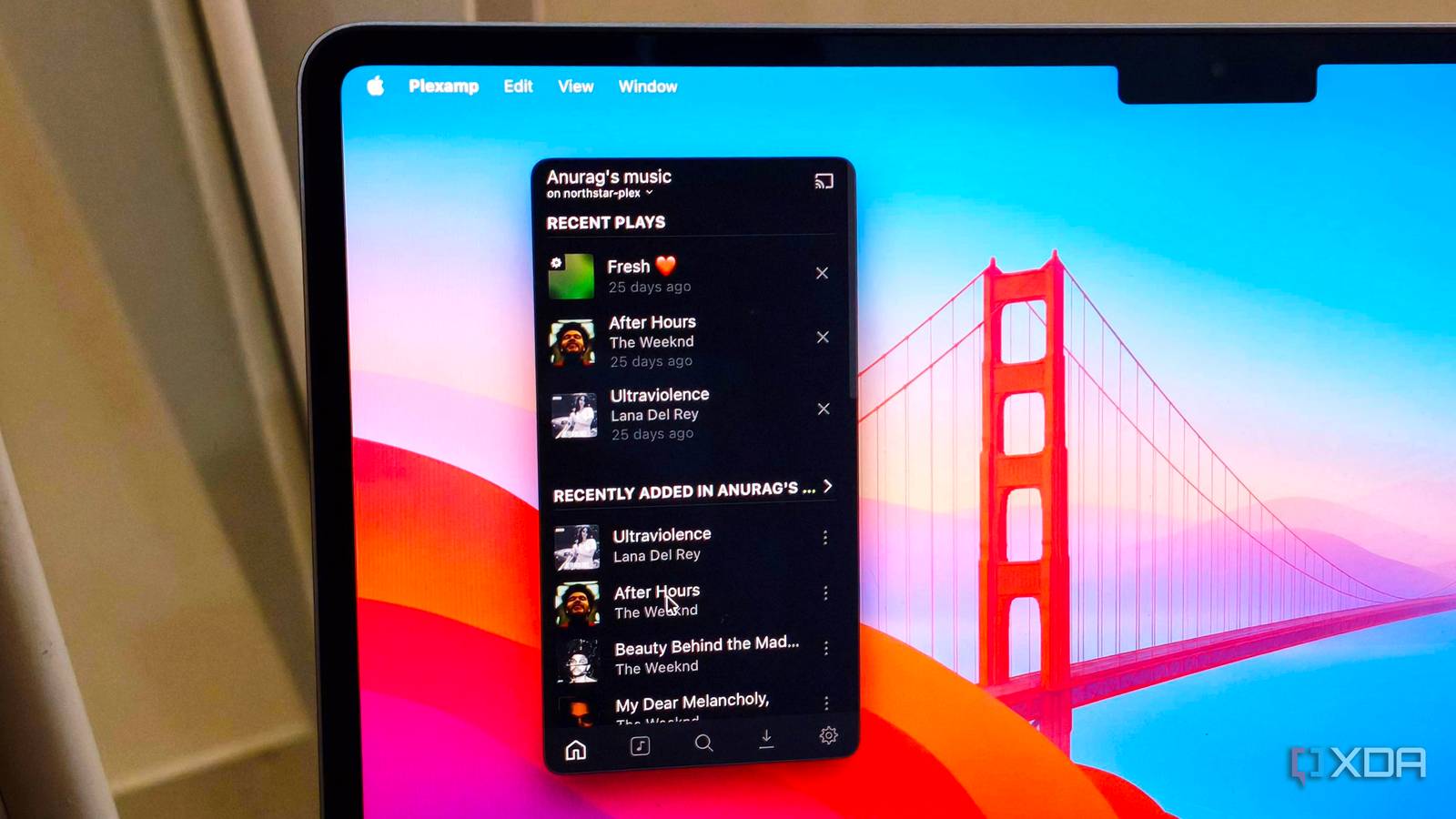
Published Nov 18, 2026, 6:00 PM EST Anurag is an experienced journalist and author who’s been covering tech for the past 5 years, with a focus on Windows, Android, and Apple. He’s written for sites like Android Police, Neowin, Dexerto, and MakeTechEasier. Anurag’s always pumped about tech and loves getting his hands on the latest gadgets. When he's not procrastinating, you’ll probably find him catching the newest movies in theaters or scrolling through Twitter from his bed. I've been paying for music streaming services for years, and at one point, I realized that despite listening to thousands of songs, I didn't actually own any of them. I wanted to change that, so I stopped using streaming services for a month and started building my own music library. I already had a home server, so I figured I could buy and download my favorite albums, organize them, and use Plexamp to listen to them across my devices. It sounded straightforward enough. After all, people bought and downloaded music long before Spotify came along. But I quickly discovered just how difficult owning music has become. I struggled to find some of the songs I wanted to purchase, spent hours organizing files and fixing metadata, and had to figure out how to recreate the conveniences I'd taken for granted with Spotify. Buying music shouldn't be this difficult Finding music to purchase takes effort The first challenge I ran into was figuring out where to buy my music. Spotify has pretty much everything I listen to in one place, but buying digital music is an entirely different experience. Stores like Bandcamp, Qobuz, and the iTunes Store still sell downloadable music, but none of them has everything. I had to check multiple storefronts to find a particular album, and some of the songs and albums I wanted weren't available to purchase at all. Bandcamp was one of the first places I checked, and I like how it lets you purchase music directly from artists and download it in formats like MP3 and FLAC. However, its catalog leans heavily toward independent artists, so I can't rely on it for everything. Qobuz has a much broader selection of mainstream music, including high-resolution downloads, but it doesn't cover every artist either. I also found myself checking the iTunes Store, something I hadn't done in years. Then there's the cost. Even if an album costs $10, buying just ten would set me back $100. I had to prioritize the albums I genuinely enjoyed and wanted to keep. I also had to pay attention to the formats I was purchasing. I wanted FLAC files wherever possible because they preserve the original audio quality, but not every store offers lossless downloads. Building my own music library was another challenge Plexamp made things a lot easier Once I had some music downloaded, I needed a way to organize everything and listen to it across my devices. I already had a home server, so I decided to use Plexamp, a dedicated music player that works with Plex Media Server. It lets me stream my personal music collection to my phone, laptop, and other devices, much like Spotify. I just had to create a music library in Plex, point it to the folder containing my music, and let it scan everything. However, getting my collection to look and behave like a proper music library required some work. I had files with inconsistent names, missing album artwork, and incorrect metadata. Plex could identify most albums automatically, but I still had to fix tracks that appeared under the wrong artist or album. I also had to organize my files into proper artist and album folders, especially when dealing with compilations and multiple releases from the same artist. Once I sorted that out, Plexamp was surprisingly good. It has a polished interface, supports lossless playback, and offers features like smart playlists, gapless playback, and radio stations based on my own collection. I can also access my music outside my home network, provided my server is running and I have a working connection to it. Streaming has completely changed how we consume music Owning music no longer makes economic sense Streaming services have completely changed the economics of listening to music. For roughly the price of a single album, Spotify gives me access to millions of songs for an entire month. I can explore new artists, listen to entire discographies, and discover music without spending anything beyond my subscription. Trying to build a comparable collection by purchasing individual albums makes absolutely no financial sense. You could spend hundreds of dollars and still end up with a fraction of the music you'd have access to through a streaming subscription. Record labels and distributors have increasingly prioritized streaming, and just because an album is available on Spotify doesn't mean you can purchase a downloadable copy. I struggled to find several albums I wanted, even after checking multiple stores. Some releases simply don't have an obvious, legitimate download option, no matter how much you're willing to pay. Of course, there's also the elephant in the room – the high seas. Not everyone who maintains a personal music library purchases albums through official storefronts. Unofficial sources have long existed, and they remain part of how people acquire music, particularly when certain albums are difficult to purchase or unavailable as digital downloads. It's an aspect of music ownership worth acknowledging, although I won't get into it here Plexamp
I stopped using music streaming for a month, and found out how difficult owning music has become
Full Article
Original Source
Read the full article at Xda-developers →KhanList aggregates and links to publicly available news content. We do not host full articles from third-party sources. Always verify important information with original sources.