
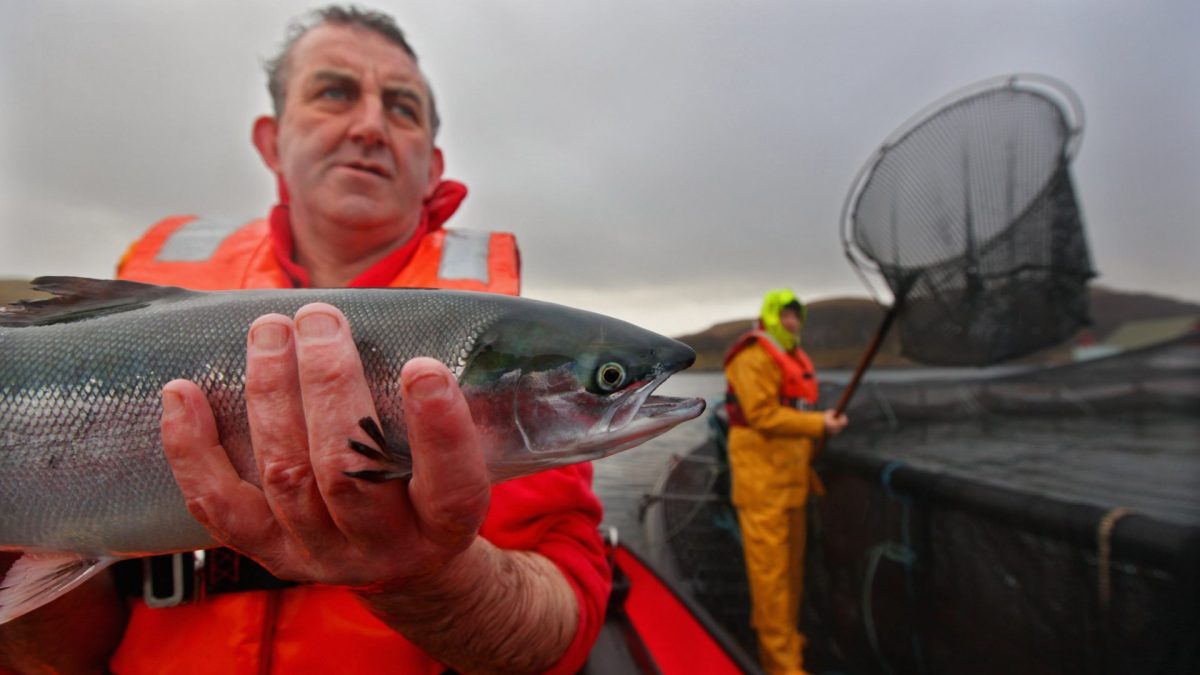
I am not a fussy or faddy eater, nor am I an eco-warrior, but about a year ago I stopped eating salmon. I was in northern Norway, and I had a chance encounter with a man who worked for the Norwegian Directorate of Fisheries, the body which manages the safety and sustainability of the nation’s fish stocks which represent Norway’s second biggest export, after oil and gas. He had very strong views on salmon farming, saying that the fish bred on highly intensive farms is neither good for us nor for the environment, and is effectively the battery farming of the marine world. Fish are kept at mind-boggling densities in cages at sea, and are prey to parasites and disease. Sea lice are a particular menace. They attach themselves to the fish, and the industry has to deploy an increasingly extensive arsenal of treatments to control them, including chemicals and pesticides. Animal welfare groups in the UK have released stomach-churning footage of the physical deformity sea lice inflict on the fish. Most farmed salmon is, my Norwegian friend said, as far away from organic as it’s possible to get, and doesn’t possess some of the nutritional benefits we imagine. This staple of the middle-class dinner party is better for you than, say, a Bernard Matthews Turkey Twizzler, but perhaps only just: supermarket salmon has a much higher fat content, and is thus more calorific, than wild varieties, while artificial pigmentation is sometimes used to give the flesh its rich, pink colour (farmed salmon naturally has greyish flesh).He then went on to explain the damage that escaped farmed salmon do to stocks of wild fish. Because salmon are bred on farms for rapid growth, they have physical traits that differ from wild salmon. When they interbreed with wild salmon, the resulting offspring have lower survival rates and reduced genetic fitness, weakening native populations. Last year, 75,000 salmon escaped from a farm in the Highlands, one of the most serious reported incidents of its kind. A spokesman for the Scottish Green Party said that “every escape adds to the pressure on our already depleted wild salmon populations”. Wildfish, a pressure group dedicated to the protection of fish stocks in the wild, warned that such escapes are not, in fact, rare, and that these occurrences “should be framed plainly as a strategic risk to a species now listed as endangered, not as an accounting footnote”. Scottish salmon farms reported more than 35 million fish deaths between January 2023 and October 2025, according to figures obtained by Animal Equality UK. So that’s why I don’t eat salmon any longer. And I’m pleased that my little one-man abstention is now in tune with wider thinking on the subject. The Soil Association, the body which certifies organic and sustainable standards in food production, has, according to The Times, ruled it will strip British farmed salmon of its “organic” status. This will give the industry, and consumers, pause for serious thought. Sales of salmon have increased threefold since 2000, and now represents a £1.5bn-a-year industry. So a focus on the conditions in which salmon are bred and kept poses a serious risk to producers, who point out, in their defence, that they put an affordable source of protein on supermarket shelves, contribute to our exports and provide rural jobs. Be that as it may, the opposition to farmed salmon is growing fast, and 120 chefs from 26 countries, holding between them 90 Michelin stars, have now signed up to a pledge to “keep ocean-farmed salmon off their menus unless changes are made to existing farming practices”. I am not suggesting that we should all give up eating salmon. But I wonder whether we should ask the same questions that we do when buying chicken, meat or dairy products. What is its provenance? How was it raised? Is it a natural colour? What is its exact nutritional value? Are there any artificial additives? And what was the environmental impact of getting it on to our plates? We have become so obsessed with the nutritional virtues of what we eat that we sometimes neglect the conditions in which it is produced. We need to recognise the gap between salmon’s healthy, nutritional image and the grim reality of intensive farming, and agitate for serious improvement in husbandry standards.
I stopped eating salmon a year ago. Once you’ve read this, so will you
Full Article
Original Source
Read the full article at Inews →KhanList aggregates and links to publicly available news content. We do not host full articles from third-party sources. Always verify important information with original sources.