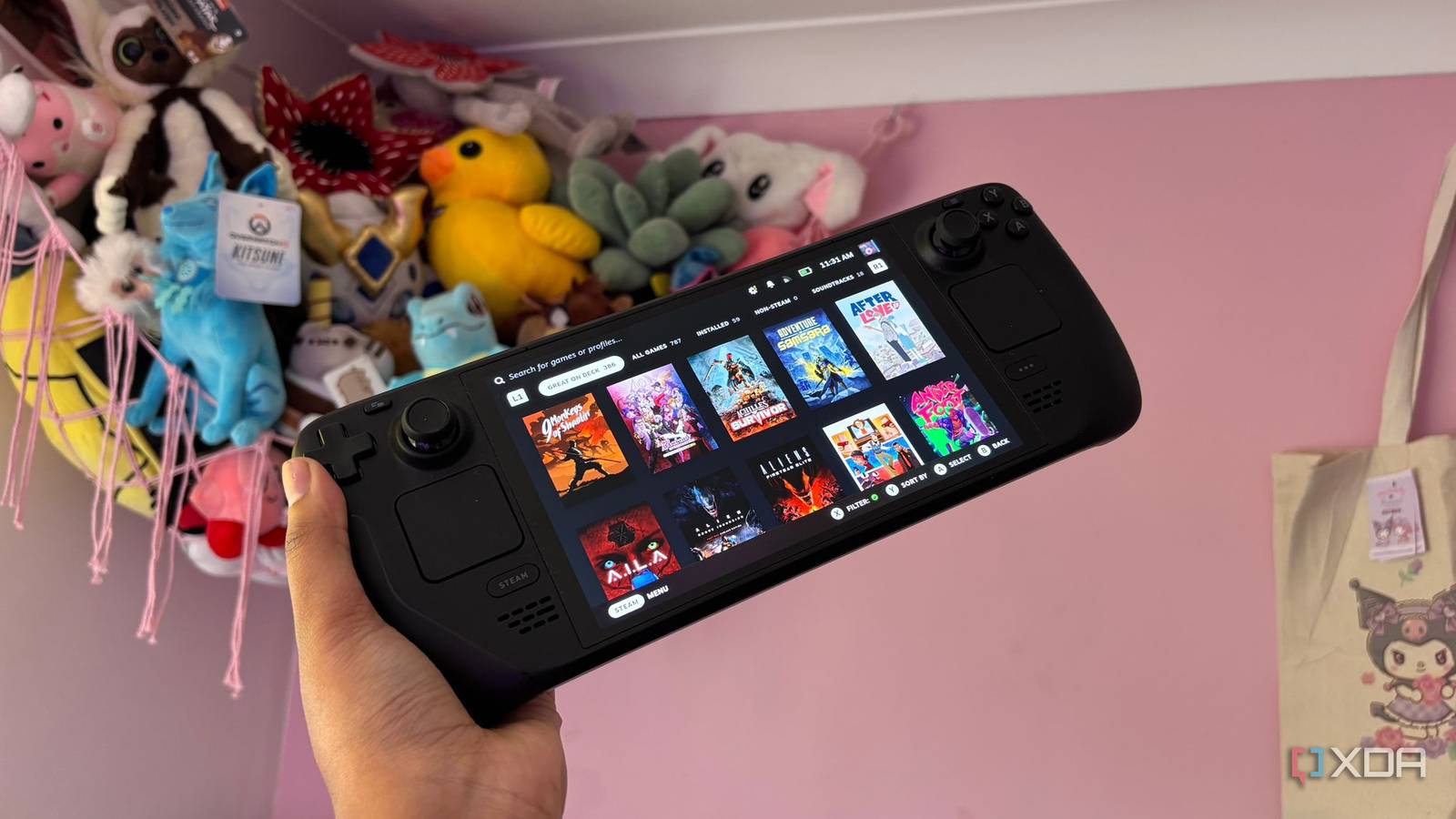
Published Jul 26, 2026, 2:30 PM EDT Jasmine is Software and PC Hardware Author at XDA with years of tech reporting experience ranging from AI chatbots right down to gaming hardware, she's covered just about everything. Whether it's breaking news about the latest AMD NPUs or creating video tutorials on social media platforms, Jasmine has contributed to the world of AI and tech in a variety of ways including interviewing the CEO of Razer, AMD's Director of Product Marketing and the VP of Lenovo. Passionate about gaming and PC technology, she has built countless computers, keyboards and other peripherals - knowing them inside and out. I've been gaming on a PC since I was about 10 years old, and PC gaming has never felt more like a relentless consumerist cycle than it does now. It feels like, to enjoy modern releases, you must periodically drop over $1,000 on new graphics cards, multicore desktop CPUs, and high-wattage power supplies just to keep up with ballooning system requirements. So I decided to pick up my Steam Deck, and it proved to me that the biggest barrier to enjoying PC gaming isn't your hardware's age. It's actually the industry's obsession with brute-force hardware performance over software optimization. By leveraging intelligent Linux translation layers, system-level frame caps, and low-resolution compositing, Valve's handheld breathes immediate mobile life into my otherwise untouched gaming backlog, proving that you don't need a high-end desktop to unlock your library's true value. PC gaming is a never-ending cycle of upgrading And components are rising in price Right now, PC gaming feels like a hardware arms race, and for the average gamer, their digital shelf is only growing larger. A massive, sprawling library, whether this is on Steam, GOG, or Epic, packed with hundreds of purchased titles that sit untouched, is all too common. The Steam Deck isn't merely a portable console but a quiet revolution against hardware obsolescence. It's a low-power 400 x86 handheld that fundamentally changes how we view performance and software value. So what makes the Steam Deck feel so magical? It's actually the software. Proton, which is Valve's compatibility layer built on Wine and DXVK, eliminates the heavy system background bloat of Windows. Rather than running raw Windows executables natively with high overhead, Proton translates a directory X calls to Vulkan on the fly, often running older and optimized games with smoother frame pacing than a high-end Windows rig. And the perk of this is that you aren't actually limited to the deck-verified illusion either. You don't need that green tick badge for a game to run flawlessly. Community tools like Proton DB prove that thousands of unsupported or unrated games in your back catalog play with minimal tweaking or community Proton GE builds. You can even take advantage of universal storefront aggregation. Open-source launchers like Heroic Games Launcher or Lutris bring non-Steam libraries from Epic Games and GOG under the same portable umbrella. This instantly mobilizes titles you picked up for free years ago or lets you access games you purchased on sale through other storefronts. The display is great And GameScope is even better Some may feel like the display on the Steam Deck isn't good enough. It's easy to start chasing 4K or even 1440p resolutions on a desktop, and this requires exponential GPU horsepower. However, on a 7-inch panel, a 1280x800 resolution yields a sharp pixel density at around 215ppi. This rivals high-end desktop monitors and looks absolutely flawless. This also means that a humble 15W system-on-chip delivers playable, steady performance simply because it isn't forced to push millions of unnecessary pixels that don't even make a difference to the display itself due to the size. You also get the benefit of system-level GameScope utilities. Valve's secret weapon is the GameScope micro-compositor. Instead of fighting in-game settings menus, users can cap frame rates like 40 Hz/40 FPS, apply global FSR upscaling, and tweak TDP limits directly from the Quick Access menu to make demanding games look crisp while still extending the battery life of their device. 'Unplayable' has changed 40fps is no longer 'unplayable' For a lot of PC gamers and enthusiasts alike, it's easy to label anything under 60fps on ultra settings as unplayable, but realistically, this isn't the case at all. On the Steam Deck, it feels like unplayable is a word that doesn't even exist. The engineering brilliance of the Steam Deck's 40hz/40fps target provides a golden ratio. Because 40fps sits at the exact mathematical midpoint in frame time (25ms) between 30fps (33.3ms) and 60fps (16.6ms), it delivers significantly smoother motion than 30fps while saving massive amounts of power over 60fps. While on a high-end gaming desktop 40fps might feel unplayable, on a Steam Deck it is completely different. It feels and looks completely comfortable to play. You can even breathe life into forgotten classics. Older AAA titles from the PS3/PS4 and early Xbox One era actually deliver a superior experience on the Steam Deck too. Games like Batman Arkham Knight, Mad Max, or The Witcher 3 run at high settings with rock-solid frame rates, feeling like they were custom-engineered for modern handheld hardware. Whether you're revisiting these old classics or playing them for the first time, the experience of playing them on the Steam Deck feels pretty flawless. Play your backlog It doesn't need to be ultra settings; it just needs to be played Right now, the gaming industry feels like it's keeping players perpetually behind on a hardware curve. The Steam Deck proves that the games you already bought years ago aren't obsolete. They were just waiting for an efficient, well-designed platform that respects your time and money. It's easy to stare at your unplayed Steam library backlog while waiting for next-generation graphics cards to drop in price. However, take a step back from your desktop for a second, and you will realize that enjoying games in handheld mode allows you to embrace the magic of Proton and 800p efficiency. The Steam Deck feels like the best gaming rig in the world because it actually lets you play the games you already own.
I stopped chasing RTX cards after realizing my Steam Deck runs my entire backlog better
Full Article
Original Source
Read the full article at Xda-developers →KhanList aggregates and links to publicly available news content. We do not host full articles from third-party sources. Always verify important information with original sources.