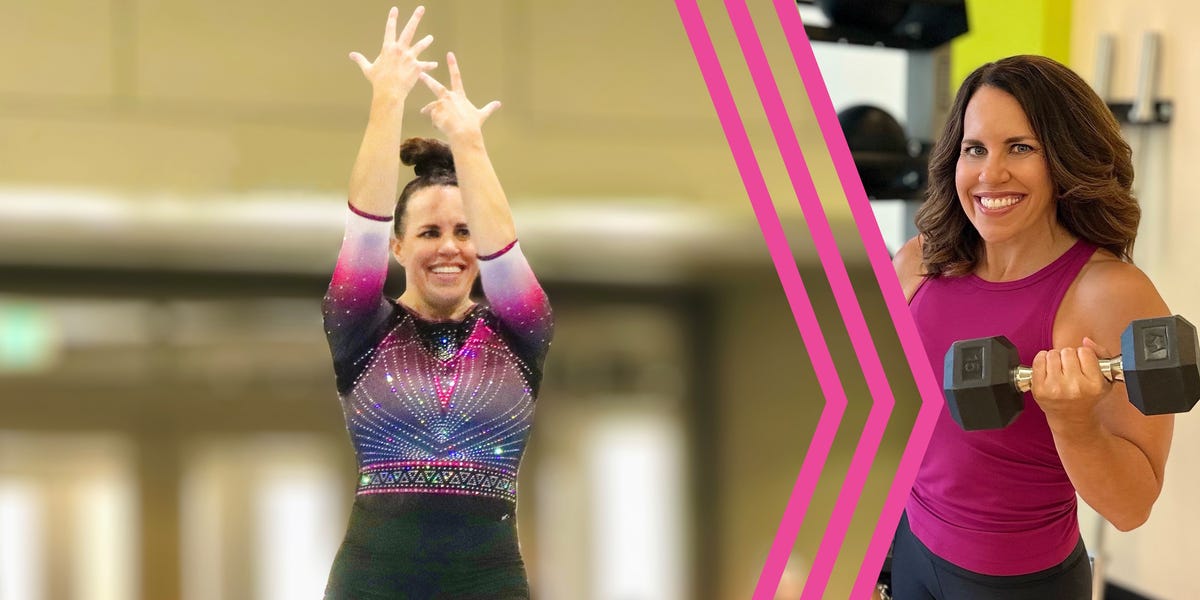
6 min readI’ve always considered myself an athlete. Growing up, gymnastics was my world—I spent most of my childhood competing and later became a cheerleader in high school and college. Sports were a huge part of my identity, and I felt most like myself when I was flipping and flying through the air. But shortly after graduating college, everything changed.At 23, I was in a serious car accident that left me with severe back injuries, including fractures, nerve impingements, and herniated discs. Suddenly, everyday movements became incredibly difficult and painful. Doctors told me it was unlikely I’d ever return to the athletic life I once knew—and, for a long time, I believed them. For the next 14 years, I lived with chronic pain. Exercise felt impossible, and over time, I lost strength, muscle, and confidence. Then, when I was 37, my best friend was diagnosed with cancer and it changed the way I looked at life. I realized I wanted to take control of my health.So, I began working with a physical therapist who helped me improve my mobility and lift weights to rebuild strength. With her help, I learned that strength training wasn’t something I needed to fear because of my injuries; it was actually something that would help me heal. I began feeling confident with weights, and eventually, started strength training on my own one or two days each week outside of physical therapy. I also started seeing a nutritionist who taught me how to intuitively fuel my body with whole foods. I gradually cut back on processed foods, eliminated alcohol, and started building balanced meals centered around protein, fiber, healthy fats, fruits, and vegetables.Within a year, I had completely transformed my life. The combination of strength training, intentional movement, and a focus on nutrition allowed me to lose 50 pounds, build significant muscle, and, most importantly, become pain-free. Over the next few years, I eventually stopped physical therapy since I was feeling better, but I continued lifting three or four times a week. Along the way, I also became a certified group fitness instructor to deepen my understanding of movement and use my experience to help other women feel stronger.Still, at 40, I found myself missing something I hadn’t experienced in decades—the feeling of flipping and flying through the air. And when I found out my best friend’s cancer was terminal, I decided to stop putting my gymnastics dreams on hold.At 41, I signed up for an adult gymnastics class. Walking back into the gym after so many years was intimidating, but it also felt like coming home. Years of strength training made the transition back to gymnastics easier than I expected, especially with upper-body skills like handstands and the ability to hold myself up on the bars.With every practice, I reconnected with a part of myself I thought I’d left behind—and after a few classes, I joined the gymnastics team at the gym where I was taking class. Returning to the sport reminded me that my abilities weren’t defined by age, previous injuries, or the years that had passed. It helped me rediscover the athlete I had always been.Now, at 46, I’ve created a fitness routine that brings me joy while benefitting my long-term health.Here’s my split: I do full-body strength training twice a week on Mondays and Fridays using a combination of dumbbells and weight machines. My workouts include exercises like unassisted pull-ups (I can do 10 in a row!), lat pulldowns, overhead presses, chest presses, deadlifts, squats, lunges, and box jumps. I typically complete two to three sets of 8 to 12 reps for each exercise. Proper form always comes first, and once I’ve mastered a movement, I focus on progressive overload by gradually increasing the weight or reps to continue building strength and muscle.On Tuesdays and Thursdays, I teach Zumba, a dance cardio workout. Then, Wednesdays, I teach a combination class that includes STRONG Nation, a HIIT-based workout with plyometrics and martial arts-inspired movements, along with strength training using dumbbells, bodyweight exercises, and core work. I also attend gymnastics one to two evenings a week where I practice skills, routines, tumbling, and conditioning. Additionally, once a week, I train at a ninja gym to challenge my grip strength, upper-body power, coordination, and balance.One of my biggest accomplishments with fitness has been competing in several local gymnastics meets each year. Over the past two years, I’ve had the honor of completing the 14-event Omnithon at the National Association of Intercollegiate Gymnastics Clubs (NAIGC) Nationals, which is considered one of the biggest challenges in adult gymnastics. It combines all four women’s events (vault, bars, beam, and floor) with all six men’s events (floor, pommel horse, still rings, vault, parallel bars, and high bar), plus trampoline and tumbling.In 2024, I also had the opportunity to represent the USA at the Masters Gymnastics World Cup, an international adult gymnastics competition for athletes 30 and older. It was a moment I never could have imagined as the little girl who first fell in love with the sport.Additionally, I applied to and ended up competing on American Ninja Warrior at age 42, which was the ultimate challenge to my grit and resilience. It was such a meaningful milestone in my journey because it represented what was possible after rebuilding my strength, overcoming years of injuries, and rediscovering myself as an athlete.3 Fitness Products I Can’t Live Without Lululemon Align No Line High-Rise Pant 25"Credit: CourtesyLululemon Align leggings are my go-to for training thanks to their lightweight, breathable, and buttery soft fabric. RXBAR Protein BarsCredit: CourtesyI *always* keep an RXBAR in my purse. They’re delicious, made with simple, recognizable ingredients, and easy for on-the-go snacking.On Cloudswift 4Credit: CourtesyI swear by my On Cloudswift sneakers for cross-training because they offer the perfect balance of responsiveness, cushioning, and stability.These three changes became the foundation of my strength transformation:1. I learned that movement is medicine—but it should also be something that makes me happy.When I first started working out consistently, my goal was to improve my quality of life; and I did exactly that. Exercise became a tool for healing, helping me rebuild my body, regain confidence, manage chronic pain, and take control of my health. Most importantly, movement helped me reconnect with the strength, confidence, and joy I thought I had lost.After years of consistency and hard work, I’ve built a workout routine that makes me feel strong, capable, energized, and joyful. Strength training is the foundation of my routine—but by adding in gymnastics, HIIT, Zumba, and work at the ninja gym, I’ve seen just how fun exercise can be at every stage of life.2. I didn’t let age hold me back.For a long time, I thought some opportunities had an expiration date. I assumed there were things I had missed my chance to do simply because I was getting older. But I’ve come to realize that age isn’t a deadline—it’s an opportunity for another chapter.Getting back into an exercise routine with a debilitating back injury at 37 and walking back into the gymnastics gym at 41 was equal parts exciting and intimidating. But I leaned on my physical therapist and nutritionist for help and worked through my fear. I just started slowly, set realistic goals, rebuilt my strength safely, and focused on what my body could do rather than what it couldn’t.My journey has reminded me that it’s never too late to reconnect with an activity you love, challenge yourself in new ways, or pursue a bold dream you thought was behind you. The best part of my story didn’t happen when I was younger; it’s happening right now, in midlife.3. I stayed consistent instead of chasing perfection. My transformation didn’t happen overnight, and there wasn’t one workout, meal, or defining moment that changed everything. It was the result of showing up consistently, week after week, even when progress felt slow. On the days I didn’t feel motivated, I reminded myself that simply showing up was enough. Some days, that meant a shorter session or lighter weights than I had planned, because I knew that keeping the habits alive mattered more than having the “perfect” workout every time. And consistency changed more than just my body—it changed my confidence, mindset, and belief in what was possible. It taught me that small choices, repeated over time, can create incredible change.That same mindset is what I carry with me when I compete in gymnastics meets today. I focus less on the outcome, and more on the experience and progress I make over time. I celebrate being strong and healthy enough to show up, grateful for the opportunity to compete, and excited to support and cheer on the incredible athletes around me.My fitness journey has never been about medals, rankings, or proving what I can do. It’s always been about my own growth, finding purpose through the process, and discovering just how much I’m capable of achieving.Find the Perfect Women's Health Training Program for YouJustin SteeleRona Ahdout//Hearst OwnedAndi Breitowich is a freelance writer who covers health, fitness, relationships, beauty, and smart living. She is a graduate of Emory University and Northwestern University's Medill School of Journalism. Her work has appeared in Women's Health, POPSUGAR, Food & Wine, What To Expect, Cosmopolitan, Men's Health, and elsewhere. As a former collegiate pole vaulter, she loves all things fitness and has yet to meet a group workout class she doesn't like.
‘I Started Strength Training at 37. Now, at 46, My Workout Routine Helps Me Build Muscle and Strength—And It’s Still Fun.'
Full Article
Original Source
Read the full article at Womenshealthmag →KhanList aggregates and links to publicly available news content. We do not host full articles from third-party sources. Always verify important information with original sources.