
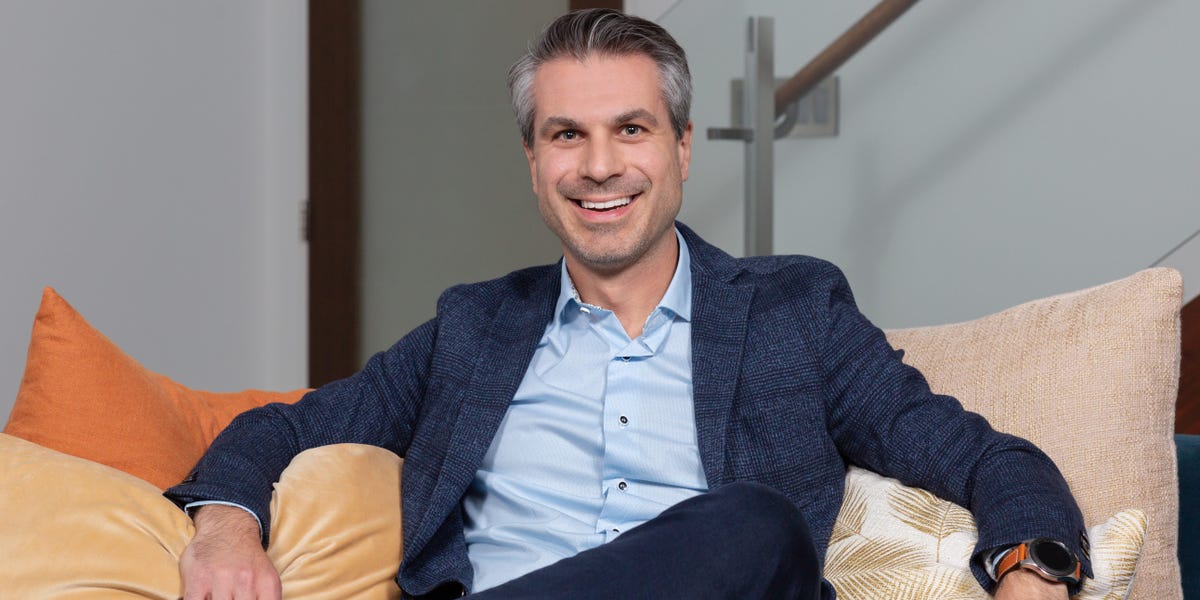
I started coding for my dad, earning $1 an hour. Now, my company is estimated to be worth more than $1 billion. Courtesy of Nacho de Marco Nacho de Marco started coding for his dad This as-told-to essay is based on a conversation with Nacho de Marco, cofounder and chairman at BairesDev. It has been edited for length and clarity.Growing up in Argentina in the 1980s, I had an absolutely terrible public school education. Luckily, my parents were phenomenal at helping my three siblings and me learn at home.When I was 15, my dad got laid off and started taking on freelance programming work. I wanted to play soccer, not work with him, but when he offered to pay me $1 an hour, it was enough to put my soccer ball away. I thought I was going to be rich.I tracked my hours carefully — even deducting time for bathroom breaks. I didn't want to overcharge my dad. At the end of the first month, I'd earned $82. More importantly, I'd fallen in love with coding. It was the creativity that got me. When I realized I could create and build solutions, I couldn't imagine doing anything else with my life.Luck — and getting fired — helped me succeedThe next years of my life were spent programming nearly 24/7. During college and graduate school, I worked during the day, attended class from 7 to 11 p.m., and then took a 90-minute bus ride home. People told me my schedule sounded like a nightmare. But I enjoyed programming so much that I didn't mind being tired. Nacho de Marco worked during the day and went to classes at night. Courtesy of Nacho de Marco Then, I got fired from my job. I was a kid trying to implement big changes that the company maybe didn't need.It ended up being a blessing. People tend to forget that luck plays a big role in success. My lucky break came when someone who I knew offered me a large project that required a team. I reached out to Paul, who became my cofounder, and he was crazy enough to say, "Yeah, we can do it."Turning down an acquisition offer was riskyThat first year, Paul and I worked constantly. At the end of it, I'd earned $3,000. He had a family, and I was still living at home, so he took a salary, and I got what was left. I hoped our company would eventually be worth the effort we put in.I couldn't live on $3,000, so I took a full-time job in Australia. I'd work from 9 to 6 at that job, and then work on BairesDev till 3 a.m. I did that for about 18 months until I couldn't do both. Keeping my job in Australia would have been safer, but I believed in the company. All the while, we were growing. In 2013, we received an offer to buy the company for a high seven-figure price tag. Turning that down was very, very risky. For a bit, it was tough. I felt like I was having a heart attack every time I had to make payroll. Then, one day, I realized I wasn't worrying about it anymore.I feel safe financially, so I want to help othersToday, Paul and I have built something substantial (editor's note: BairesDev is estimated at more than $1 billion). I'm an optimist, but even I never could have imagined that we'd scale like this, all without outside investment. It still seems statistically impossible.Mentally, finances are a burden for 99.99% of people. But I've reached a point where I feel safe. Once I was no longer in survival mode, I realized I could help those around me. I wanted to return the luck I'd had to my siblings, parents, and friends. I wouldn't be where I am without them.AI is going to expand global opportunitiesI'm glad we've made money, and also proud of the way we've helped people around the world. If you're the smartest person in a small town in Brazil or Argentina, you're not going to get many great opportunities, unfortunately. BairesDev gives people in the middle of nowhere a chance.That's going to become more common with AI. We've given our engineers superpowers. AI has shrunk the capital requirements for building a business, and it's going to level the playing field for smart people from around the world to do great things. Someone from Africa will be able to compete with someone in New York City. Nothing comes without problems, but I'm pretty confident about the future. Read next Business Insider tells the innovative stories you want to know Business Insider tells the innovative stories you want to know Business Insider tells the innovative stories you want to know Business Insider tells the innovative stories you want to know Kelly Burch has been writing about personal finance for more than a decade.She's particularly interested in how finances impact the most intimate parts of a person’s life, from educational and reproductive choices to love, immigration, or estate planning. Kelly has written about these topics personally and explored them with experts, including entrepreneurs, multi-millionaires, financial planners, and more.Kelly is a first-generation college graduate and homeowner who integrates her personal experience creating financial stability into her reporting. She’s a career journalist, with work appearing in “The Washington Post,” “The Chicago Tribune,” “Boston Magazine” and more.Kelly lives in rural New Hampshire with her husband, two children, and two dogs. When she’s not behind her desk, she can be found getting lost in the mountains and lakes around her home.Follow her on Facebook or Twitter, or learn more here. as told to Careers Billionaire More
I started coding for my dad, earning $1 an hour. Now, my company is estimated to be worth more than $1 billion.
Full Article
Original Source
Read the full article at Businessinsider →KhanList aggregates and links to publicly available news content. We do not host full articles from third-party sources. Always verify important information with original sources.