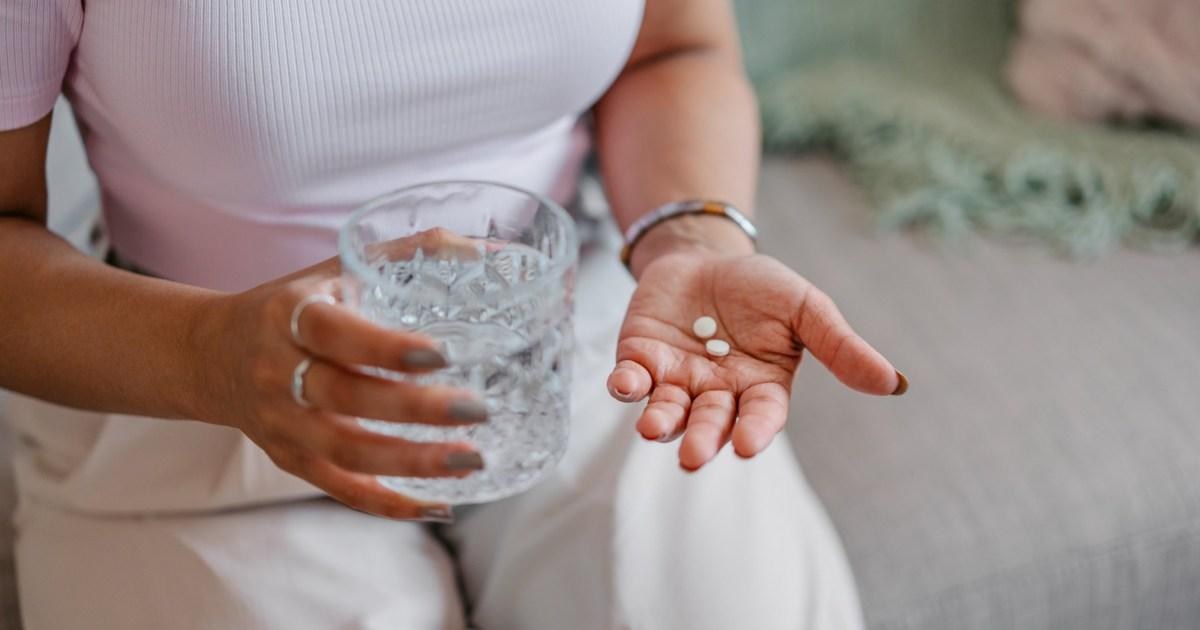
Ginny ordered drugs online using next day delivery (Picture: Getty Images) ‘I’m sorry, we can’t serve you,’ said the Boots cashier. ‘You’ve been in here every day this week.’ Ginny Shenton’s face flushed red, as she looked down at the packet of co-codamol on the counter between them. ‘I was so embarrassed,’ Ginny, 42, tells Metro. ‘Everyone could hear, while I tried to convince her she’d got the wrong person. ‘That should have been a turning point, but I just went to another pharmacy on the same road, and got my supply there instead.’ Ginny, from Stockton-On-Tees, was first prescribed codeine by a doctor in November 2022, to ease pain caused by gallstones. Ask Metro Use AI to go deeper into the stories you care about – powered by Metro and trusted publications. ‘I was also suffering badly with arthritis,’ she explains. Ginny had no history of addiction issues (Picture: Ginny Shenton) ‘I found it difficult to walk, had swelling in my knees and was in terrible pain, all the time. It was taking a real toll on my mental health, and I felt miserable — but all that changed once I started taking codeine.’ For the first time in years, Ginny was pain-free. ‘Life was great at first,’ she says. ‘Suddenly I had so much more energy. I was busy at work, and could still keep on top of life admin, and seeing friends and family.’ But codeine — a prescription-only opioid, in the same family of drugs as morphine — can become addictive. And Ginny, who worked in a charity shop at the time, was quickly building up a tolerance, recalling: ‘I started off on the lowest dose, 15mg, taking four pills a day. Within six months, that had been upped to 60mg. ‘Then, I started noticing my prescription wasn’t lasting the entire month it was meant for, and that’s when I started getting co-codamol (a lower-strength dose of codeine mixed in with other painkillers such as paracetamol, available over the counter) to supplement it. ‘At no point did I think “this is a problem”. I just thought I hadn’t kept track of how many I was taking. And I wasn’t getting high. I just felt normal again.’ The 42-year-old fell into debt to feed her habit (Picture: Ginny Shenton) Because she’d always had a healthy relationship with alcohol, and had never touched drugs before, Ginny didn’t realise the seriousness of her increasing dependence. ‘The drugs are legal, so I wasn’t putting myself in dangerous situations to feed my habit,’ she explains. ‘I was buying them from high street stores, and when you’re taking pills from a standard pill packet, you can do it in public, in front of people, or at work. No one bats an eyelid.’ Even after her gall bladder surgery in 2024, the GP continued to prescribe Ginny codeine for pain. ‘The only person that seemed concerned was my brother, who lived with me,’ she says. ‘But he thought it was a failing of the care I was receiving. He’d tell me to go back to the doctors, because he assumed the pain killers weren’t doing enough for me.’ After the incident at Boots — where Ginny was refused service — she had to find new ways to get the drugs, initially splitting her purchases between different shops and never going to the same one too many times in a row. ‘I’d keep track of which staff members were working when, and who had already served me,’ she adds. ‘And then, one day I just Googled “buy codeine online”, and discovered online pharmacies.’ She accessed drugs online or over the counter (Picture: Getty Images) The General Pharmaceutical Council (GPhC) tell Metro that there’s growing concern about websites like these. Kathie Cashell, chief executive at the GPhC, says: ‘We are increasingly concerned about the number of fake online pharmacies. ‘These often look real but could be selling medicines that are unsafe and seriously harmful. ‘A quick search of our online register at pharmacyregulation.org can help people identify legitimate pharmacies.’ Through these fake online pharmacies, Ginny says it was ‘easy’ to order unlimited co-codamol and codeine at the click of a button, having it delivered to her door within 24 hours. Eventually, she was spending £115 on the 100-pill a day habit, equating to around £3,565 a month. Ginny says: ‘These were not legitimate sites or brands you’d recognise. It was like ordering from Amazon. All you had to do is pick what you wanted and pay, there was no consultation or medical questions whatsoever. ‘I remember once seeing a receipt for 224 tablets that I’d bought in one go, and got through them in about two or three days. How to know if an online pharamcy is legitimate Kathie Cashell, chief executive at the GPhC tells Metro: ‘Online pharmacies can offer convenient access to medicines and healthcare advice, but providing services remotely can bring additional patient safety challenges. ‘All legitimate pharmacies must be registered with us and have to meet our standards when supplying medicines. We inspect those pharmacies and take enforcement action if our standards are not being met. ‘In our updated guidance for registered pharmacies providing pharmacy services at a distance, including on the internet, we specifically make clear that: Staff should have all the information to check that the supply is safe and appropriate. This may be from the person receiving pharmacy services and from access to a person’s medical records, for example their NHS national care record. For sales or supplies of Prescription Only Medicines, pharmacy staff should check that the person receiving pharmacy services is who they claim to be by carrying out an identity check appropriate for the medicine being supplied. That an appropriate method of consultation is used. Online questionnaires alone are not suitable for some medicines such as those liable to misuse, or medicines which have a higher risk of fatality or serious harm if taken in overdose. Pharmacies should have in place systems to identify inappropriate requests for medicines, for example, requests that are too large or made too often. ‘All pharmacies in Great Britain have to be registered with the GPhC. A quick search of our online register at can help people identify legitimate pharmacies and avoid potentially harmful fake medicines, helping to keep people safe.’ ‘I’d just pour them into my hand and take them, that way, I could trick myself into thinking I wasn’t taking as much. ‘I didn’t do anything else apart from work, pay my bills, do the food shop, and take codeine. ‘I stopped seeing my niece and nephew because I couldn’t afford the £20 train ticket to Newcastle. ‘I was sick a lot, and dropped down to about 7st. I’d get withdrawals — cramps in my legs, aches, flu-like symptoms and trouble sleeping.’ And, Ginny was beginning to struggle with debt. ‘I’d take out credit cards and pay day loans. I borrowed a lot of money from family. I’d tell them I just needed extra to pay bills. I was lying so much.’ But in November 2025, Ginny’s addiction finally reached crisis point. Ginny flew home from France, and went straight to A&E (Picture: Ginny Shenton) She explains: ‘I went to France for a wedding. I woke up the morning after, went to the toilet, and there was blood pouring out of me. ‘I told myself I was just hungover, and after about 24 hours the bleeding stopped, but back in the UK, I went to A&E. ‘I was diagnosed with stomach ulcers, caused by ibuprofen in co-codamol. I needed two blood transfusions. ‘I told them I’d been taking codeine, but I didn’t reveal the full extent.’ Still, four days in hospital proved to be a wake-up call. ‘I went online and searched for drug rehab centres, and Grow Change Love popped up, a health and social care charity,’ says Ginny. ‘They signposted me to a rehab service, and I went the next day. ‘I walked into reception and felt really out of place. I didn’t think of myself as a drug addict. A lot of the people there didn’t have homes to go, and were what you might imagine when you think “drug addict”. ‘But I had to leave any stereotypes at the door. Nobody wants that label, and I didn’t feel like one, but you have to admit it to yourself to get help.’ Ginny has been clean since November 2025 (Picture: Ginny Shenton) Despite being on a methadone programme, taking a synthetic opioid each day to treat her drug dependence, Ginny found the first four months especially difficult. ‘If someone had given me some pills, I’d have taken them; psychologically, you still want it,’ she says. ‘I now deal with pain from the arthritis again, but I’ve found healthier coping mechanisms. I exercise, and meditate. I’m learning to live with it.’ And life is so much better drug-free. Ginny explains: ‘I’m spending time with my friend and family again, and everyone has been so supportive of my recovery. ‘I’m just living a fun, normal life. I’m so much happier.’ Now, Ginny is raising awareness of the danger of accessing drugs via these fake online pharmacies, saying she’s concerned ‘making drugs so accessible can turn people into addicts.’ Deals of the Day Parents can save up to 30% on Kickers school shoes ahead of the new term The back-to-school hack that's helping parents avoid queues and sold-out sizes Could your hair be wavy rather than straight? This brand thinks so Could your star sign improve your skincare routine? This new beauty launch thinks so Best skincare for menopausal skin? This dermatologist-created treatment is tailored to you ‘There needs to be more checks and balances,’ she adds. ‘These drugs can kill, and people need to be protected.’ Do you have a story you’d like to share? Get in touch by emailing MetroLifestyleTeam@metro.co.uk Arrow MORE: Cocaine worth £232,000,000 found stashed in bananas at UK port Arrow MORE: Breaking up with my best friend saved our friendship Arrow MORE: Dementia has devastated our family – this is why I still have hope The Slice Your free newsletter guide to the best London has on offer, from drinks deals to restaurant reviews.
I spent £3,565 a month on codeine tablets from online pharmacies
Full Article
Original Source
Read the full article at Metro →KhanList aggregates and links to publicly available news content. We do not host full articles from third-party sources. Always verify important information with original sources.