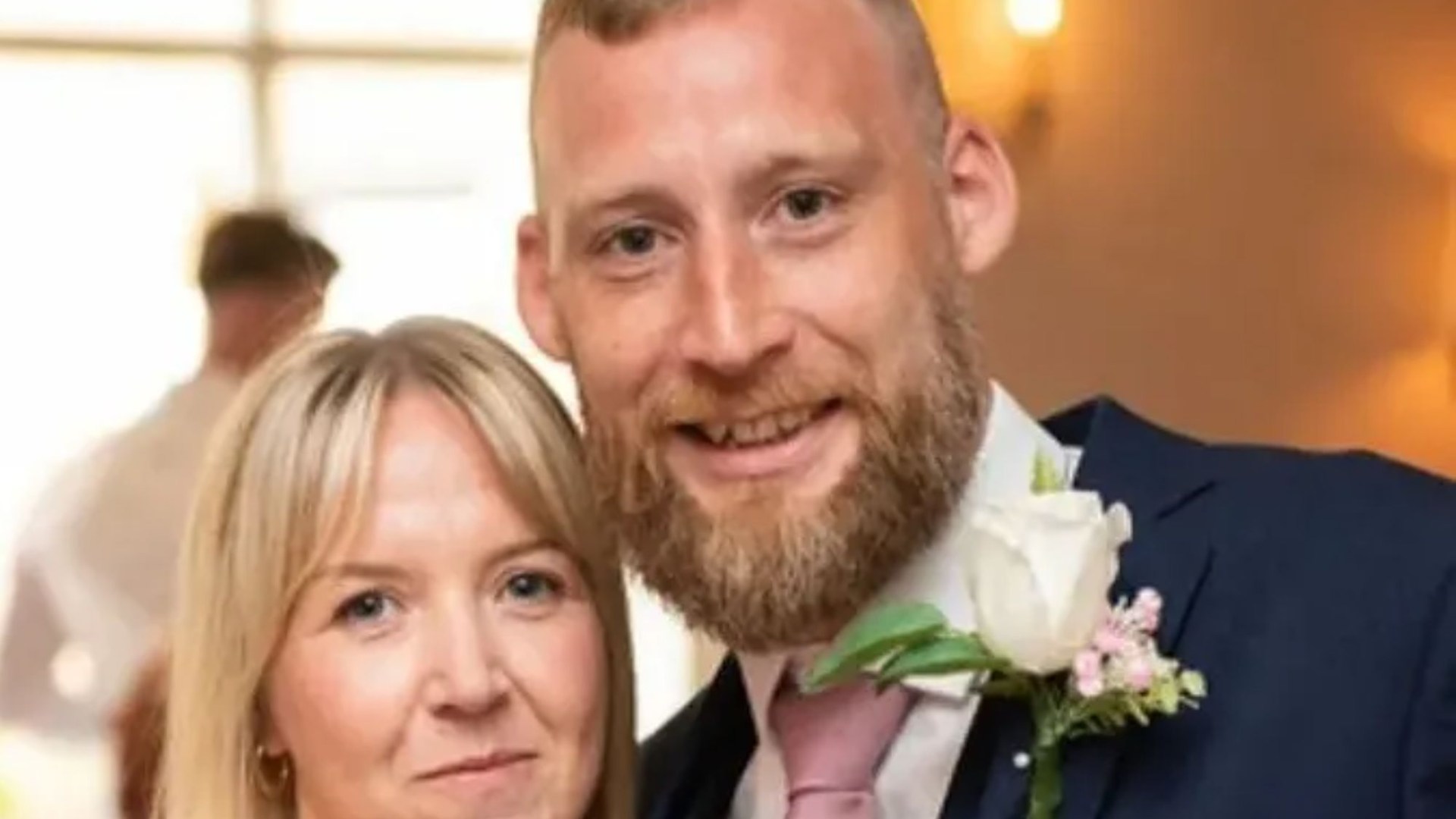
Travelling home on the bus, dad-of-three Anthony Coey, 37, from Carlisle could feel a familiar tightening in his chest. Sweating profusely, he looked around him at the other passengers, wondering if they could tell what was happening. Anthony Coey, pictured with his wife Sarah, spent 20 years suffering from anxiety and panic attacks Credit: Anthony Coey His panic attacks, which he his from his children by leaving the house, only started getting less frequent when he received one piece of life-changing advice Credit: Anthony Coey Feeling trapped and claustrophobic in such a contained space, he tried to remain calm and regulate his breathing until he could mercifully get off at his stop. The feeling was well known to Anthony, a Health, Safety, Environment and Quality Manager. Sign up for the Health newsletter Thank you! For 20 years, Anthony suffered panic disorder, causing anxiety, fear, panic and panic attacks. It wasn’t until he sought therapy through the NHS that Anthony got his life back. Although not formally diagnosed, Anthony was given beta blockers, which helped temporarily. But his panic attacks wreaked havoc on his work and home life. He carried shame, fear and confusion about his symptoms, which he says often made him feel like he was dying. He says: “I couldn’t concentrate on emails and would read them 20 times. I struggled to get through the day with normal tasks. “I couldn’t retain information. I am a manager and so I want to be the go-to person, but I was hiding myself away. Most read in Health “I would be worried about when the next panic attack would be.” At home, he was conscious he didn’t want his children Jessica, 11, Oliver, 15 and Anthony, 16, to see him feeling low or vulnerable. He would always say he was nipping out when he felt the panic rising in his chest. “I would sometimes say I was going to lie down, or I would just disappear quietly to another room until it fizzled out,” he says. “I don’t know what I look like when it happens, so I wouldn’t want the kids to see and wonder what was wrong with me. “I felt like it was my job to worry about everyone else – not the other way around. As a parent I wanted to protect my children.” At its worst, Anthony was suffering from seven panic attacks a day Credit: Anthony Coey Pictured with his wife and kids, Anthony tried to hide his panic attacks from his kids Credit: Anthony Coey But he says somehow his wife, Sarah, 38, who he describes as ‘his rock’ always knew. He says: “Sarah seemed to know I was going to have a panic attack before I even did. “When you have lived with someone for 20 years, I guess you can pick up on body language.” Anthony remembers first suffering panic disorder at the age of 16. The NHS describes it like a cycle of living “in fear of fear”. It says: “You may start to avoid certain situations because you fear they’ll trigger another attack.” Anthony says: “I started struggling at 16, and not knowing what was happening, I would be up in A&E all the time. “I was in my early 20s when I realised what it was.” He tried to manage it alone, worried that opening up would make him seem vulnerable. But decades later, he reached the point where he could no longer hide the secret. His panic attacks reduced in 2018 after he moved from his hometown of Blackburn to Carlisle, which he credits to the change of scenery and a fresh start. But when his grandma died in 2024, they spiralled to seven a day. He says: “I was given medication which regulated my heartbeat and slowed me down, but when my grandma passed away in 2024, it spiralled to six or seven panic attacks a day.” Whenever Anthony would have a panic attack, he says he would try his best to mask it in front of others – making an excuse to disappear. Anthony says: “I lived with panic attacks for 20 years, trying to manage it alone, and it impacted every part of my life. “The constant worry about when the next panic attack would happen made it really difficult to focus. “In my personal life, I couldn’t concentrate long enough to read books which was always something that had brought me comfort.” Anthony recalls facilitating a stroke awareness workshop led by an NHS nurse at work. He volunteered to get his blood pressure taken, but as soon as the belt tightened around his arm and he felt his pulse, he was triggered and started having a panic attack. As usual he masked how he was feeling and as soon as it was done he made an excuse to leave. Directly after a panic attack, Anthony says the physical sensations would make him feel so exhausted, almost as if he had run a marathon. He would also be overcome with anxiety and an overwhelming feeling of impending doom – this affected every aspect of his life. He isolated himself and didn’t want other people to worry about him, avoiding social gatherings and work events. He even stopped going home to Blackburn to see his family. Anthony says: “It affected every angle of my life. I was just living in fear of my next panic attack. “There are no rational thoughts. You know you are not dying, but it feels as though you are.” Realising that it was not normal to have seven panic attacks a day, supported by his wife, Anthony was referred by his GP to NHS Talking Therapies in November 2024. He initially resisted, saying: “I wasn’t keen on speaking to a stranger. I thought, ‘How can this person relate to what I am going through?’” But over 10–12 sessions, Anthony says he slowly realised how much relief came from putting his experiences into words. He kept a diary, set clear goals, and learned to understand and manage the physical sensations that once overwhelmed him. He says: “I realised I was enjoying the process. “It helped me to vocalise what I am going through and I began diarising each panic attack.” LIFE-CHANGING ADVICE Anthony’s anxiety got so bad that he couldn’t concentrate on reading. Now, he has joined a local book club Credit: Anthony Coey One of the biggest challenges for Anthony, was that each panic attack made him fear he was having a heart attack. “During a panic attack, I would get such a tightening in my chest, I would often convince myself I was having a heart attack,” he says. While many of Anthony’s tactics relied on relaxing, he was given an unusual piece of advice that finally shifted his brain away from a life-threatening heart attack. He says: “It was suggested I do things like run upstairs when I was having a panic attack because nobody having a heart attack would be able to do that. “I was encouraged to rationalise what the pain could be, distract myself by doing something like having a cold wash and concentrating on my breathing with slow, deep breaths and relaxation methods such as relaxing every part of my body. “I would listen to YouTube videos showing relaxation methods.” Today, Anthony feels proud of the progress he has made. He says he still experiences occasional panic attacks, but now it’s just one or two per month instead of several a day. Since his journey to recovery, he regained his ability to concentrate for longer periods, allowing him to enjoy reading again and has even joined a local book club. Symptoms of panic disorder During a panic attack you get a rush of intense mental and physical symptoms. It can come on very quickly and for no apparent reason. A panic attack can be very frightening and distressing. Most panic attacks last between 5 and 20 minutes. Some have been reported to last up to an hour. The number of attacks you have will depend on how severe your condition is. Some people have attacks once or twice a month, while others have them several times a week. Symptoms include: a racing heartbeat feeling faint sweating nausea chest pain shortness of breath trembling hot flushes chills shaky limbs a choking sensation dizziness numbness or pins and needles dry mouth a feeling of dread or a fear of dying a churning stomach a tingling in your fingers feeling like you’re not connected to your body HOW TO GET HELP You should see a GP if you’ve been experiencing symptoms of panic disorder. They’ll ask you to describe your symptoms, how often you get them, and how long you have had them. They may also carry out a physical examination to rule out other conditions that could be causing your symptoms. You may be diagnosed with panic disorder if you have regular and unexpected panic attacks followed by at least a month of continuous worry or concern about having further attacks. Talking therapies and medicine are the main treatments for panic disorder. If you are in England, you can refer yourself directly to a talking therapies service for treatment based on cognitive behavioural therapy (CBT) via the NHS website. Visit: https://www.nhs.uk/nhs-services/mental-health-services/find-nhs-talking-therapies-for-anxiety-and-depression/ Source: NHS Anthony says Talking Therapies has broken a cycle he thought he’d be trapped in forever. Motivated to reduce stigma and raise awareness, he is now more open about his mental health and keen to help others access the support he wishes he’d found sooner. He says: “NHS Talking Therapies changed everything – it’s broken a cycle I thought I’d be stuck in forever. “I finally feel in control again and am able to concentrate for longer periods. “I went from having six or seven panic attacks a day at its worst, to just one or two a month now.” He urges anyone too embarrassed to seek help to put their worries aside and reach out as soon as possible. He says: “If you’re struggling, please don’t wait as long as I did. You only get one life, so be brave enough to put yourself first and get the support you deserve.” Anthony is supporting the NHS Talking Therapies campaign, which shows how treatment can give you practical skills and techniques to overcome panic disorder and other mental health conditions. Find out more, or refer yourself at nhs.uk/talk. Comment now
I spent 20 years suffering from crippling panic attacks – crucial piece of advice saved me & could help you too
Full Article
Original Source
Read the full article at Thesun →KhanList aggregates and links to publicly available news content. We do not host full articles from third-party sources. Always verify important information with original sources.