Published Aug 14, 2026, 8:15 AM EDT I've been hearing from many experts in the artificial intelligence field since last year predicting that local LLMs (Large Language Models) will be the future of AI. I don't make such sweeping predictions, especially in tech, but the growing number of voices favoring local LLMs pushed me hard to get my hands on them. After months of delay, I finally ran a local LLM on my phone. While this was an experiment, I treated the local LLM as my primary AI assistant for performing everyday AI tasks. I knew the limitations of local LLMs and set the expectations accordingly, but the one I tried still surprised me. I might not have felt that way had I not used an AI cloud subscription, which I've grown accustomed to all these years. Although I knew it wouldn't work, I skipped the AI cloud subscription by running a local LLM on my Android phone. Here is what I noticed in my experiment. Quiz 8 Questions · Test Your KnowledgeRunning local LLMs on AndroidTrivia challenge Think you know your tokens from your tensors? Test your knowledge of running AI models right on your Android phone. HardwareAI ModelsAppsPerformanceTech Begin Which app is widely regarded as one of the first popular tools for running local LLMs directly on an Android device? AChatBot AIBMLC ChatCGemini NanoDLM Studio Correct! MLC Chat, developed by the MLC AI team, was one of the pioneering apps that brought local LLM inference to Android devices. It uses the MLC-LLM framework to compile and run models efficiently on mobile hardware. LM Studio, while popular, is a desktop-only application. Not quite — the answer is MLC Chat. Developed by the MLC AI team, it was among the first widely used apps to run large language models locally on Android. LM Studio is a great tool but only runs on desktop operating systems, not Android. Continue What component in a modern Android phone is most critical for accelerating local LLM inference? AThe baseband processorBThe display driver chipCThe NPU (Neural Processing Unit)DThe UFS storage controller Correct! The NPU, or Neural Processing Unit, is purpose-built for the kind of matrix math that LLMs rely on heavily. Chips like Qualcomm's Snapdragon 8 Gen series and Google's Tensor chips include dedicated NPUs that dramatically speed up AI inference while reducing battery drain compared to using the CPU alone. The correct answer is the NPU — Neural Processing Unit. Unlike the baseband (which handles cellular connectivity) or the storage controller, the NPU is specifically designed to accelerate the matrix multiplications at the heart of LLM inference, making it the key hardware component for on-device AI. Continue Which model format is commonly used to run quantized LLMs efficiently on resource-constrained devices like Android phones? AONNXBGGUFCTensorFlow SavedModelDPyTorch .pt Correct! GGUF (GGML Unified Format) is the successor to the older GGML format and is widely used for quantized models, especially with tools like llama.cpp. Its design makes it easy to load models in chunks, which is invaluable when working with the limited RAM found on most Android phones. The answer is GGUF. While ONNX and TensorFlow SavedModel formats exist and are used in mobile AI, GGUF is the dominant format for running quantized LLMs on constrained hardware. It was designed with efficient memory loading in mind, which is critical when your phone only has a few gigabytes of RAM to spare. Continue What does 'quantization' mean in the context of running LLMs on Android? ASplitting the model across multiple devicesBEncrypting the model weights for securityCReducing the precision of model weights to shrink size and speed up inferenceDIncreasing the number of model parameters for better accuracy Correct! Quantization reduces the numerical precision of a model's weights — for example, from 32-bit floating point down to 4-bit integers. This dramatically shrinks the model's file size and memory footprint, making it feasible to fit a capable LLM into the limited RAM of a smartphone while also speeding up inference. Not quite — quantization means reducing the precision of a model's weights. For instance, a model's numbers might be stored as 4-bit integers instead of 32-bit floats. This tradeoff slightly reduces accuracy but makes models small enough to run on devices like Android phones that have only a few gigabytes of RAM available. Continue Google's Gemini Nano is notable for being the first version of Gemini designed for on-device use. On which Android feature did it first debut publicly? AGoogle Maps offline navigationBPixel's Call Screen featureCSummarize in Recorder and Smart Reply in GboardDGoogle Photos magic eraser Correct! Gemini Nano made its public debut powering features like Summarize in the Pixel Recorder app and Smart Reply suggestions in Gboard on the Pixel 8 Pro. This marked a milestone for truly on-device generative AI running without sending data to the cloud. The answer is Summarize in Recorder and Smart Reply in Gboard. Gemini Nano first appeared on the Pixel 8 Pro powering these two on-device features, marking Google's first step toward running its Gemini model family locally on Android hardware without a cloud connection. Continue What is the typical RAM requirement to run a capable 7-billion parameter LLM in 4-bit quantized form on an Android device? AAround 512 MBBAround 4–6 GBCAround 20 GBDAround 1 GB Correct! A 7B parameter model at 4-bit quantization requires roughly 4–6 GB of memory, which is why flagship Android phones with 8–12 GB of RAM are the practical minimum for a smooth experience. Phones with less RAM will struggle with larger models, often crashing or running extremely slowly. The right answer is around 4–6 GB. Even with aggressive 4-bit quantization, a 7-billion parameter model still needs several gigabytes of RAM to load its weights. This is why running capable local LLMs is largely limited to flagship Android phones that ship with 8 GB or more of RAM. Continue Which open-source inference engine, originally developed for desktop use, has been ported to Android and powers many local LLM apps on the platform? ATensorRTBllama.cppCCoreMLDOpenVINO Correct! llama.cpp, created by Georgi Gerganov, is a highly optimized C++ inference engine that was quickly ported to Android via the NDK. Its efficiency and support for GGUF models made it the backbone of many Android LLM apps. CoreML is Apple-only, TensorRT is NVIDIA-focused, and OpenVINO targets Intel hardware. The answer is llama.cpp. Developed by Georgi Gerganov, this C++ inference engine was designed to run LLMs efficiently even without a GPU, and it was ported to Android using the NDK. It supports GGUF models and has become the engine under the hood of many popular Android local AI apps. Continue Which Qualcomm chip generation was the first to officially support Qualcomm's AI Hub platform for on-device generative AI workloads on Android phones? ASnapdragon 855BSnapdragon 888CSnapdragon 8 Gen 2DSnapdragon 730 Correct! The Snapdragon 8 Gen 2 was a landmark chip for on-device AI, bringing substantial NPU improvements and being the first generation Qualcomm promoted heavily alongside its AI Hub platform for generative AI. Phones like the Samsung Galaxy S23 series used this chip and became popular targets for local LLM experimentation. The answer is the Snapdragon 8 Gen 2. While earlier Snapdragon chips had NPUs, the 8 Gen 2 was the generation Qualcomm officially championed for generative AI workloads alongside its AI Hub platform. It delivered major NPU performance leaps and became a go-to chip for developers exploring on-device LLMs on Android. See My Score Challenge CompleteYour Score / 8 Thanks for playing! Try Again My Android phone became my AI assistant without a cloud subscription A local model has answers to most of what you need I didn't complicate my setup. I downloaded and installed an app called PocketPal from the Google Play Store and then downloaded a local model from Hugging Face to run it on my phone. The PocketPal app allows you to deploy open source models from Hugging Face without leaving the app. It took only a few minutes to complete the setup, though it was worth investing time. I could easily use the E2B variant of the Gemma 4 model when not connected to the internet and still generate answers to complex questions. For example, I use it as a decision-maker tool. Instead of reading a complete phone review, I copy and paste the text and then ask it to tell me the strengths, weaknesses, and who should avoid buying the handset. Similarly, I can give it the data and ask it to organize it in a table. It can also summarize text, highlight key points, and break down complex topics so that everyone can understand the basics. Since it can't pull data from the internet, you need to copy and paste the information in the prompt. It can do almost everything that an AI model running in the cloud can do, except browse the web. While the lack of web browsing capability is a disadvantage, its offline capability puts it in a unique position. No matter how powerful a cloud-based LLM is, it can't compete with a local model in giving you access to AI when you can't access the internet. Since it doesn't send your data to the cloud servers, all your information stays on your phone. So, a cloud-based model is no match for local ones when it comes to protecting users' privacy. My local LLM is far from being perfect Its flaws are hard to ignore I won't rant about the knowledge cutoff date here. I accept the limitation, but it bothers me when it gives me wrong information when I ask it about events that took place well before its knowledge cutoff date. I asked the E2B variant of the Gemma 4 to list all the cricket teams that have won the Indian Premier League (IPL), and it gave me teams that don't exist in franchise cricket. That's how outrageous the answer was. I even confronted it and said that it was wrong, but to no avail. I tried to give it multiple clues but still couldn't get the right answer. This is not just about cricket. The local LLM I tested gave me bad responses most of the time when I asked about past events. A series of bad responses can significantly lower your confidence. You'll keep doubting the answers for topics you don't know, but what makes it worse is that you can't fact-check that information using the internet without leaving the app. I also noticed it gave me unnecessarily long answers even for the simplest of queries. It lacks awareness of when to keep things concise. Instead of requiring me to intervene and ask for a concise answer when needed, I would've preferred a more automatic approach, where it would know when to be comprehensive and when to keep things short. You'll sometimes need a lot of patience to get the best results. A local LLM can't replace a cloud AI, but it can help you rethink your subscription A cloud AI subscription gives you access to many powerful features. But most people don't need them. Instead, drafting emails, writing to a friend, and helping set the right tone in writing have broader appeal. There is no need to pay a fee to use AI for these kinds of tasks — a local LLM is good enough. For daily productivity tasks, a local LLM works better because of its offline capability. For the way I use AI, a local LLM can't replace a cloud AI subscription. But after this experiment, I'm more open to the idea of ditching mine.
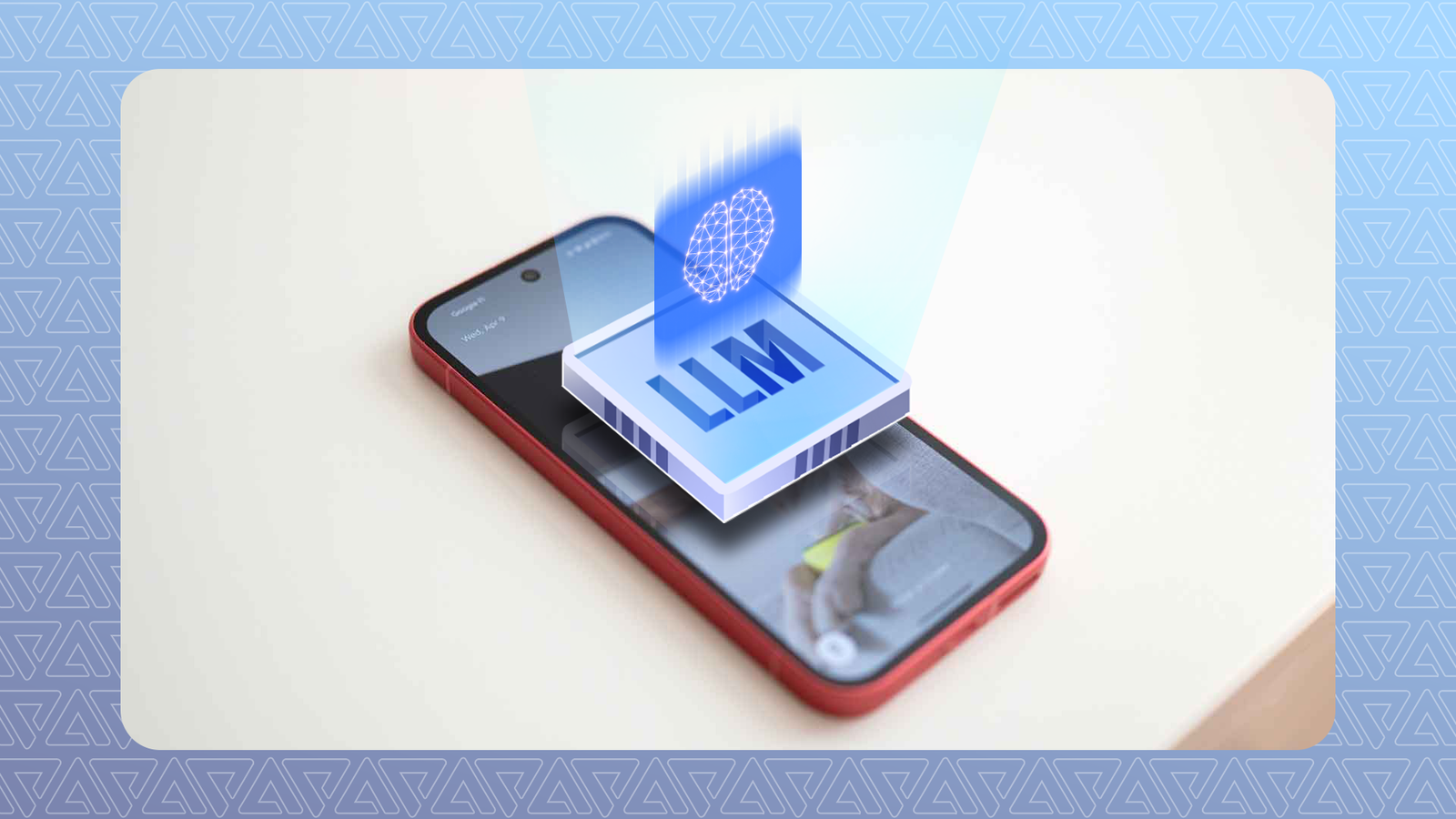
I skipped the AI cloud subscription by running a local LLM directly on my Android phone
Full Article
Original Source
Read the full article at Androidpolice →KhanList aggregates and links to publicly available news content. We do not host full articles from third-party sources. Always verify important information with original sources.