
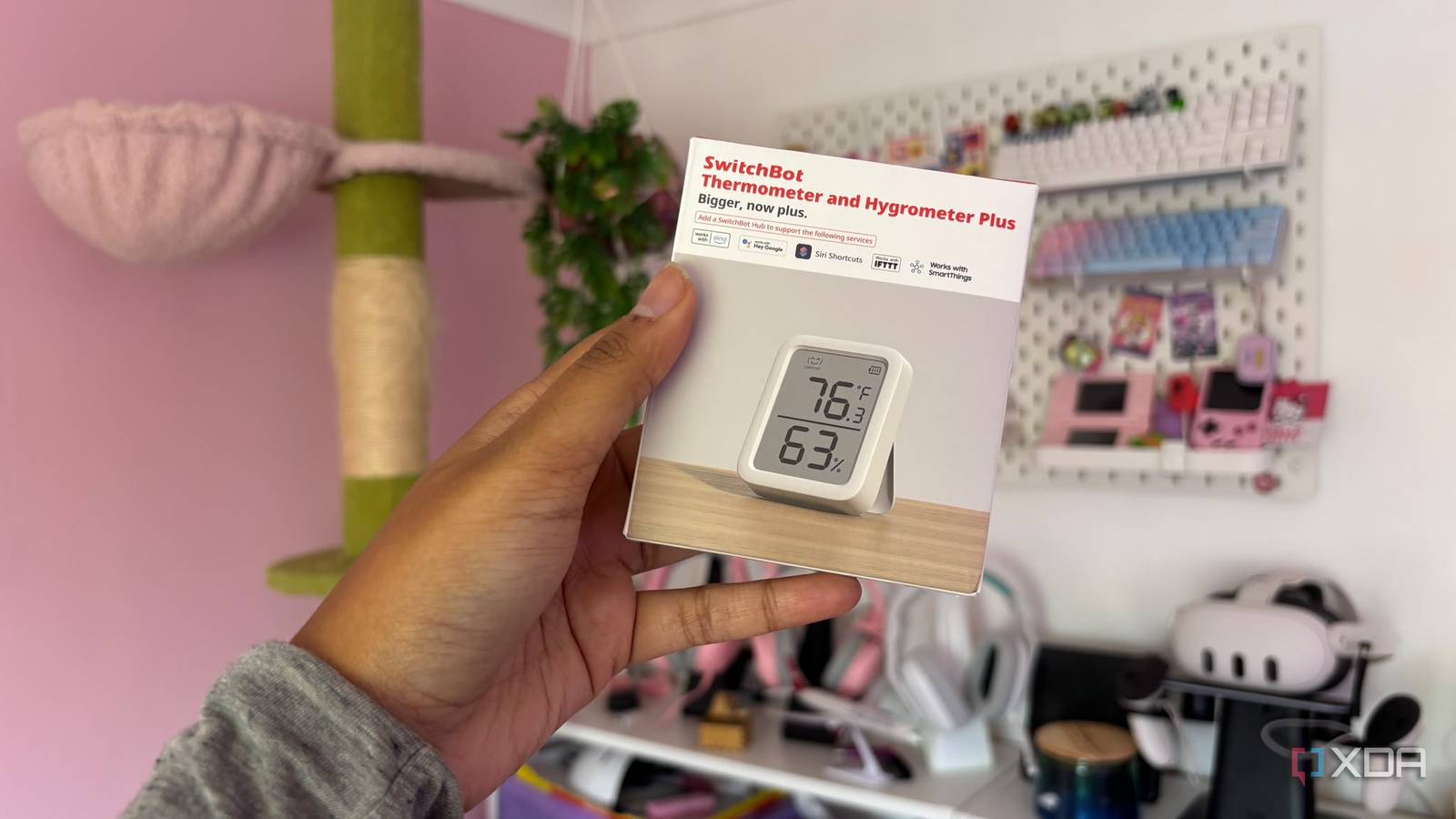
Published Sep 18, 2026, 8:00 AM EDT Jasmine is Software and PC Hardware Author at XDA with years of tech reporting experience ranging from AI chatbots right down to gaming hardware, she's covered just about everything. Whether it's breaking news about the latest AMD NPUs or creating video tutorials on social media platforms, Jasmine has contributed to the world of AI and tech in a variety of ways including interviewing the CEO of Razer, AMD's Director of Product Marketing and the VP of Lenovo. Passionate about gaming and PC technology, she has built countless computers, keyboards and other peripherals - knowing them inside and out. A frustrating element of running a smart home is having to climb on ladders every 3 to 6 months to swap out CR2032 batteries or rip down your sensors to plug them in. Realistically, the reason behind this is that retail starter kits push cheap Wi-Fi sensors that wake up, spin up a full TCP/IP stack, perform a DHCP handshake, open a TLS session, and ping a cloud server every time a door opens (burning through a tiny battery in months). A truly mature smart home shouldn't require constant maintenance, and your environmental node should operate silently in the background for 2 to 5 years on a single set of off-the-shelf batteries. Smart home maintenance shouldn't feel like managing a fleet of smartphones. By ditching power-hungry Wi-Fi sensors in favor of ultra-low-power sub-GHz protocols like Zigbee 3.0, Z-Wave Long Range, and optimized Bluetooth Low Energy, you can build a comprehensive home automation sensor grid where battery replacement is an infrequent multi-year event rather than a seasonal chore. Wi-Fi technology might be the problem Connecting to the internet drains power Wi-Fi technology drains power instantly, while other sensors can stay asleep for years due to the physics of low-power radio protocols. With Wi-Fi there's a wake-up penalty. Wi-Fi radios are designed for high-throughput streaming and web browsing. Waking a Wi-Fi chip from sleep, authenticating with an access point, negotiating IP allocation, and pushing a packet require massive peak concurrent draws, which can drain tiny coin batteries pretty rapidly. However, with Zigbee there's a major advantage thanks to the microsecond bursts. Zigbee operates on the 2.4 GHz spectrum using ultra-lean IEEE 802.15.4 frames. When a door sensor trips, it transmits a tiny 35-byte payload in less than 2 ms, dropping back into deep sleep mode pretty much instantly, meaning it can conserve power. With sub-GHz long range like Z-Wave LR, these lower frequencies pass through walls and solid concrete with significantly less attenuation than 2.4 GHz Wi-Fi. This means that sensors don't need to boost transmission power to punch through obstacles, yet again allowing them to conserve power. Choose the right protocol Sticking to Zigbee might be the better call If you want to extend the battery life of your smart home devices, then you need to ensure that the exact hardware and architectural choices you're making are correct. The first step is ensuring you're choosing the right protocol. Battery-powered sensors must always be configured as end devices (aka sleeping nodes). Never allow battery-powered nodes to route any mesh traffic as routers or repeaters because this will force them to stay awake constantly and, as a result, drain batteries in weeks. Leave mesh routing to mains-powered smart plugs and wall switches instead. You can take advantage of Z-Wave long range by removing the traditional mesh hop overhead in favor of a direct star topology to a central coordinator. Dynamic power control scales transmitter output down when the hub is closed, maximizing coin cell lifespan. You can also utilize passive advertisement beacons like Switchbot or Xiaomi sensors, flashed with custom firmware. This means that they broadcast telemetry without maintaining an active two-way connection. You can still take advantage of all the information they provide without having to keep them connected to the internet at all times. Outside factors play a part too Better quality batteries and less reporting make a major different There are a range of other steps that you can take to maximize your sensor longevity outside of the protocol that you're choosing. Once you already have the sensors, make sure you're following the steps below to ensure that your battery lasts way longer. Ensuring that you're paying close attention to the battery chemistry. Avoid cheap alkaline batteries in high-drain or cold environments, like garage door sensors in winter, because they suffer from voltage sag. Using high-performance lithium primary cells or name-brand coin cells can ensure stable voltage delivery down to the device's cutoff threshold. It's better to spend slightly more money on higher-quality batteries and have to change them less often, as this can save you a lot of money in the long run. Avoiding over-reporting. Many temperature and humidity sensors are configured out of the box to report changes every time the temperature shifts by as little as 0.1°C or when humidity shifts by just 1% in a drafty hallway. This causes the sensor to wake up hundreds of times an hour. You can fix this by adjusting reporting thresholds in your settings to report only when temperature shifts by a higher amount or maybe at a time threshold like every 15 minutes. This should cut your radio activity down by almost 90% without losing meaningful automation fidelity. Regularly checking your Zigbee or Z-Wave mesh. If a battery-powered sensor is mistakenly trying to route through a flaky smart bulb that occasionally loses power, the sensor will burn through its battery trying to re-establish dropped parent links. By avoiding these mesh routing traps you can ensure sensor longevity too. You shouldn't have to change your batteries every few months Your sensors should last years A smart home that requires weekly babysitting and constant battery maintenance can feel like it's defeating its own purpose. True automation should be as invisible and maintenance-free as your home's electrical wiring or plumbing. Instead of wasting time swapping batteries every few months, you can audit your sensor fleet and migrate to a lean sub-GHz local protocol. Tune your reporting intervals and build a smart home that runs quietly in the background for years on end without the need for constant battery changes.
I run my entire smart home on batteries I change once every few years
Full Article
Original Source
Read the full article at Xda-developers →KhanList aggregates and links to publicly available news content. We do not host full articles from third-party sources. Always verify important information with original sources.