
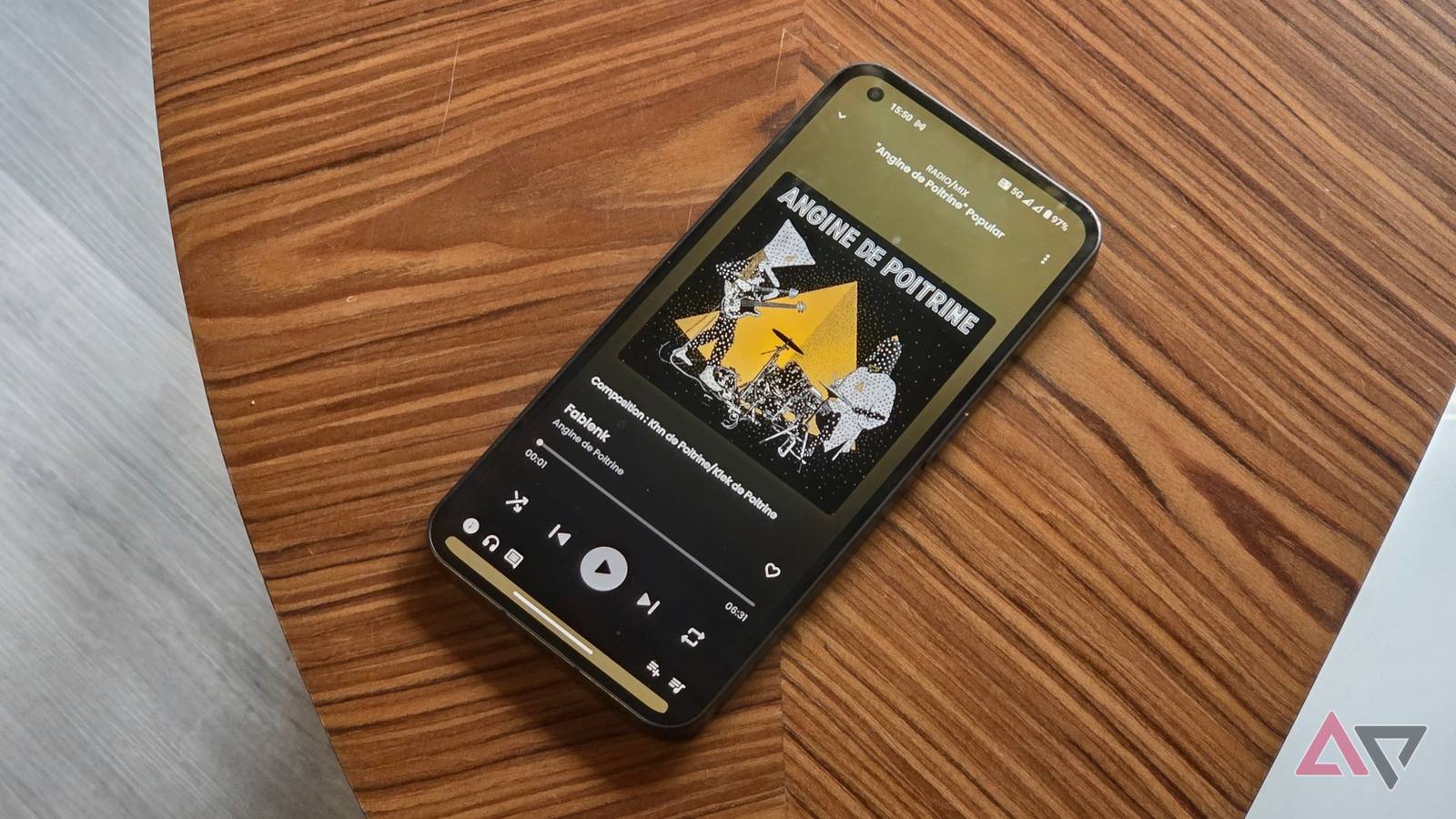
Published Nov 16, 2026, 1:00 PM EST Marvin is a Features Author for Android Police. His media career began as an editorial assistant at a now-defunct print publication. He has since transitioned to digital media as an editor, attended technology events in over 10 countries, and earned his master's degree in journalism. He enjoys film photography, outdoor running, and alternative coffee brewing during his leisure time. YouTube Music is Google's Swiss Army knife for audio playback. It plays music videos, podcasts, and songs from YouTube's massive library. Ever since it absorbed Google Podcasts, YouTube Music has become increasingly bloated. For every useful feature released, there are a couple of features I'd rather leave in the beta phase. I've always been on the lookout for open source alternatives. I already found a dedicated podcast app to replace YouTube Music, and I gave apps like BitChord a chance to become my primary music player. This time, I tried SimpMusic for a little over two weeks. It's another open source, ad-free alternative to YouTube Music. It initially wowed me with its simplicity and rich feature set, but I eventually found where it falls short as an all-around music player. SimpMusic matches YouTube Music's Premium features All the goodness, minus the subscription SimpMusic is free to download on GitHub. You can choose from several APKs. Pick the one labeled full-arm64-v8a if your phone was released from 2017 onward. The other APKs cater to older phones and Android emulators. Right off the bat, SimpMusic strips out all ads and preserves background playback without needing a subscription. In contrast, YouTube Music requires its Premium tier to unlock these functions. Another nifty feature: Listen Together. This lets you create a room that you can share with others for a unified music-listening experience. YouTube Music Premium doesn't offer this. You can log in with your YouTube account to sync your playlists and liked music. I initially tested the app without signing in. It let me stream and download freely from YouTube Music's library, but it stored my newly created playlists and favorite songs locally on SimpMusic. Unfortunately, you must sign in with your YouTube Music Premium account to enable higher-bitrate streaming up to 256kbps. Without it, you're limited to Low (64kbps) or Medium (128kbps). You can change the streaming and download quality via Settings > Quality and Download quality. So, while you can use SimpMusic without an account, you'll be limited to lower-quality streaming and downloads. The good news is that several top-tier features are available without additional plug-ins. SimpMusic offers native crossfade support and an interactive equalizer with a draggable frequency curve and built-in presets for specific speaker and headphone models. YouTube Music lacks these, even with a Premium account. SponsorBlock is also baked in, which automatically skips non-music segments like long introductions and sponsor reads within tracks. My favorite part about SimpMusic is the interface customization. I can choose between multiple UI skins, including Classic, Material 3 Expressive, and an Apple Music-inspired design for the Now Playing page. There's also an option to apply an iOS-style liquid glass look across the app. It's a beta feature I initially liked, but it felt so disconnected from my other apps that I turned it off. Some features are left behind on YouTube Music SimpMusic can't replicate everything Although SimpMusic has a competent music discovery page, it doesn't stand up well against YouTube Music's algorithm. It might take more than two weeks of SimpMusic usage to improve. SimpMusic has music recommendations on the homepage, plus its own SimpMusic Charts for categorized recommendations. The library shows my favorite songs and playlists, most-played tracks, and downloaded files. YouTube Music has a more comprehensive library and search function. I can even hum a song in the app or use Gemini to help me find specific songs. SimpMusic has AI integration, as well, but it feels half-baked compared to YouTube Music's implementation. Even though I normally detest short-form videos on my YouTube Music app, it's a page I missed while using SimpMusic. The open source app doesn't do as good a job at presenting new music catered to my tastes. SimpMusic lets you log in with your Spotify, Last.fm, or Discord account to import additional information. Most importantly, YouTube Music is more reliable. When I play a song or podcast, the app simply works. Whether it's on my phone or another connected device, YouTube Music executes commands instantly. Like other open source apps relying on YouTube Music's API, SimpMusic's performance is inconsistent. During the two-plus weeks I used SimpMusic, there were times when the app either refused to play a track or took half a minute to begin. SimpMusic also doesn't have the device and software connectivity options of YouTube Music. While it supports Android Auto, SimpMusic doesn't have native support for Wear OS or RSS feeds. To the developer's credit, SimpMusic is available as a desktop app on Windows, macOS, and Linux. YouTube Music's desktop interface is clunky compared to its Android app. SimpMusic has a few obstacles to get over SimpMusic has been a revelation among YouTube Music alternatives. It matches several Premium features without requiring a subscription. It also has superior UI customization. This isn't to say YouTube Music is a bad player. Google's app is more robust in terms of AI integration and ecosystem compatibility, if that matters to you. Its Premium tier is also required for higher bitrates during playback and downloads. On its own, SimpMusic is worth an installation for those who crave an ad-free music app. Since it's open source and actively supported by its developer, it'll only get better from here on out.
I replaced YouTube Music with SimpMusic; here's what I lost
Full Article
Original Source
Read the full article at Androidpolice →KhanList aggregates and links to publicly available news content. We do not host full articles from third-party sources. Always verify important information with original sources.