
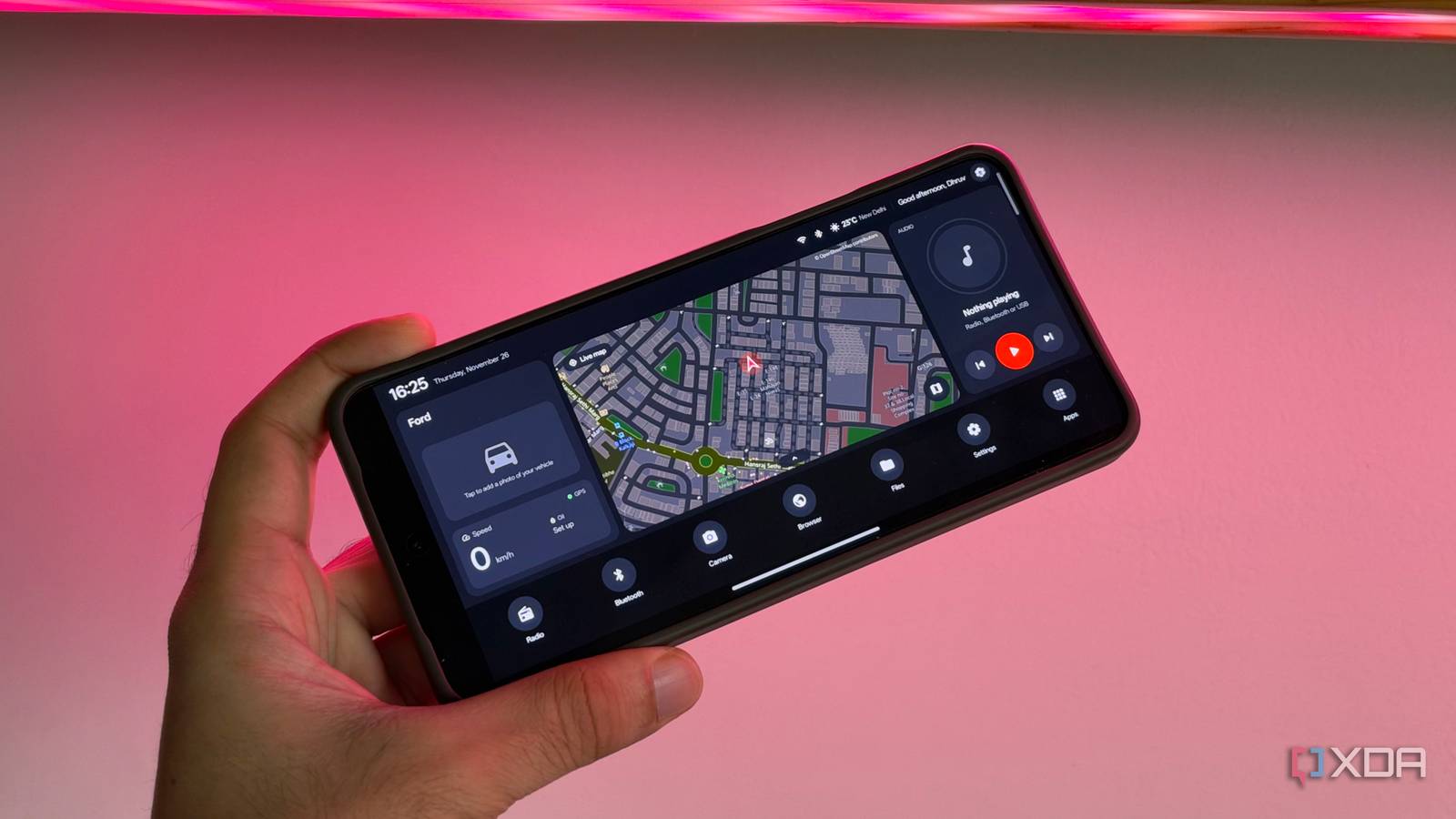
Published Nov 29, 2026, 6:00 PM EST Dhruv Bhutani has been writing about consumer technology since 2008, offering deep insights into the personal technology landscape through features and opinion pieces. He writes for XDA-Developers, where he focuses on topics like productivity, networking, self-hosting, and more. Over the years, his work has also appeared in leading publications such as Android Police, Android Authority, CNET, PCMag, and more. Outside of his professional work, Dhruv is an avid fan of horror media spanning films and literature, enjoys fitness activities, collects vinyl records, and plays the guitar. Android Auto is brilliant for what it is. It's made it an order of magnitude easier to use navigation, make calls, and stream music while on the go in a car. However, it isn't the only infotainment experience around. My secondary car has an aftermarket Android head unit installed, with all the hardware needed to run navigation, music, and other apps. It can even pull up Android Auto and CarPlay. The hardware is great, but the software is the problem. The interface is dated and clunky, to say the least. StradaOS is trying to solve exactly that. This open-source launcher is built from the ground up to transform an ordinary Android car screen into a much more useful dashboard. Rather than just pulling together a collection of apps, StradaOS takes an Android Auto-style approach but makes it its own. Plus, it plays nicely with Android Auto installations if you want to try it before committing. StradaOS fixes the biggest problem with third-party Android head units A cleaner dashboard makes it easier to access music, navigation, and even vehicle information. Third-party infotainment systems tend to get the hardware right with decent displays, built-in GPS, and ample processing power. However, I'm yet to come across a head unit with a serviceable software layer. On my Blaupunkt unit, the software is janky, to say the least, with poorly designed menus that take much longer than they should to get to the right setting. Honestly, I just dip into Android Auto as quickly as I can. StradaOS tackles that OS-level jank by replacing the factory home screen with a dashboard design specifically built to look good and solve modern needs. The widget-style layout brings together an OSM-powered live map, a music player, vehicle information, weather, and a speedometer. That's basically everything you could need on the home screen, and instead of jumping between applications to check basic information, you can access the things you need right from the home screen. I especially like how the interface handles music playback, arguably one of the most important functions of any head unit. The home screen music player card can display the currently playing track, album artwork, and playback controls by tapping into Android's notification service. This way, it can work independently of the streaming service you use. So you could be streaming on Spotify, Plex, YouTube Music, or Symfonium, and the widget will pick up the details regardless. Placed on the right-hand side, it makes a lot of sense for me, as I can simply tap to toggle playback on or off, or just skip over to the next track. StradaOS also includes a live map based on OpenStreetMap. To begin with, let me be clear: this isn't a navigation app replacement. Instead, it lets you see ongoing turn-by-turn navigation and your current location. Personally, I prefer this approach. There's no need for one app to do it all. Google Maps, Waze and Organic Maps are popular for a reason. Any alternative would invariably be derived from OpenStreetMap, of which we have plenty of options. StradaOS offers plenty of customization features Adjustable layouts, app shortcuts and Android Auto support Of course, a good infotainment interface is about more than just navigation and music. It should also tackle smaller inconveniences and offer plenty of customization. That's where StradaOS truly comes into its own. To begin with, the level of customization here is unprecedented. You can change everything from accent colors to light and dark themes, and, of course, the dashboard layout. The music player can be swapped from left to right to suit left-hand-drive and right-hand-drive layouts. Similarly, you can adjust the navigation bar configuration to suit your own needs. All this is useful because while the app can certainly be used on a phone, it is predominantly designed for in-car infotainment systems. These infotainment systems come in a variety of sizes and aspect ratios, and being able to adjust the UI to fit these varying layouts is critical. Elsewhere, the preset buttons are shortcuts you can set to any app you want, including one-tap access to your preferred navigation app or even Android Auto. If your head unit already supports Android Auto through its own implementation or via apps like ZLink, StradaOS can make use of it. If it doesn't, it can even integrate Open Headunit over a wired USB connection. I've talked about Open Headunit before, and it's an excellent solution for adding Android Auto endpoint support to any tablet or smartphone; seeing it here is very cool. You'll also find some additional tidbits, like the ability to include an OBD-II scanner panel. I don't have an OBD scanner on hand, so I couldn't test it, but the developer says the intended function is to get maintenance reminders based on distance driven, which sounds pretty nifty to me. Elsewhere, the dashboard also displays the current weather conditions, which definitely comes in handy. A simple launcher upgrade that can give your infotainment system a serious overhaul At the end of the day, StradaOS isn't really trying to replace the entire operating system of your head unit. Instead, it is an improved frontend to tap into the functionality already built in. It takes an outdated or outdated-looking Android head unit and gives it a much-improved interface, useful information, and easier access to features I'd actually use. If you're as annoyed by your aftermarket infotainment system's interface as I am, this open-source app is well worth a try. StradaOS StradaOS is an open-source front-end for in-car infotainment systems that offers plenty of customization and Android Auto compatibility.
I replaced my car's clunky home screen with an open-source dashboard that puts Android Auto to shame
Full Article
Original Source
Read the full article at Xda-developers →KhanList aggregates and links to publicly available news content. We do not host full articles from third-party sources. Always verify important information with original sources.