
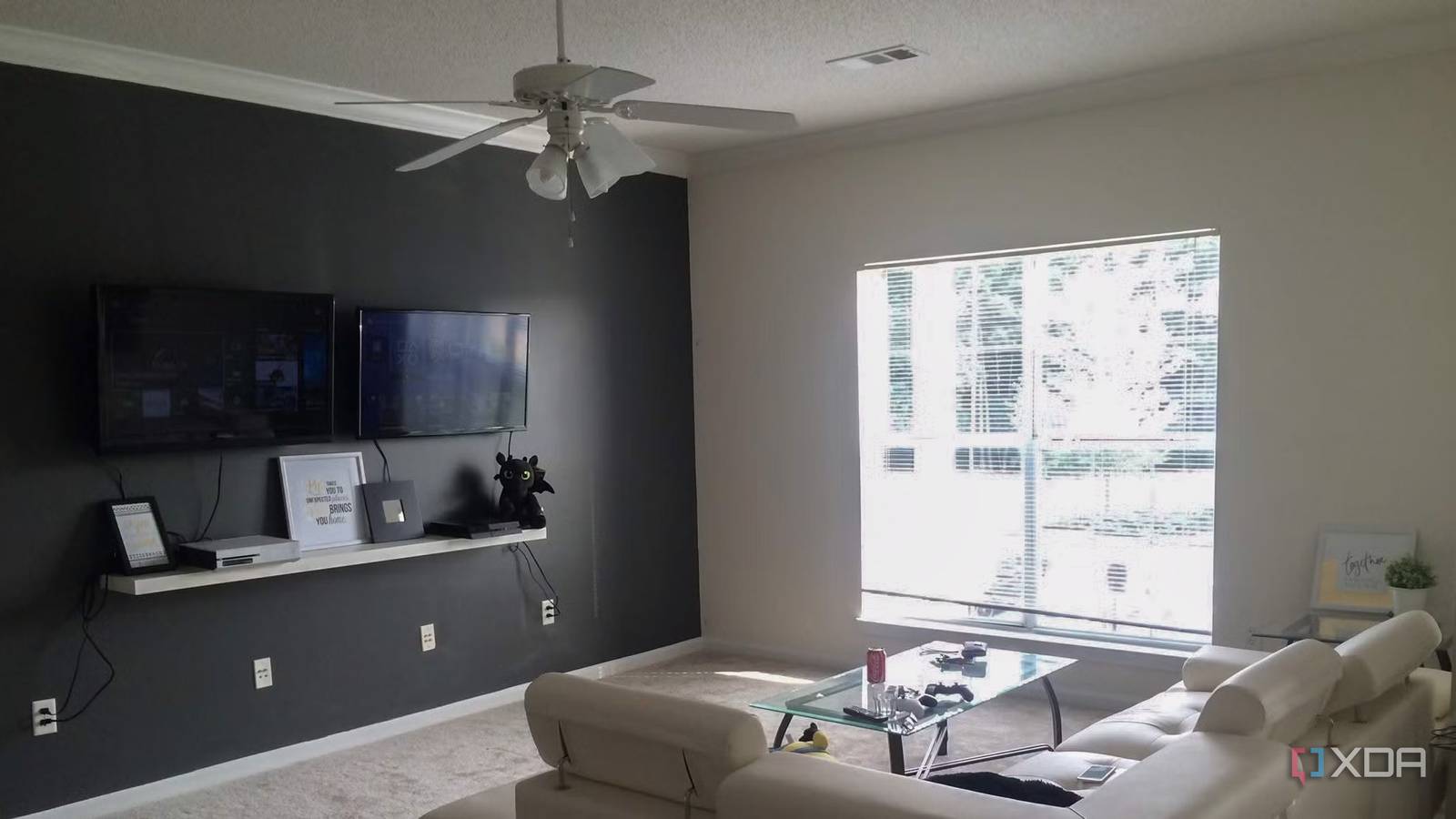
Published Sep 21, 2026, 8:30 AM EDT Patrick is a seasoned writer with more than a decade of experience, specializing in any and all things tech. His work has been featured on platforms like CNET, Yahoo, Xfinity, and many other outlets. When not typing away, he can be found with his nose in a book. Once upon a time, I believed wall-mounting a TV was the best option. I thought it looked more elegant and really pulled a room together. For a while, I enjoyed it — until I wanted to move furniture around and realized I was stuck with certain configurations based on the TV's placement. And that wasn't the only issue. Installing a wall-mounted TV takes a lot of work, and it's not always an option; some apartments won't allow renters to put holes in the wall. In the end, I found that a decent TV stand is usually less expensive than a wall mount, easier to maneuver, and is not nearly as permanent. Getting the placement right for a wall mount is too finicky And it takes a fair amount of know-how If you've never wall-mounted a TV, it's sometimes just easier to hire a professional than to try and figure it out. The mounting hardware isn't that hard to handle, assuming your home or apartment is built to code (and you aren't trying to mount to brick or metal). The hard part is figuring out the right height and viewing distance before you place the TV. Room layouts don't always make sense, and the best place for a TV might not be the optimal viewing location. Knowing exactly where your couch will go helps, but then you still have to figure out where to mount the TV based on where you sit. And under no circumstances should you ever mount a TV above a fireplace, but that's an entirely different subject. While mounts allow room for error with stud placement, they're not always enough to compensate for an off-center TV. Tilting mounts can help adjust angles, but in my experience, they usually make the overall experience more uncomfortable. The cables made it look messy And hiding them was complicated I mounted my TV above a couple of wall shelves. I thought it would look nice, but the dangling power and HDMI cables from the TV looked awful against an otherwise clean setup. I did what I could, but none of my solutions ever looked as clean as I hoped. There are several options available. Plastic cable channels are cheap, but they usually stand out against the wall color. A more refined option is to run the cables through the wall, but again, this requires a lot of work — including drilling two sizable holes in your wall. It also makes any setup more permanent, since rerouting cables becomes a bigger job once they're in the wall. The mount locked me into a specific room layout Any serious furniture upgrade might mean moving the TV About a year after mounting the TV, I bought a new couch and wanted to rearrange the furniture. I had laid out the room around the TV, and while I could shift a few things around, the TV was still the central focus. Since it wasn't moving anywhere, I found myself limited in how I could move the furniture. After all, it was a lot easier to buy furniture with a semi-permanent fixture in mind than it was to move the TV somewhere else. It also meant I couldn't upgrade my TV to a larger size unless I wanted to install another, bigger mount. At the time, I was fortunate; my apartment was lenient regarding in-unit changes, but I've also lived in places that wouldn't even let me drive a nail to hang up a picture. If you live in an apartment with rules like that, mounting a TV isn't even an option. Sometimes, wall-mounting can make sense It might be inconvenient, but the trade-offs are sometimes worth it Here's the thing: a wall-mounted TV, done correctly, can look incredibly sleek. If you're setting up a TV in a small room, you might not have space for a TV stand. If floor space is at a premium, wall-mounting can be the way to go. Safety is another factor to consider. A wall-mounted TV is much more stable than one on a stand, and if you have young children, wall-mounting keeps the TV more secure and reduces the risk of it toppling over. As for sight-lines, a full-motion mount can adjust the screen to be visible from different angles. Hiding cables is a pain, but it can be done well — it just takes more effort. A TV stand is often a better option When I mounted my TV to the wall, it didn't end in disaster. In fact, it looked pretty clean. But it created a lot more work than it was worth. The look didn't make up for the installation hassle, and now I always choose a TV stand or entertainment center over a wall mount.
I regret wall-mounting my TV, and I won’t make that mistake again
Full Article
Original Source
Read the full article at Xda-developers →KhanList aggregates and links to publicly available news content. We do not host full articles from third-party sources. Always verify important information with original sources.