Published Aug 14, 2026, 8:30 AM EDT I cover Android with a focus on productivity, automation, and Google’s ecosystem, including Gemini and everyday apps. With a background in engineering and software development, I tend to go beyond surface-level tips and focus on how features fit into real workflows. Before joining AP, I wrote for tech publications such as Gizbot in 2023 and iJunkie (formerly known as iPhoneHacks) from 2021 to 2022. I truly want to like Pixel phones. Their cameras are consistently impressive, and the software is cleaner than what you'll find on many competitors. They also get updates before most other Android devices. But I'm not willing to pay flagship money to feel like Google's beta tester. Every phone has bugs, but when software updates start feeling like a gamble, that's where I draw the line. And Google's recent Pixel track record isn't helping. Quiz 8 Questions · Test Your KnowledgeGoogle Pixel phonesTrivia challengeFrom the original Pixel to the latest flagship — how well do you know Google's own phone lineup?HardwareHistoryCamerasSoftwareFeaturesBegin In what year did Google release the very first Pixel smartphone?A2014B2015C2016D2017Correct! The original Google Pixel and Pixel XL were announced on October 4, 2016. They replaced Google's Nexus line and marked the first time Google fully branded a smartphone under its own name.Not quite — the first Google Pixel launched in 2016. Google had previously made Nexus devices with hardware partners, but the Pixel line was the first to carry Google's own branding front and center.Continue What computational photography feature, first introduced on the Pixel 2, allowed sharp photos of moving subjects using a single lens?ANight SightBPortrait ModeCSuper Res ZoomDMotion PhotosCorrect! The Pixel 2 introduced Portrait Mode using a single rear camera, relying on Google's machine learning rather than dual lenses to create that blurred background bokeh effect. It was hugely impressive for its time.The answer is Portrait Mode. Unlike rivals that used two cameras to simulate depth, the Pixel 2 achieved Portrait Mode with just one lens by using Google's advanced machine learning algorithms — a notable technical achievement.Continue Which Google-designed chip first appeared in the Pixel 6 series, marking Google's shift away from Qualcomm processors?ATensor G2BGoogle Titan MCGoogle TensorDPixel Neural CoreCorrect! The original Google Tensor chip debuted in the Pixel 6 and Pixel 6 Pro in 2021. It was Google's first in-house SoC designed specifically to accelerate AI and machine learning tasks on-device.The correct answer is Google Tensor. Introduced with the Pixel 6 in 2021, Tensor was Google's first custom-built SoC. It prioritized AI workloads like speech recognition and photo processing over raw benchmark performance.Continue What Pixel-exclusive calling feature uses AI to screen spam calls and read out a caller's reason for calling before you pick up?ALive TranslateBDirect My CallCCall ScreenDHold For MeCorrect! Call Screen launched with the Pixel 3 in 2018 and lets Google Assistant intercept unknown calls, asking the caller to state their purpose. You see a live transcript and can decide whether to answer or mark it as spam.The answer is Call Screen. Introduced on the Pixel 3, this feature lets Google Assistant handle incoming calls from unknown numbers, transcribing the caller's response in real time so you can decide how to respond without ever picking up.Continue Which Pixel model was the first to feature a hole-punch front camera, moving away from the notch design?APixel 5BPixel 4aCPixel 6DPixel 4a 5GCorrect! The Pixel 4a, released in August 2020, was the first Pixel to use a punch-hole selfie camera cutout. It was a budget-friendly device that many considered one of the best value smartphones of that year.The first Pixel with a hole-punch camera was the Pixel 4a, launched in 2020. Its predecessor, the Pixel 4, used a large top bezel housing Face Unlock sensors, so the 4a's punch-hole design was a notable shift in Google's approach.Continue What night photography mode, now a staple of smartphone cameras everywhere, did Google debut on the Pixel 3?ANight ModeBNight SightCAstrophotographyDDark Mode CaptureCorrect! Night Sight arrived as an update for the Pixel 3 in November 2018 and used computational photography to capture bright, detailed images in near-darkness. It set the benchmark that nearly every Android manufacturer has since tried to match.The answer is Night Sight. Google launched Night Sight for the Pixel 3 in late 2018, and it quickly became a gold standard for low-light smartphone photography, using multiple exposures and machine learning to dramatically brighten dark scenes.Continue The Pixel 4 series featured a unique sensor array on the back. What was the distinctive sensor included that no other mainstream Android phone had at the time?ALiDAR scannerBSoli radar chipCInfrared depth sensorDUltrasonic fingerprint sensorCorrect! The Pixel 4 included Google's Soli radar chip, which enabled Motion Sense — allowing the phone to detect hand gestures hovering above the screen to skip tracks or silence alarms. It was innovative but ultimately discontinued in the Pixel 5.The correct answer is the Soli radar chip. Google embedded this miniature radar sensor in the Pixel 4 to power Motion Sense gesture controls. Despite being a fascinating piece of technology, the feature was dropped by the Pixel 5 due to limited practical use.Continue Pixel phones are known for receiving Android updates first. How many years of OS updates did Google promise for the Pixel 8 series at launch?A3 yearsB5 yearsC7 yearsD10 yearsCorrect! With the Pixel 8 and Pixel 8 Pro launched in 2023, Google committed to an impressive 7 years of OS and security updates. This matched Samsung's Galaxy S24 promise and set a new standard for Android software longevity.The answer is 7 years. Google announced 7 years of guaranteed OS and security updates for the Pixel 8 series — a major leap from the previous 3-year promise and a direct response to pressure from Samsung's similarly extended update commitments.See My Score Challenge CompleteYour Score/ 8Thanks for playing!Try Again I don't want to discover Google's bugs for it My phone shouldn't be Google's test lab One of the biggest reasons to buy a Pixel is Google's software. The company controls both Android and the Pixel hardware, so you'd expect the two to work together better than almost any other Android phone. That's part of the appeal. You aren't waiting months for another manufacturer to adapt Google's latest software. But the same advantage can become a liability when something goes wrong. Pixel owners have reported everything from battery drain and display problems to crashes and boot issues following software updates. The software bugs keep piling up It's not only one bad update Credit: Lucas Gouveia / Android Police Google's support channels and issue tracker show that Pixel users have repeatedly run into serious problems after software updates. Take the March 2026 update. Google's issue tracker contains reports from Pixel owners whose phones became stuck in boot loops after the update, with one issue describing devices being pushed into Android Recovery and effectively soft-bricked. That's not the kind of bug I want to discover on a phone I paid hundreds of dollars for. And it's not limited to updates completely breaking a device. Pixel's official support community is filled with users asking for help with problems that appeared after updates, from battery drain and charging issues to performance and connectivity problems. When a phone's biggest selling point is that it gets Google's latest software first, I expect that software to have been thoroughly tested before it reaches me. I don't want to install an official update and then start searching Google's forums to figure out why something suddenly stopped working. Updates shouldn't feel like a gamble I shouldn't have to think twice before updating Credit: Lucas Gouveia / Android Police Google has turned frequent software updates into one of Pixel's biggest selling points. Pixel owners get regular security patches, feature drops, and new versions of Android without having to wait around for a manufacturer to approve them. But there's a difference between frequent updates and frequent experimentation. If a new update fixes a handful of bugs while introducing another handful, the experience can start to feel like an endless loop. Google's update history is a reminder that Pixel owners can end up dealing with numerous fixes after launch. Recent Pixel updates have included fixes for wireless charging, camera freezing, display glitches, keyboard problems, crashes, and other interface issues. Again, that's not inherently bad. Software is complicated, and fixing bugs is normal. But if I'm spending money on a phone, I don't want to feel like I'm participating in that debugging process. The irony is that the Pixel is supposed to be the safe choice The Pixel paradox If I wanted an experimental Android phone, I could pick almost anything. But the Pixel is Google's own hardware. Google also makes a big deal about long-term support. The Pixel 8 and newer phones get seven years of OS and security updates. I want to buy a Pixel, keep it for years, and know Google has my back. And if something goes wrong, I want Google's control over the hardware and software to mean the problem gets sorted quickly. Instead, Pixel's biggest selling point creates a strange contradiction for me. Google has created a phone that gets the latest version of Android and Google's newest software features first. But that also means Pixel users are often the first to encounter bugs and software problems. What Google needs to do to earn my trust It still has a chance to win me over Credit: Lucas Gouveia / Android Police I've used Samsung, Motorola, and OnePlus phones over the years, but I've never bought a Pixel. That's what makes this particularly frustrating. I've been thinking about buying one for the first time, and Google is making it harder for me to take that step. Before I spend my money, Google needs to earn my trust. For me, that starts with making stability feel like a priority. I need Google to show that updates are being thoroughly tested before they reach my phone, particularly when they affect something as fundamental as battery life, connectivity, or the display. Most importantly, I want Google to remember that not every Pixel buyer is an enthusiast who wants to live on the bleeding edge. Some of us are looking for a reliable Android phone. We want clean software, smart features, and a long support window, without having to wonder what the next update might do. Google could still change my mind I'm still tempted by the Pixel. The cameras, software, and long-term updates are hard to ignore. But as a potential Pixel buyer, I need more than exciting features. I need to know that I'm buying a finished, reliable phone, not signing up to test Google's latest software. Give me that confidence, and Google might finally get my money.
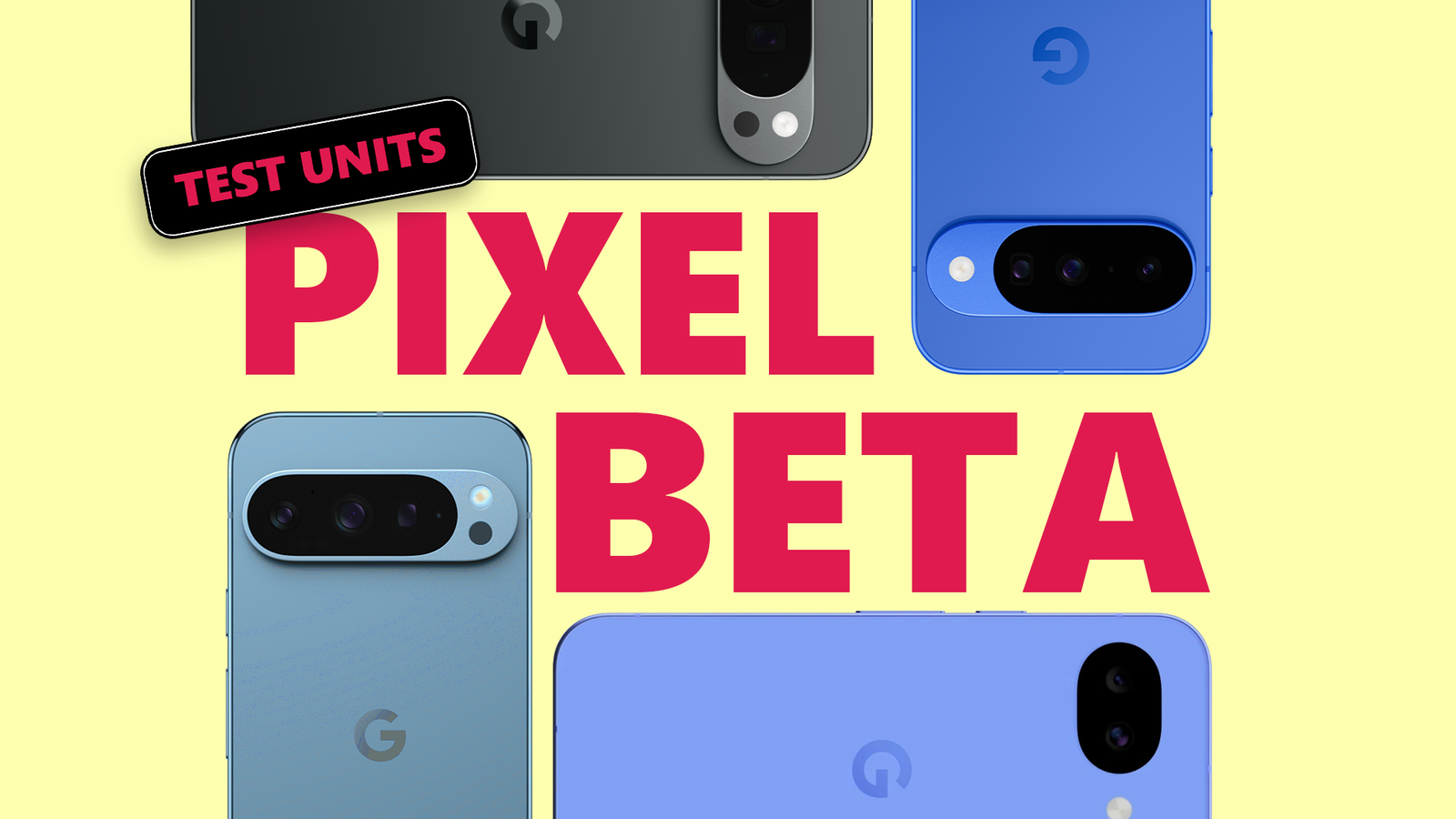
I refuse to buy a Pixel phone until Google stops treating users like beta testers
Full Article
Original Source
Read the full article at Androidpolice →KhanList aggregates and links to publicly available news content. We do not host full articles from third-party sources. Always verify important information with original sources.