
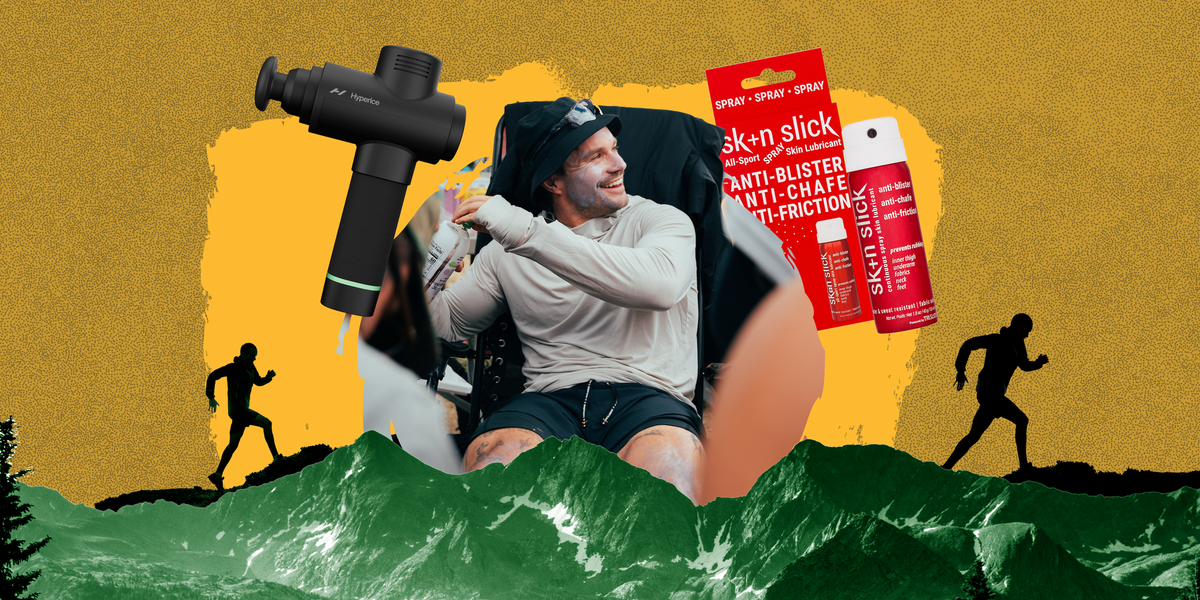
Welcome to Trail Tested, a monthly column from entrepreneur and athlete Jack Espy as he trained for the grueling Leadville 100 ultramarathon. Trail Tested followed Jack along his journey to do his first 100-miler to see what his body is capable of and what his mind can endure. Throughout his training and post-race, he’ll be giving us a rundown of gear he’s been putting to the limit.CONSIDERING I RAN a 100-mile ultramarathon, my body held up surprisingly well. I didn't get a single blister, which says a lot about the socks and trail shoes I was wearing and about staying on top of foot care throughout the race.My biggest issue was my right knee. I started experiencing pain around Hope Pass, somewhere around mile 45. Luckily, I had packed a knee sleeve in my drop bag at the next major aid station around mile 50, and getting that on made a huge difference.Outside of the knee pain, my body stayed tough through all 100 miles. I definitely hurt, but I never reached a point where I felt like I was completely breaking down. I’m gonna give a rundown of how I kept fresh on race day as well as how I’ve been recovering since I crossed that finish line of the Leadville 100 back in August.Aid Station ApproachI used a handful of different tools at aid stations throughout the race, but the ones I relied on most were a knee sleeve, a Hyperice massage gun, anti-chafe ointment and spray, and Biofreeze.The leg sleeve became especially important because I had been dealing with some lingering pain in my right knee from a previous 50-miler. I used the Flytex leg compression sleeve. The compression helped the knee feel more secure and manageable as the miles added up.Jack EspyThe author working out some muscles at an aid station.Anti-chafe ointment was another must. I used Skin Slick and Body Glide. I stayed on top of lubricating my feet and toes throughout the race, and somehow made it through all 100 miles without a single blister—the Hoka Tecton X 4 had a big part to do with that as well.I also used a Hyperice Hypervolt 2 massage gun at aid stations to loosen up my quads and calves. When you're running for 28-plus hours, anything that can help your legs feel a little fresher is huge.Finally, Biofreeze became one of my go-to tools once my knee started bothering me around mile 42. I knew that if I wanted to make it another 58 miles, I needed to stay ahead of the discomfort rather than wait for it to become unbearable.How I Rested Right After the RaceI was pretty banged up the day I finished, but actually not as destroyed as I expected to be. I could still walk, which definitely wasn't the case for everyone crossing the finish line.My quads, hips, and feet were incredibly tight, but my feet probably hurt the most. Being on them for more than 28 hours takes a serious toll.My parents and crew were amazing. They got me whatever I needed, kept me hydrated, and basically made sure I didn't have to do anything except recover.The rest of the day was pretty simple: I stayed in bed with my Hyperice compression boots on, drank multiple Strives to replenish fluids and electrolytes, and eventually crushed an entire large pizza. After consuming gels, waffles, and race “food” for more than a day, getting a big meal with plenty of carbohydrates and calories back into my body felt incredible.I also took magnesium before bed. Sleep can be surprisingly difficult after an ultra because your body is still so wired from the effort. Even though you're completely exhausted, it can take time for your system to settle back down. I experienced everything from chills to sweating after the race, so that first day was really about letting my body come back to normal.How I Recovered in the Following Days and WeeksIt took me about four weeks before I truly felt fully recovered from Leadville.My biggest priorities were sleep, nutrition, and giving my body time to recover. I aimed for at least eight hours of sleep every night and tried to sauna around five days a week because I found the heat relaxing and helpful for how my muscles felt.I also used my Hyperice compression boots constantly. They became one of my favorite recovery tools throughout the entire training process, and I continued using them after the race to help my quads, hamstrings, and calves feel less stiff.Jack EspyGetting in a compression session.My feet needed a lot of attention too. I rolled them out every morning and again before bed. Nutrition was another major focus: lots of whole foods, enough calories, and plenty of protein to support recovery.The biggest lesson was that just because your legs start feeling normal again doesn't necessarily mean you're fully recovered. My muscles bounced back relatively quickly, but my overall energy and sleep took much longer.The Next Time I Went for a RunMy coach told me to take two full weeks off from running. Naturally, I made it about six days.I ran roughly six miles the Friday after Leadville, and shockingly, my legs felt great. Muscularly, I felt almost back to normal, which was wild considering I had just run 100 miles less than a week earlier.But that was a little misleading. While my legs felt good, my sleep was still off and my overall energy levels were way down. Those didn't fully return to normal for about four weeks.Then, three weeks after Leadville, I ran 30 miles around New York City for my 30th birthday. It was an incredible day with friends, and I wouldn't trade the experience for anything—but in hindsight, my coach was probably right about taking recovery more seriously. I aggravated my right knee during that run and have been dealing with it ever since. I've now had to take the past couple of weeks off from running.If anything, it taught me that there's a major difference between feeling recovered and actually being recovered after a 100-mile race.Other Recovery Treatments and Tools I UsedJack EspySauna was a key component to the author’s recovery regimen.Recovery was a huge part of my Leadville training, especially as the mileage increased. The two things I consistently came back to were sauna and compression boots.I found sauna sessions especially helpful for relaxing after long training days and improving my sleep. When you're stacking big mileage week after week, getting quality sleep becomes just as important as the training itself.The Hyperice compression boots were probably my most used recovery tool. I used them roughly every other day during heavier training blocks to help my legs feel fresher between sessions. When you're running high mileage while still trying to strength train, anything that helps you recover for the next day's work becomes incredibly valuable.I also incorporated peptides into my recovery routine, which is an entire topic on its own—and one I'll dive into in my next article. Stay tuned.
I Ran a 100-Mile Race. Here's What Actually Helped Me Recover After the Finish Line.
Full Article
Original Source
Read the full article at Menshealth →KhanList aggregates and links to publicly available news content. We do not host full articles from third-party sources. Always verify important information with original sources.