
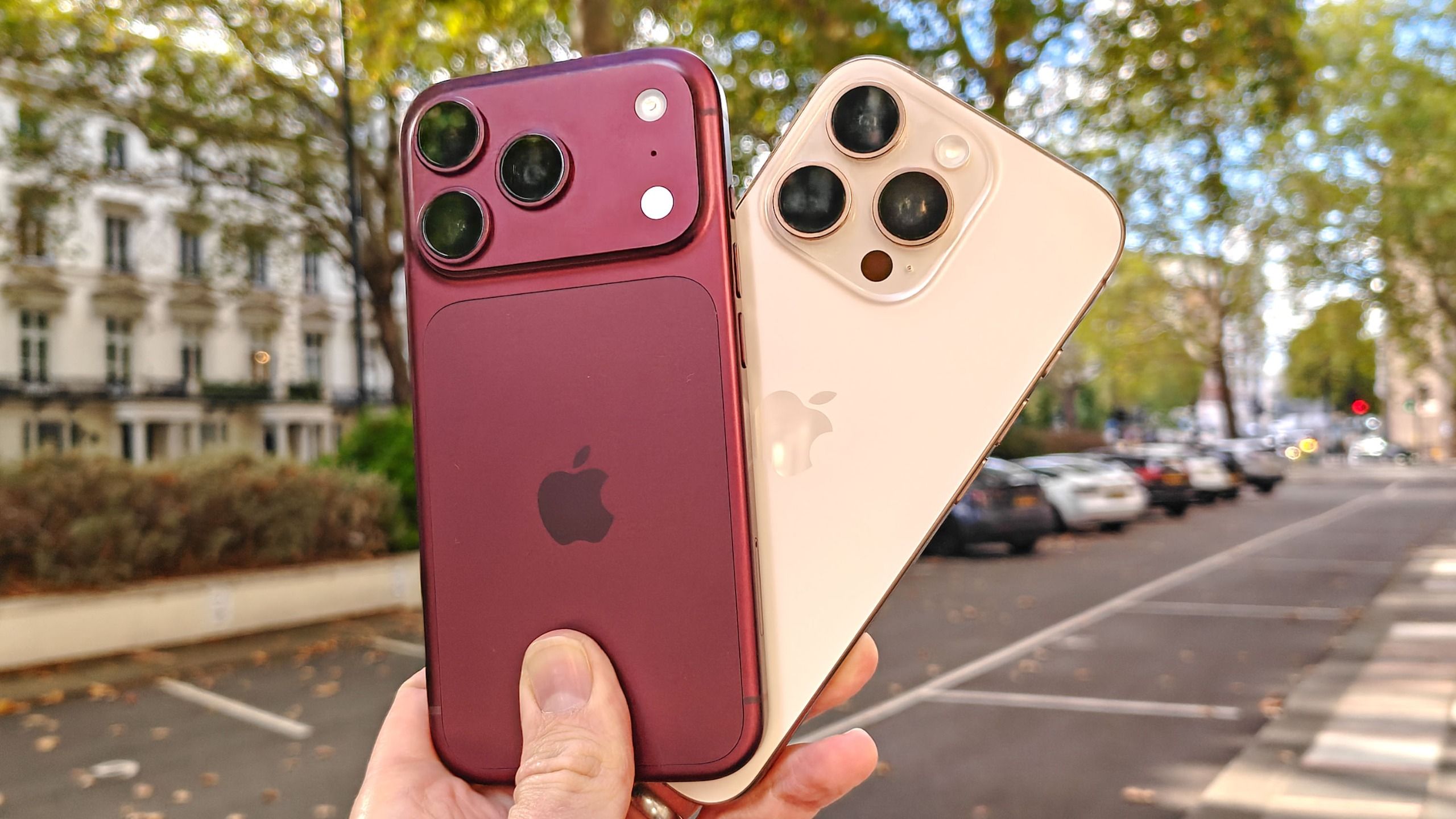
(Image credit: Tom's Guide / Jeff Parsons) The iPhone 16 Pro is only a couple of years old and remains a very capable handset. But with the iPhone 18 Pro now out in the wild and offering several big performance improvements, many people may be weighing up whether it’s time to upgrade.A good general rule of thumb is to upgrade every 3 or 4 years, but owners switching from an iPhone 16 Pro to Apple’s latest effort will immediately see a few changes. The camera island has become a camera plateau, the chassis has ditched titanium for aluminum and the Dynamic Island has noticeably shrunk.Having used both phones, I can give you the full breakdown on how they compare in my iPhone 18 Pro vs iPhone 16 Pro face-off. Back in 2024, the 16 Pro impressed on its debut with features like an upgraded 48MP ultra-wide camera, 4K 120 fps slow-mo videos and Audio Mix. In 2026, the 18 Pro takes things to an even higher level — albeit for an increased cost. So, is it worth making the switch?Read my full breakdown below to find out.iPhone 18 Pro vs. iPhone 16 Pro: Specifications Swipe to scroll horizontally Header Cell - Column 0 iPhone 18 Pro iPhone 16 Pro Price From $1199/£1,199/AU$2,099 From $999/£999/AU$1,799 Main Display 6.3-inch Super Retina XDR display (2,622 x 1,206) 6.3-inch Super Retina XDR display (2,622 x 1,206) Refresh Rate 1-120Hz ProMotion 1-120Hz ProMotion Processor A20 Pro A18 Pro Storage 256GB, 512GB, 1TB, 2TB 256GB, 512GB, 1TB RAM 12GB 12GB Front Camera 18MP Center Stage camera (f/1.9) 12MP (f/1.9) Rear Cameras 48MP main with variable aperture (f/1.48, f/1.8, f/2.8, f/4), 48MP ultrawide (f/2.2), 48MP telephoto w/4x optical zoom (f/2.8) 48MP main (f/1.78), 48MP ultrawide (f/2.2), 12MP telephoto w/5x optical zoom (f/2.8) Battery Capacity 4,056 mAh 3,582 mAh Charging 60W wired, 25W wireless 30W wired, 25W wireless Size 5.91 x 2.83 x 0.35 inches (150 x 71.9 x 8.8 mm) 5.89 x 2.81 x 0.33 inches (149.6 x 71.5 x 8.3 mm) Weight 7.44 ounces (211 grams) 7.02 ounces (199 grams) IP Rating IP68 IP68 Colors Black, Silver, Glacier, Burgundy Black, White, Desert, Natural Titanium iPhone 18 Pro & Pro Max Review! (Answering the Internet) - YouTube Watch On iPhone 18 Pro vs. iPhone 16 Pro: Price & Release (Image credit: Tom's Guide / Jeff Parsons)If you’re looking for pure value, then sticking with your older iPhone 16 Pro (or picking one up at a discount) is easily your best bet. When Apple launched it back in 2024, it came with a starting price of $999/£999/AU$1,799, which was the same price as the previous year.Unfortunately, we can’t say the same for the iPhone 18 Pro. This year, Apple added an extra $100/£100/AU$100 to the price to account for rising DRAM costs as well as manufacturing costs associated with moving to a new chip architecture.That’s slightly offset in this comparison because Apple raised base storage in 2025 from 128GB to 256GB. So although the iPhone 18 Pro is more expensive, you’re getting double the storage from the start. Regardless, if keeping costs down is your chief concern, then I’d advise holding onto the iPhone 16 Pro for another year at least — especially as Apple may have something interesting planned for the iPhone’s 20th anniversary next year.Sign up to the Tom's iGuide weekly newsletter with coverage on everything from product launches to software updates, this is your go-to source for the latest updates on all the best Apple content.iPhone 18 Pro vs. iPhone 16 Pro: Design (Image credit: Tom's Guide / Jeff Parsons)Apple made some notable changes last year, and while the changes between last year’s flagship and this year’s model are hard to spot, that’s not the case if you’re comparing the 18 Pro with the 16 Pro.The two biggest design changes are the shift away from a titanium frame back to an anodized aluminum unibody used in the past and a new camera plateau. Let’s talk aluminum first. Abandoning titanium means the iPhone 18 Pro is liable to be more affected by scratches and scuffs than the older device. Also, because it’s a softer metal, you can expect the iPhone 18 Pro to be more prone to dents or dings if you happen to drop it and you don’t have it shielded by one of the best iPhone 18 Pro cases. Apple likely anticipated this, which is why the company has added Ceramic Shield toughened glass to the back of the iPhone 18 Pro.However, Apple is able to do a lot more optimizing by switching back to anodized aluminum. For starters, the iPhone 18 Pro is lighter at 199g / 7.03 ounces compared to the 211g / 7.44 ounces iPhone 16 Pro. Secondly, because aluminum is a better heat conductor, Apple can use the entire chassis as a heat sink to manage the thermal output of the chip. To double down on this, Apple also added a vapor chamber as part of the design change that helps the phone achieve 40% better sustained CPU/GPU performance compared to a titanium frame.In practice, I don’t notice the difference in hand between the aluminum and titanium construction. Although titanium has that “premium” connotation, I’m happy to trade that for better performance. Time will tell if the iPhone 18 Pro chassis holds up to scratches or any potential discoloration, but for the most part I keep my phone in a case so it’s unlikely to be an issue for me.The camera plateau makes the iPhone 18 Pro ever so slightly more top-heavy in the hand than the iPhone 16 Pro, but Apple has balanced the weight evenly so you quickly become used to the upgrade. I personally don’t think it looks as good as a camera island but, as we’ll see, the camera upgrades that necessitated it are more than worth having a design that looks like it’s copying Google’s Pixel phones.Finally, you get a fresh set of colors for the iPhone 18 Pro that some people may appreciate. I personally really liked the Desert Titanium color on the iPhone 16 Pro, but the Burgundy colorway is also growing on me. It looks a bit more refined in the flesh and, for those who have been wanting it for years, the iPhone 18 Pro finally comes with a matte black color option.iPhone 18 Pro vs. iPhone 16 Pro: Display iPhone 18 Pro (L) vs iPhone 16 Pro (R) (Image credit: Tom's Guide / Jeff Parsons) Swipe to scroll horizontally Row 0 - Cell 0 iPhone 18 Pro iPhone 16 Pro Display 6.3-inch Super Retina XDR display (2,622 x 1,206) 6.3-inch Super Retina XDR display (2,622 x 1,206) Peak Brightness (tested) 2,314 nits 1,510 nits sRGB 115.2% 113.5% DCI-P3 81.6% 80.4% Delta-E 0.19 0.24 The iPhone 18 Pro has the same 6.3-inch display size as the iPhone 16 Pro, with the same resolution (2622 x 1206) and pixel density (~460 ppi). However, the newer device has a higher peak brightness of up to 3,000 nits (compared to 2,000 nits on the 16 Pro), which is noticeable when outside and in direct sunlight. That's Apple's own numbers, you can see our testing results showing peak brightness with adaptive brightness switched on in the table below.The extra brightness is made more effective by a specialized anti-reflective display coating Apple added for the 18 Pro. It reduces ambient glare and increases contrast in bright environments, and I appreciated it when I had both phones side-by-side outdoors.As mentioned, you also get a smaller Dynamic Island on the 18 Pro that can give you up to three Live Activities at once. In practice, this didn’t impact much on my day-to-day interaction with the phone, but it’s nice to have that pill cutout made a little bit less invasive.Otherwise, these are the exact same screens with Apple’s ProMotion technology with adaptive refresh rates up to 120Hz. So although in this regard, I’d hand the win to the iPhone 18 Pro, I wouldn’t consider the screen itself a reason to upgrade from the iPhone 16 Pro.iPhone 18 Pro vs. iPhone 16 Pro: Cameras (Image credit: Tom's Guide / Jeff Parsons)If you’re a frequent photographer, you’re going to find the upgrades present in the iPhone 18 Pro the most tempting. For starters, Apple has upgraded the 12MP Telephoto camera from the 16 Pro into a full 48MP Fusion Telephoto camera that’s now capable of up to 8x optical zoom and 40x digital zoom.Much of the excitement around the 18 Pro comes from mechanical variable aperture and native Pro-level controls in an iPhone for the first time. Unlike the iPhone 16 Pro, which has a main camera fixed at f/1.78, the 18 Pro can move through four physical stops: f/1.48, f/1.8, f/2.8, and f/4. This means you can manually open the aperture in low light for a better shot or close it down to keep multiple subjects sharp across depths.Accessing these controls is also now possible because Apple has, for the first time with the 18 Pro, added Pro Controls to its default camera app. Photographers can now make adjustments to things like shutter speed, ISO, white balance and manual focus. And that’s just in Apple’s own camera app. The company has said that third-party app developers will be able to utilize the mechanical aperture to offer a sliding scale rather than just the four physical stops Apple has predetermined.Meanwhile, the 12MP selfie camera on the iPhone 16 Pro is also bested by the 18MP Center Stage camera on the 18 Pro that supports tap-to-zoom, rotation and Dual Capture, where you can record from the front and rear cameras simultaneously.Here's how the two phones stack up across a few different pictures side-by-side.Starting with the main shooter, there's not a whole lot of difference to my eye between the two. Colors are nicely repurposed, but the iPhone 18 smooths out some of the crispness around the petals.In this image, taken with each flagship's selfie camera, you can see the iPhone 18 Pro's 18MP Center Stage camera provides a wider field of view. While I think my skin tone is more even in the iPhone 18 Pro's shot, and the dynamic range is also better, I feel like the detail on my sweater is closer to true life on the iPhone 16 Pro image.The two images above show the telephoto shooters on both phones. When you push the cameras to their limits — 40x on the iPhone 18 Pro and 25x on the 16 Pro — you can continue to see detail, like the outline of the brickwork around the lettering and the cracks in the wall.The iPhone 18 Pro's zoom is obviously better but when the benefits of a digital zoom are up for debate and camera fans better informed than I will be able to speak to that. What I do think is that there's a washed out look to the iPhone 18 Pro's picture at that increased magnification that I don't see on the iPhone 16 Pro.These are just a few small examples, and I still have more photos to take — particularly in low-light situations and experimenting with the iPhone 18 Pro's variable aperture. I'll update this article with more images when I have them, but it's clear both phones offer great dynamic range, detail, and color fidelity even before you start playing with the features.iPhone 18 Pro vs. iPhone 16 Pro: Performance iPhone 18 Pro (L) vs iPhone 16 Pro (R) (Image credit: Tom's Guide / Jeff Parsons)Our review process has already shown that the new 2nm A20 Pro silicon inside the iPhone 18 Pro is a step-up in performance. If you’re regularly pushing an iPhone into demanding territory — like gaming or photo editing — you’ll notice faster loading times or quicker rendering. That’s not to say the A18 Pro inside the iPhone 16 Pro is sluggish, but as our testing results below show, there’s a huge gain, especially in graphical performance. Swipe to scroll horizontally Row 0 - Cell 0 iPhone 18 Pro iPhone 16 Pro Chipset A20 Pro A18 Pro Geekbench 6 (single / multi-core) 4,735 / 12,800 3,400 / 8,391 3DMark Solar Bay Unlimited (fps / score) 61.9 fps / 16,288 28.6 fps / 7,519 That being said, the iPhone 16 Pro was a performance powerhouse when it launched and it still carries some muscle. While interacting with apps is fast and painless with the iPhone 18 Pro, many users will be happy with the performance still offered by the older iPhone.iPhone 18 Pro vs. iPhone 16 Pro: Battery & Charging (Image credit: Tom's Guide / Jeff Parsons)Apple increased the battery size for the iPhone 18 Pro to 4,056mAh over the 3,582mAh cell inside the iPhone 16 Pro. That’s a relatively minor 13% increase in capacity, but our real-world tests show that it makes a meaningful difference when you’re using the phone.Apple was quick to point out during its keynote presentation that the iPhone 18 Pro contains the same battery longevity as the iPhone 17 Pro Max. So when you stack it up against a handset two years older, the difference is clear. Swipe to scroll horizontally Row 0 - Cell 0 iPhone 18 Pro iPhone 16 Pro Battery Size 4,056 mAh 3,582 mAh Battery Life (hours:minutes) 16:17 14:07 Charging level in 15 minutes 53% 29% Charging level in 30 minutes 80% 56% Our testing showed the iPhone 18 Pro averaged 16 hours and 17 minutes, substantially outlasting the 14 hours and 7 minutes from the iPhone 16 Pro. Not only do you get over two hours of extra power from the newer device, but you also get faster charging speeds.The iPhone 18 Pro features upgraded 60W wired charging, nearly doubling the speed of the 16 Pro. In our tests, the 18 Pro took 15 minutes to reach 53% and 30 minutes to hit 80%. In those same timeframes, the 16 Pro charged to just 29% and 56%, respectively.iPhone 18 Pro vs. iPhone 16 Pro: Software & AI (Image credit: John Velasco / Tom's Guide)The iPhone 16 Pro and iPhone 18 Pro are both capable of running iOS 27 (the latter ships with it preinstalled) so there’s almost no difference in software. All of Apple’s AI tools, like Clean Up photo editing, Reframe, and interactive polls in Messages, are available on both phones.It’s too early to definitively say that Siri AI is preferable to ChatGPT or Claude, but Apple has made Siri into a conversational assistant that answers questions and can respond to what’s on your iPhone screen. The most important thing is that it can tap into all the information on your phone to help you organize content, interact with apps and websites and respond to notifications. It’s a stepping stone towards agentic AI that anyone baked into the Apple ecosystem may appreciate.iPhone 18 Pro vs. iPhone 16 Pro: Verdict (Image credit: Tom's Guide / Jeff Parsons)Although I can see some very worthwhile reasons for upgrading, notably the improvements in photography controls and a performance increase for mobile gaming, I’m not convinced you need to ditch the iPhone 16 Pro for the iPhone 18 Pro.It’s wonderful to have manual photography controls on a Pro model iPhone, as well as better battery life and the benefits of the A20 Performance. But you could look at this in the context of an “S” model iPhone. Next year will likely be an even bigger upgrade, and with the iPhone 16 Pro hitting three years old, the case for switching up at that point will be much more enticing. (Image credit: Future)Follow Tom's Guide on Google News and add us as a preferred source to get our up-to-date news, analysis, and reviews in your feeds. Make sure to click the Follow button!More from Tom's Guide Scammers are using iPhone Duo pre-orders to try and steal your passwords — here's how to stay safeI tore my living room apart looking for the Apple TV remote my son hid — until this iPhone feature saved the dayI checked out the new Samsung SmartTag3 — here’s why this tracker could be a game-changer Jeff is UK Editor-in-Chief for Tom’s Guide looking after the day-to-day output of the site’s British contingent.A tech journalist for over a decade, he’s travelled the world testing any gadget he can get his hands on. Jeff has a keen interest in fitness and wearables as well as the latest tablets and laptops. A lapsed gamer, he fondly remembers the days when technical problems were solved by taking out the cartridge and blowing out the dust.
I put the iPhone 18 Pro vs. iPhone 16 Pro through a 7-round face-off: Is the upgrade worth it?
Full Article
Original Source
Read the full article at Tomsguide →KhanList aggregates and links to publicly available news content. We do not host full articles from third-party sources. Always verify important information with original sources.