
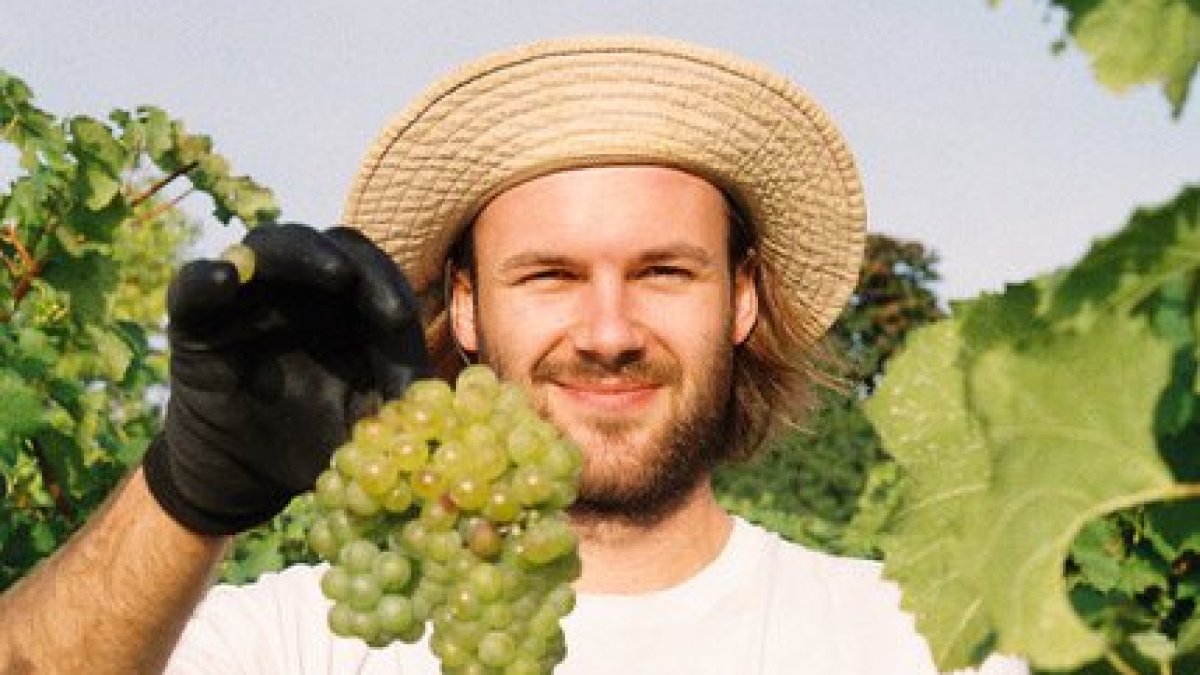
When George Loat, now 27, decided to launch his own wine business at 23, he didn’t have a vineyard or money, but he did have two very understanding parents. George, founder of boutique English wine brand One Another, went from making 300 bottles in his parents’ home in 2022 to producing 2,300 bottles in 2025. Now his customers include Daylesford Farm Shop in the Cotswolds as well as various Michelin-starred pubs. One Another began in the family home, and may never have got off the ground without the effort and patience of Loat’s parents, who were willing to sacrifice their space, time and, occasionally, their sanity. His mother Lisa Davies, admits barely a corner of the family home is free of wine, while most of the production was done in their outhouse. George’s sister Lily, 24, a fashion design graduate, also helps out, meaning the business is truly a family affair. Shorts New research by Starling Bank on the role parents play in creating UK start-ups found that 38 per cent of young founders were living at home when they launched their first business. Michelle Ovens CBE, CEO and founder of Small Business Britain, isn’t surprised. “The rise in young people starting small businesses is essential during a time when almost one million 16- to-24-year-olds are not in education, employment, or training, so encouraging more young people to explore entrepreneurship is essential,” she says. “Having the backing from family and friends, whether that’s financial support, a place to work or simply encouragement, can play a crucial role in turning a side hustle into a successful small business operation.” George’s journey into winemaking began during the pandemic. He was studying graphic design at Central Saint Martins in London when Covid disrupted his studies. Rather than continue learning remotely while paying expensive London rent, he moved back to his parents’ home in the Cotswolds and deferred the final part of his degree. A friend was volunteering at a small winery in southern France, and George asked to join him. “I thought it would be all sun, free wine – a free holiday really,” he admits. “But I soon discovered there’s a lot more to making wine than meets the eye. After a few weeks, I really fell in love with the people and process.” He stayed for three and a half months from summer to September, working the 2021 harvest, and by the time he arrived home, he’d caught the winemaking bug. In 2022, he travelled to Argentina, working in a larger winery with a more technical approach to production. By the time he returned home to Gloucestershire, George was determined to establish his own winery. There was just one problem. He had no premises, no equipment and very little money. Lisa admits that when her son first announced his plans, nobody fully appreciated what was involved. “We didn’t really set clear parameters from the outset because I don’t think any of us knew quite what we were in for,” she says. The family agreed to clear out an outhouse so George could turn it into a miniature winery. Meanwhile, George had a more pressing problem: money. “I got back from Argentina with nothing, so I did a Kickstarter campaign,” he explains. “I just about raised just over £6,000, enough money to buy everything I needed to make my first batch.” George admits the first production run was a disaster; with the grapes he’d acquired from a vineyard in Essex, he should have produced around 600 bottles. Instead, he managed just 300. But he admits the experience taught him a lot, and he was determined to keep going. Meanwhile, his parents were beginning to realise what it meant to have a winery at home. Both worked full-time, Lisa in communications and marketing for a charity, and her husband Nick, a self-employed graphic designer, yet their evenings and weekends were increasingly devoted to their son’s new venture. “We’ve done a bit of everything, from picking grapes, destemming them by hand and foot-stomping, to bottling, printing labels, and providing marketing and accountancy advice,” says Lisa. And the winery was no longer confined to the outhouse. “His bedroom is overflow wine storage, the kitchen table is an office and the worktops are quite often taken over by labelling and waxing bottle tops,” says Lisa. Then there are the unexpected houseguests. “One time we were visited by a group of young winemakers George met in South America who came to stay,” she says. “That night ended in impromptu music, wine and poetry in the garden.” Harvest time brings another level of mayhem, with George’s friends descending on the property to help process grapes, followed by huge celebratory meals. Fortunately, Lisa says the family embraces the chaos, “We’re all quite creative, we’re not the tidiest, and we have a high threshold for mayhem.” Of course, not every business that starts in the family home will be harmonious. Amy Taylor, who worked in government youth enterprise schemes for 10 years, says arguments often arise when money is involved: “When a child starts a business with family money, this may come with strings attached, and parents may want to be more involved in the day-to-day running than their child was expecting, to ensure their money isn’t being ‘wasted’. It’s one of the reasons I always encourage young people to look for external sources of funding, so as not to put a strain on family relationships.” But while the family home has become increasingly crowded, George’s business has flourished. After his disastrous first harvest, he turned to experienced winemakers he’d met in France and Argentina, regularly calling them for advice. That collaborative spirit inspired his business name, One Another, reflecting the sharing, learning, and cross-border connections that made the wines possible, and his graphic design degree helped him create a distinctive brand. Production has grown from just 300 bottles in his first year to 600 in his second, 1,000 in his third and enough wine for 2,300 bottles from the 2025 harvest. George, 27, earned a first in his degree after an initial deferral and works as a landscaper to keep him afloat financially, but hopes to grow the wine business enough to sustain him. Right now, he puts all the money he makes back into the wine business. For Lisa, seeing her son build a business from scratch has made the sacrifices worthwhile. “We’re incredibly proud of what he’s achieved,” she says. “During Covid, he was at the point of giving up on university, but he went on to gain a first, create a brand, work out business plans and build supplier relationships. He has literally built this from scratch.” What makes his achievement particularly impressive, she believes, is that he hasn’t had substantial financial backing. “Plenty of people start up, but lots have serious money behind them, which we were never in a position to provide. We haven’t put money into the business, but we’ve helped by providing a base and support in kind so he can build something.” Now George is preparing to move out of the family home, which might ordinarily mean his parents could look forward to reclaiming their space. But there’s a catch. “George is moving out, but the wine seems to be staying put a bit longer,” Lisa laughs. While most parents might be relieved to see their grown-up children finally leave the nest, Lisa faces an altogether different challenge: figuring out how to get several hundred bottles of wine to follow him.
‘I put a winery in the garden’: Gen Z are building businesses from the family home
Full Article
Original Source
Read the full article at Inews →KhanList aggregates and links to publicly available news content. We do not host full articles from third-party sources. Always verify important information with original sources.