
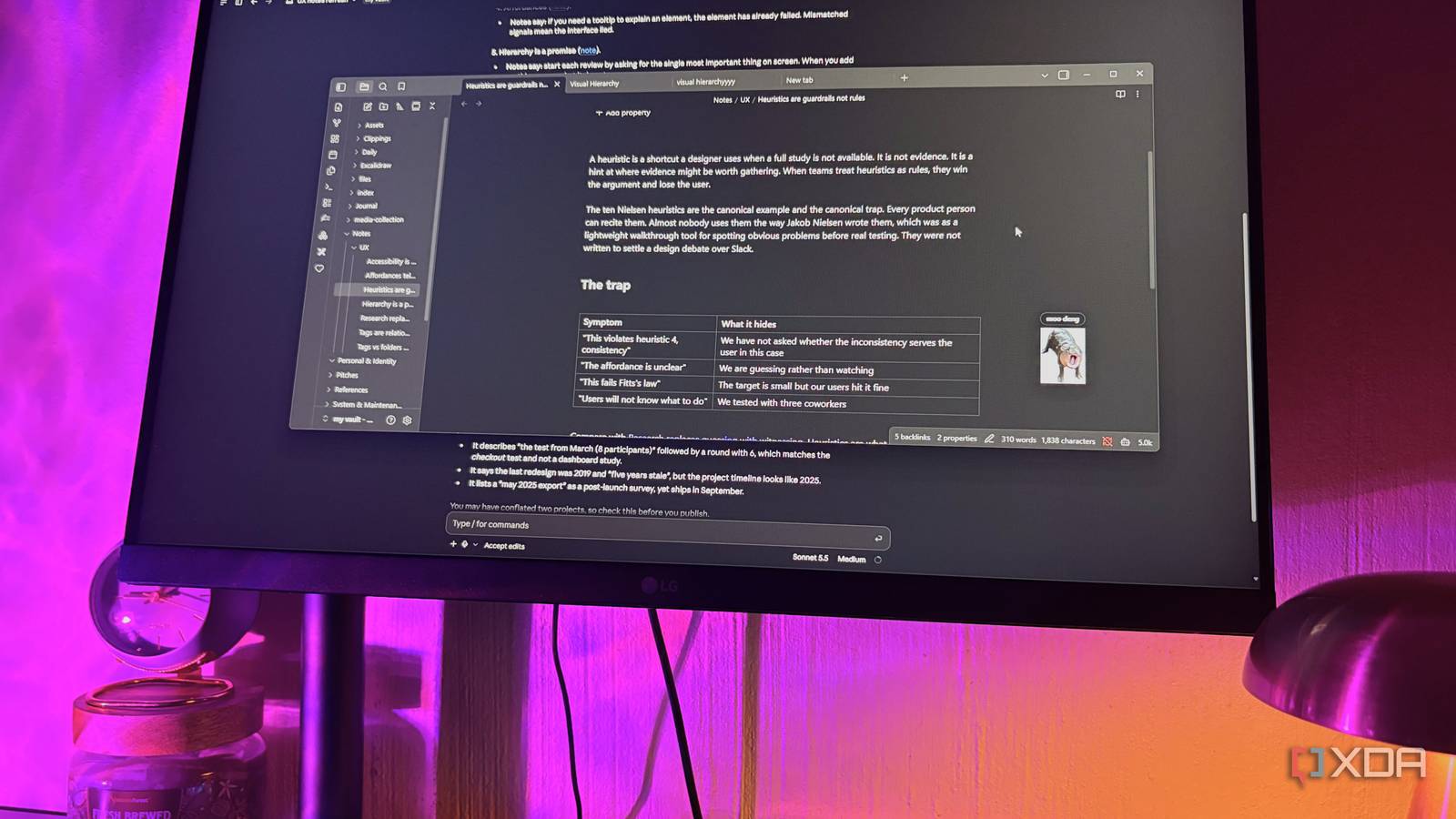
Published Oct 4, 2026, 4:00 PM EDT Nolen began their writing career in 2019, with three years dedicated to editing the Creative section at MakeUseOf. Their expertise lies at the crossroads of technology and creativity, covering areas like photography, video editing, and graphic design. Outside of work, you'll often find Nolen diving into a good book, writing their own stories, or playing video games. The concept of a second brain has been floating around in the productivity space for years, partly thanks to Tiago Forte's book Building a Second Brain, but especially so since AI entered the mix. The premise is that you put pretty much your entire digital life into one trusted system and let that system do the managing and remembering for you. Every system I've come across comes with a maintenance routine, and if you skip that routine then something like your Obsidian vault just becomes a graveyard of notes. Mine definitely did, and it came down to having the wrong approach. I thought of a second brain as its own separate thing that needed to be managed, when, with the right system, it's just a digital extension of your existing one. Claude Code helped me perfect this system. Want to stay in the loop with the latest in AI? The XDA AI Insider newsletter drops weekly with deep dives, tool recommendations, and hands-on coverage you won't find anywhere else on the site. Subscribe by modifying your newsletter preferences! My notes finally started talking to each other A brain remembers by connecting things Brains store memories as connections, so recalling something is just pulling up whatever's related to it. Obsidian's wikilinks are pretty much that idea turned into a feature. Wrap a note's name in double square brackets and the two notes are linked. The note on the receiving end picks up a backlink automatically too. The problem is that somebody actually has to make those links. In our own lives, it happens automatically; the brain picks up on information and stores it as we move through the world. Once you point an agent at the vault, you can get that same automatic loop and don't have to bother with typing out the little brackets and pasting in the note links. Claude Code reads across everything at once, so it catches connections between notes I wrote months apart and never thought of as related. For example, it pointed out that my UX notes on affordances keep showing up in my article ideas, usually to explain why switching tools is hard. I never linked those myself and didn't even notice. The cool thing about pointing an agent at your vault to make the connections is that they will never become fuzzy. When our brain recalls a memory, it tends to lose a bit of detail every time, so after five months you might end up with a completely different recollection of what actually happened. Claude Code sees the facts as they are every single time, and it also translates beautifully in Obsidian's Graph view - mine used to be a disjointed mess, now things actually connect and cluster where they should. It noticed things about my notes that I didn't Some patterns only show up when you read everything at once Your brain picks up on patterns constantly, usually before you consciously register them. A vault has patterns too, but nobody's reading the whole thing in one sitting to find them. This collection of data exists outside of my physical head so I'm not constantly filing through it. So I started asking Claude what themes keep coming up across my entire vault. The main one it found was owning my tools instead of renting them - it also showed me a bunch of pitch ideas I had but abandoned relating to this topic, with new angles I hadn't considered before. It also spotted a habit of checking things myself instead of trusting a claim. That one shows up even in the instructions I give Claude, which is a little funny in hindsight. The one that actually got me had nothing to do with work. My horror reading and watching habits keep circling back to houses that feel wrong and narrators you can't trust, with things like Hereditary and The Woman in Cabin in the mix. I had no idea my taste was that consistent, but I'm not really sure what to do with this information. I stopped trying to hold everything in my head The whole point of a second brain is remembering for you Even if you're not into the idea of giving an agent access to all of your personal notes, it might come in handy for study and research materials. Writing down a note or saving a document is the easy part - actually remembering what's in there is the hard part, and being able to synthesize the information is even harder. There are a lot of techniques out there for recall especially when you're studying for a test, so you can actually just take your favorite and give it to the agent. Something that tells it "here's what I need to remember, what I need to understand, and how I prefer to retain the information". Claude Code pulls the information from my notes and ranks it by what's going to matter later (I have reusable prompts to pull out information in different layouts). When I go back to something I haven't touched in weeks, I just skim those instead of rereading every single one, and when I want something to stick, I get Claude to quiz me on it - I recommend finding some quizzes online to see which format you like the best, and giving them to Claude as a template. The trick is letting something else do the remembering The one main theme throughout this setup is that I don't have to be the one that remembers everything or how stuff connects. It gets handled for me through plain language prompts, so I can just go in there and pull out what I need, or ask Claude to guide me through whatever it is that needs more attention. Obsidian OS Windows, macOS, Linux, iOS, iPadOS, Android Individual pricing Free normally; $4/month for Obsidian Sync
I pointed Claude Code at my Obsidian vault, and it became the second brain I never had the discipline to build
Full Article
Original Source
Read the full article at Xda-developers →KhanList aggregates and links to publicly available news content. We do not host full articles from third-party sources. Always verify important information with original sources.