
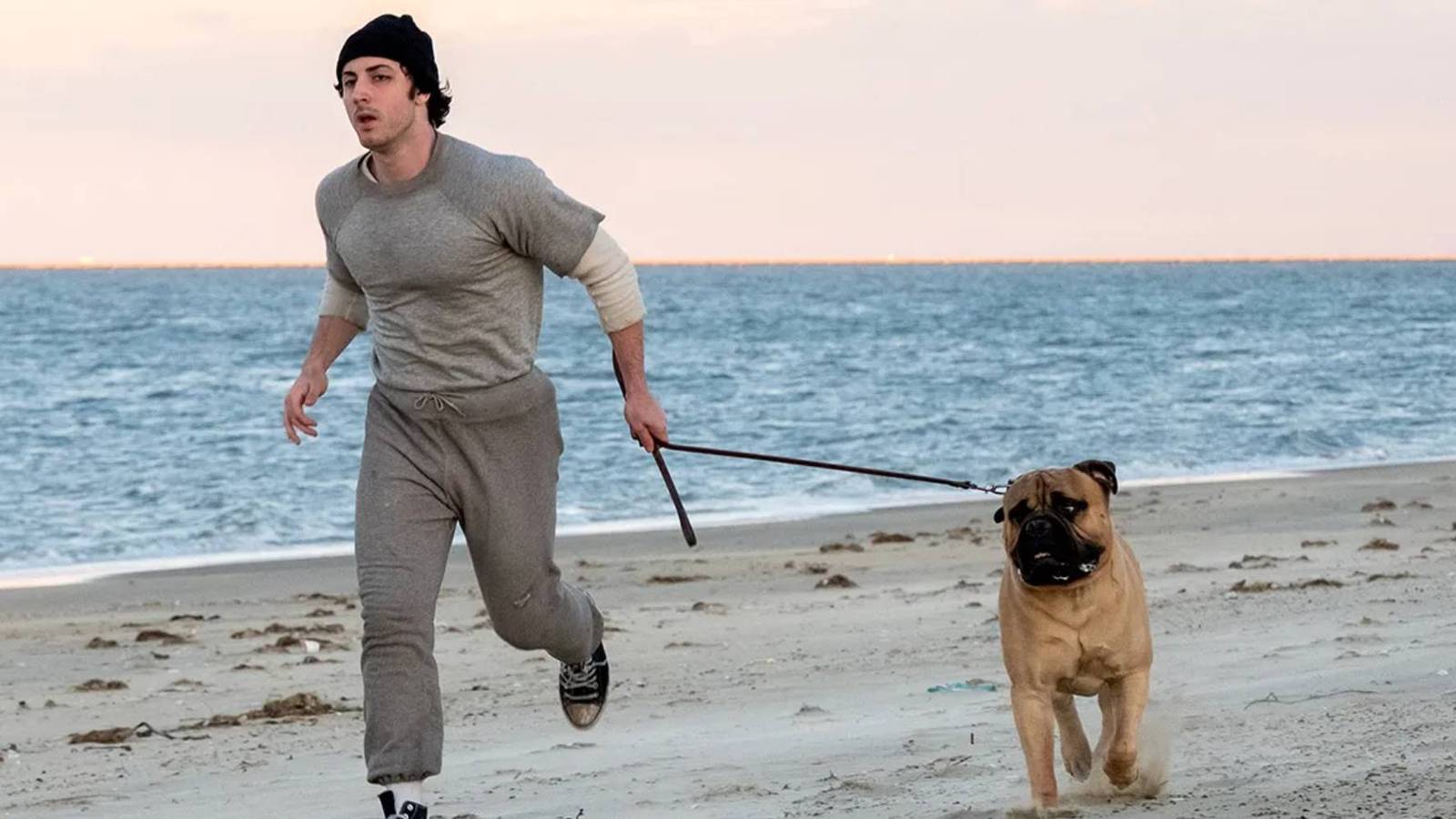
Published Nov 12, 2026, 7:01 PM EST George is a film critic and journalist with over nine years of experience in the entertainment industry. Beginning as the Co-Creator and Co-Editor of Star Wars Holocron, the most followed Star Wars fan account on Twitter/X, George went on to develop The HoloFiles, a movie and television-focused website with his brother and writing partner Josh. A member of the Hollywood Creative Alliance, Chicago Indie Critics, Online Film and Television Association, and the Internet Film Critic Society, George has covered major industry events as credentialed media, including D23, CinemaCon, SXSW, Fantastic Fest, Star Wars Celebration, Tribeca Festival, and more. He also regularly writes reviews and contributes articles to ScreenAnarchy, BRWC, Film Obsessive, TV Obsessive, and Under the Radar. George's work has been featured in various esteemed publications, including the BBC, Associated Press, Forbes, and The New York Times. Warning: Spoilers for I Play Rocky I Play Rocky punches its way into a limited number of theaters this week ahead of its wide release on November 20, 2026. The ending providing a promising glimpse of the real-life career that Sylvester Stallone ultimately enjoyed after the movie's historic release. The new film from Academy Award-winner Peter Farrelly chronicles Sylvester Stallone’s ascent from humble beginnings to worldwide stardom, tracing how grit, frustration, and an unwavering belief in himself helped bring Rocky Balboa to life. It is a behind-the-scenes underdog story about the making of a movie that would become an enduring piece of cinematic history. The film's ending brings this central conflict full circle, showing how Stallone's willingness to turn down a potentially life-changing amount of money ultimately gives him the opportunity to change his life in an entirely different way. After enduring financial hardship, personal sacrifices, and a physically demanding production, he finally gets to see his screenplay become a major motion picture. More importantly, the film's success validates his belief that he was capable of becoming more than the struggling actor Hollywood had repeatedly overlooked. Stallone's Insistence On Playing Rocky Is What Makes The Ending So Rewarding The ending of I Play Rocky ultimately vindicates Sylvester Stallone's decision to turn down a substantial amount of money rather than allow someone else to play Rocky Balboa. Throughout the film, Stallone struggles to establish himself as an actor in an industry that doesn't seem particularly interested in giving him a chance. Even after writing a screenplay that impresses producers Robert Chartoff and Irwin Winkler, he finds himself facing the same problem that has followed him throughout his career in that people are willing to recognize his writing ability, but they don't necessarily believe he has what it takes to become a leading man. When Chartoff and Winkler become interested in producing Rocky, they initially envision casting an established Hollywood actor in the central role. From a commercial perspective, their reasoning makes sense as Stallone is an unknown quantity, and giving the lead role to a recognizable star would presumably make the project easier to market and sell tickets for. However, Stallone refuses to separate himself from the character he has created. He believes he understands Rocky in a way that another actor simply couldn't, and he is unwilling to watch someone else bring his creation to life. He's offer substantial amounts of money, but doesn't relent. It's this decision that gives the film's conclusion its emotional significance. Stallone isn't simply gambling on the possibility of becoming famous. He's risking financial security because he believes that playing Rocky is the opportunity he's been waiting for throughout his entire life. When Chartoff and Winkler eventually convince United Artists to finance the movie with Stallone in the lead role, he accepts a considerably smaller payday in exchange for the opportunity to star. It's a tremendous risk, particularly given the conditions attached to the production, but it is also the moment when he finally gets to take control of his own future. The film's eventual success makes that decision look like an obvious one in retrospect. However, I Play Rocky makes a point of showing just how uncertain everything was at the time. Stallone had no guarantee that audiences would embrace him, that the production would be completed, or that the finished movie would even find an audience. The Scene With Mickey Is The Moment Stallone Finally Finds Rocky's Emotional Core Although the success of Rocky provides the obvious conclusion to Stallone's journey, one of the most important moments in I Play Rocky actually happens during the film's production. After filming gets underway, director John G. Avildsen begins to recognize that something is missing from Stallone's performance. The footage is good, but Avildsen doesn't believe the leading man has yet delivered the kind of emotionally powerful performance the film desperately requires. This poses a frustrating challenge for Stallone, who has already fought incredibly hard to secure the opportunity to play Rocky, and now he has to prove that his decision to insist on the role was justified. The production itself isn't making things any easier on Stallone. Working with a limited budget and a demanding schedule, the filmmakers are under considerable pressure to complete the movie without falling behind. Stallone is also struggling physically, dealing with injuries to his legs and hands while battling the flu. It's against this tumultuous backdrop that the production reaches the pivotal confrontation between Rocky and his trainer, Mickey. The scene isn't working as originally written, leaving Stallone and Avildsen searching for a way to make the emotional exchange more convincing. Eventually, Stallone draws on his own complicated relationship with his father, using years of frustration and personal disappointment to inform Rocky's dialogue. The resulting monologue becomes the emotional breakthrough Avildsen has been looking for. What's particularly interesting about this moment is how closely it connects Stallone's personal experiences with the character he's trying to portray. Rocky might be a fictional boxer, but his feelings of inadequacy, frustration, and determination are rooted in emotions Stallone understands firsthand, primarily due to the relationship with his father. The scene also helps explain why Stallone was so unwilling to let another actor play the character. He wasn't simply attached to the screenplay because he had written it. He believed he had something personal to contribute to Rocky's emotional journey, something that went beyond the physical requirements of playing a boxer. In this sense, the Mickey confrontation becomes a defining moment for both Stallone and the story within the film. It's where his experiences finally translate into the kind of performance that makes Rocky feel like a fully realized person rather than simply an underdog in a boxing story. Why Stallone Buying Butkus Back Is More Than Just A Happy Reunion Credit: Amazon MGM Studios Another important moment leading directly into the movie's conclusion involves Stallone's reunion with his beloved dog, Butkus. Earlier in the story, Stallone's financial circumstances become so desperate that he is forced to sell Butkus to a man outside a convenience store. With Sasha pregnant and their bills continuing to mount, he has little choice but to make the heartbreaking decision in order to afford groceries. It's one of the film's most painful reminders of just how far Stallone has fallen from the Hollywood success he dreams of achieving. However, after securing the deal for Rocky, Stallone finally has enough money to approach the man who purchased his dog and buy Butkus back. On the surface, this is a straightforward feel-good moment. Stallone has found a way to reunite with an animal he loves, and the audience gets the emotional satisfaction of seeing the two together again. But the scene also represents something more significant about the nature of his eventual success. Throughout the film, Stallone's financial struggles repeatedly force him to sacrifice things that matter to him. His acting ambitions have left him unable to provide the kind of life he wants for his wife, and his decision to sell Butkus is perhaps the clearest illustration of how desperate his circumstances have become. Getting the dog back, therefore, is an early indication that his circumstances are finally beginning to change. It's also a useful contrast with the decision he makes when the producers offer to buy his screenplay. Stallone could have accepted the money and immediately escaped his financial difficulties, but he chooses to hold out for something greater. When he finally receives a production deal, he gets the opportunity to recover some of what he has lost without surrendering the dream that brought him to Hollywood in the first place. Butkus's return is a small victory compared with the eventual success of Rocky, but it gives that success a much more personal dimension. Indeed, Butkus is actually in Rocky and Rocky II as Rocky Balboa’s pet. How Rocky's Success Mirrors Stallone's Own Underdog Story The final sequence of I Play Rocky shows the film finally reaching audiences, beginning with a relatively modest premiere in New York City before quickly becoming a major success. Although this marks the end of the film, on-screen text makes it clear that Rocky went on to capture the imagination of moviegoers, earn widespread critical acclaim, and go on to win multiple Academy Awards. This makes for an exceedingly rewarding ending for a film that has spent so much time emphasizing the similarities between its central character and the fictional boxer he creates. Rocky Balboa begins as a relatively insignificant figure, a small-time boxer who gets an unexpected opportunity to compete against heavyweight champion Apollo Creed. He's not expected to win, and the odds are overwhelmingly against him. However, Rocky's objective isn't necessarily to defeat Apollo. He wants to prove that he can go the distance and demonstrate that he's capable of achieving something that nobody expects of him. Stallone's journey follows a remarkably similar trajectory. For much of his life, he has been treated as someone who doesn't have the necessary qualities to become a successful leading man, in part due to his looks and in part due to his perceived intellect. His father dismisses his ambitions, producers initially refuse to consider him for the role of Rocky, and his financial circumstances repeatedly threaten to derail his career. Despite repeated pushback, Stallone continues pursuing his ambition, eventually creating a screenplay that gives him the opportunity to prove himself. The parallel proves particularly profound as the conclusion makes it clear that Stallone isn’t simply writing a story about an underdog. In a way, Rocky is a pseudo-true story about a person overcoming extraordinary odds to achieve greatness. I Play Rocky concludes by bringing its central themes together in the most satisfying of ways. Stallone spends the film trying to convince the world that he deserves a chance, while Rocky Balboa spends his own story trying to prove that he belongs in the ring. Stallone doesn't just make a successful movie about an underdog. He becomes the living embodiment of the story he has written, turning his own struggles into the greatest sports movie of all time. Indeed, sometimes life imitates art. I Play Rocky Release Date November 20, 2026 Runtime 127 minutes Director Peter Farrelly Writers Peter Gamble Producers Toby Emmerich, Michele Weiss, Peter Farrelly, Christian Baha Cast Anthony Ippolito Sylvester Stallone I Play Rocky is a documentary film that explores the life of Sylvester Stallone, the actor and writer behind the iconic Rocky film series. The film delves into Stallone's journey from a struggling actor to a Hollywood star, highlighting his perseverance and determination that led to the creation of the beloved Rocky character.
I Play Rocky Ending Explained: The Incredible True Story Behind the Making of Rocky
Full Article
Original Source
Read the full article at Screenrant →KhanList aggregates and links to publicly available news content. We do not host full articles from third-party sources. Always verify important information with original sources.