
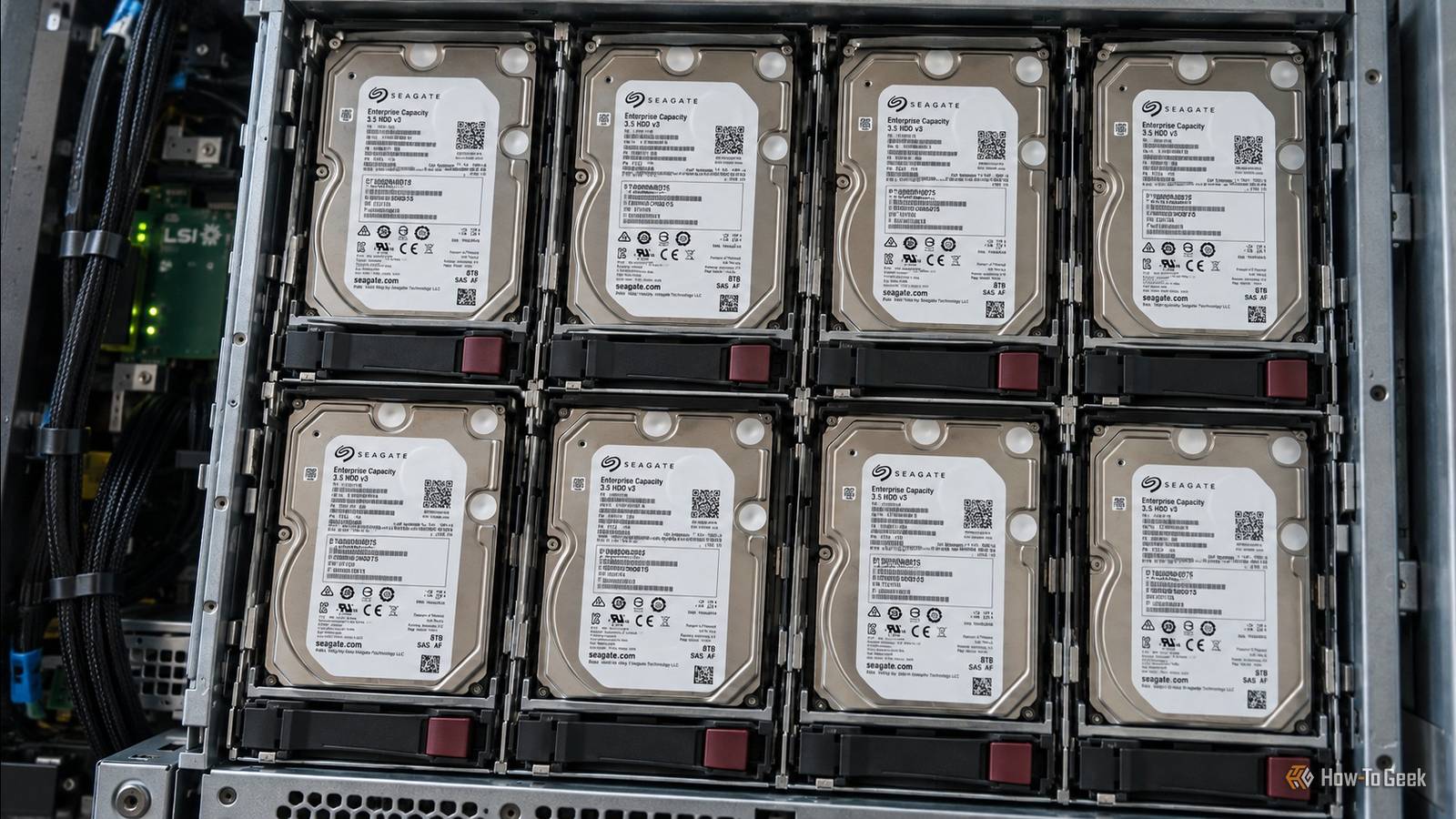
Published Oct 5, 2026, 3:30 PM EDT Sydney Butler is a technology writer with over 20 years of experience as a freelance PC technician and system builder and over a decade as a professional writer. He's worked for more than a decade in user education. On How-To Geek, he writes commerce content, guides, opinions, and specializes in editing hardware and cutting edge technology articles. Sydney started working as a freelance computer technician around the age of 13, before which he was in charge of running the computer center for his school. (He also ran LAN gaming tournaments when the teachers weren't looking!) His interests include VR, PC, Mac, gaming, 3D printing, consumer electronics, the web, and privacy. He holds a Master of Arts degree in Research Psychology with a minor in media and technology studies. His masters dissertation examined the potential for social media to spread misinformation. Outside of How-To Geek, he hosts the Online Tech Tips YouTube Channel, and writes for Online Tech Tips, Switching to Mac, and Helpdesk Geek. Sydney also writes for Expert Reviews UK. He also has bylines at 9to5Mac, 9to5Google, 9to5Toys, Tom's Hardware, MakeTechEasier, and Laptop Mag. The simple reason? It's trust. I simply, personally, don't trust Seagate as a hard drive brand anymore. Is it fair to avoid an entire brand? If you look under the hood at what a brand actually is, it might not make too much rational sense. Even my own personal philosophy has always been to judge products on their individual merits. A brand is simply a public-facing fiction. It doesn't actually tell you much about what goes on behind the scenes. You don't know who actually makes the panel inside your TV, and the badge on your car does nothing to improve its reliability. But if a company makes good products, its brand acts as a target for all that goodwill. The brand becomes associated with good products. Trust takes a long time to build. Consider how Samsung and LG went from "cheap but good" brands to two of the world's premium electronics makers. Then consider how LG, with its privacy scandals, has managed to destroy its reputation in just a few months. Seagate’s reputation has some expensive history behind it Fool me once... Which brings me to Seagate. This is a hard drive brand I've spent a decent amount of money on over the past 25 years. Of the 20TB of mechanical hard drives I currently own, there's a single Seagate 8TB expansion drive that's still trucking, but it's likely the last Seagate drive I will ever buy, and it certainly doesn't have a mission-critical job. It's a Plex drive holding data that can always be replaced from other sources. My misgivings about Seagate started in 2015 when Backblaze published a report showing that its Seagate hard drives had an annualized failure rate of 43.1%. Specifically, the 3TB Barracuda ST3000DM001 was causing problems. On its own, this isn't a big deal. Sometimes a company makes a bad product, but Seagate never formally acknowledged that this drive had issues that went beyond the usual expected failure rate. Users filed a class-action lawsuit (as reported via Extreme Tech), and Seagate pushed back against the allegations that the drives had inherent issues. It raised several defenses, including that Backblaze was using these drives as server units when they were designed to be desktop drives, and that regular users with failed drives could just use the regular warranty and RMA channels. However, the plaintiffs alleged that replacement drives also failed, in section B.1.a of the court filings. The court denied the renewed motion for class certification because it felt it would require too much individualized analysis to confirm this warranted class-wide litigation. But if you read Backblaze's analysis of the drive failure, it's hard not to think, "where there's smoke, there's fire." Most tellingly, the new 4TB ST4000DM000 drives the company installed had an annualized failure rate of only 2.6% according to that data. My distrust, therefore, has nothing to do with a brand having one bad drive, but everything with how that brand decided to deal with the issue. Compare that to, for example, Microsoft's handling of the Xbox 360 Red Ring of Death. One of the most expensive and painful recall and repair programs in history. Yet, it managed to repair the Xbox brand's reputation. Western Digital 6TB WD Blue Storage Capacity 6TB Workload General-purpose It's hard to beat the price per gigabyte of the WD Blue at larger storage sizes, although that does come at the cost of slower RPMs. The newer reliability research hasn’t restored my confidence The numbers still aren't adding up There's plenty of legitimate criticism of the Backblaze data by Seagate brand defenders (yes, even HDD brands have fans), but recent data doesn't fill me with confidence. A research paper titled Are There Manufacturer Differences in Hard-Drive Reliability? published in June 2026 did a thorough statistical analysis that adjusted for drive age, capacity, form factor, and temperature using Backblaze's data. What it found, when controlling for as many factors as possible, is that HGST (Hitachi Global Storage Technology) drives from this dataset were the most reliable, and that Toshiba's drives were actually slightly less reliable than Seagate's. However, Western Digital's failure rate was only 52% of Seagate's. You should read the whole paper if you want to know the methodology and how they arrived at these numbers, but assuming the methods were sound, that's more than enough to divert my money to WD or the (WD-owned) HGST drives that are still around from before the final rebrand. Seagate makes good drives, but it hasn’t earned my business back The problem with statistics on massive datasets is that they don't really predict your personal experience. If you buy a single Seagate drive today, then odds are it's going to be just fine. If you buy a bunch for a NAS, you're more likely to see some of them fail, statistically. At least based on the data analyses I've cited so far. But it doesn't matter if an individual Seagate drive might be very good on its own merits. The question is if I feel OK doing business with Seagate. For me, personally, the answeris "no," and honestly, I'm not sure what the brand can do at this point to change that. Just like I never touched a Toshiba drive again after having to replace 30 faulty drives in a single afternoon at my high school's computer center in the early 2000s. Maybe it's just personal bias, but it's also my personal money.
I own 20TB of HDD storage but refuse to buy Seagate for one simple reason
Full Article
Original Source
Read the full article at Howtogeek →KhanList aggregates and links to publicly available news content. We do not host full articles from third-party sources. Always verify important information with original sources.