
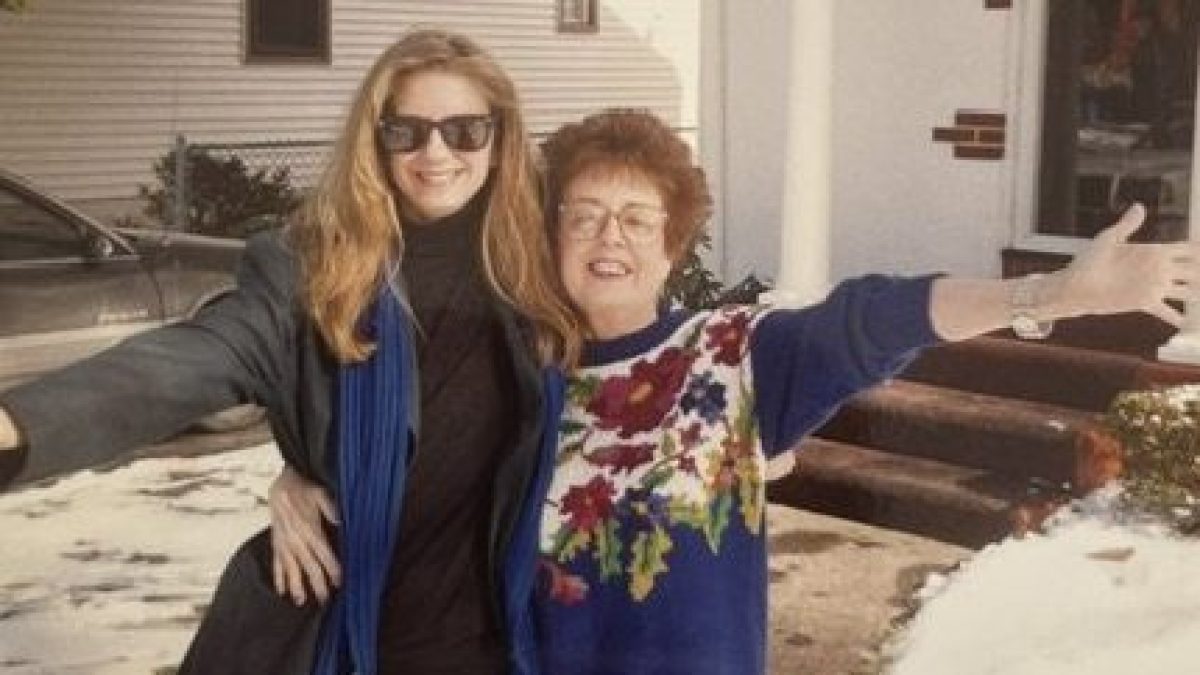
Susanne White never got on with her mother. “We had a very difficult relationship,” she says. “If we were in a room together for more than an hour, there’d be an argument.” Yet when White’s mother was diagnosed with dementia, she stepped in to help care for her. Suddenly, the two of them were forced to spend huge swathes of time together. “My dad was a stoic war veteran,” says White, who worked in the music industry doing marketing and promotion. “He had heart issues and had got exhausted taking care of my mum. I asked if he wanted help, and he said yes.” White is the elder of two sisters, but she lived closest to her parents, although it was still a couple of hours’ drive down the motorway. “I knew it was going to be difficult, and I was frightened,” says White, “but I did it anyway, because regardless of what kind of relationship I had with my mum, I felt it was the right thing to do. “But jumping in and dealing with it was a nightmare; it was like a war zone some days.” Shorts White, who had a great career and social life, spent the last four years of her fifties being a carer to someone who mostly didn’t seem to want her around. “My mum was a very self-sufficient, independent, dynamic and big personality,” says White. “She handled all the finances at home, all the scheduling, and she was a perfectionist. She didn’t want help from anyone, and she was especially angry that it was me giving her that help. I was this person she had long battled with, whose opinions had always been so different from her own. “She was angry, resistant, and nasty about it, and there were times when I’d stand in the kitchen and she’d say, ‘Go home, I don’t need your help’. I’d think, ‘Oh my gosh, how am I going to do this?'” Age UK has found that at least four million middle-aged adults in the UK are the main carers for their elderly parents, and that there are many more who are hugely involved in their care in some form. In a survey done by carer support organisation Carents.co.uk, 93 per cent of people report receiving a dismissive or unhelpful response when they talked about their caring experience. The most common responses include: “She’s your mum, it’s only family”, “Just get on with it”, and “At least you still have them.” Dismissal was reported to come from every direction: from family, from employers, and from health and care professionals. Although so many adult children step into caring roles for relatives (around four per cent of over 65s in the UK live in care homes), that doesn’t mean the relationships are always cosy and loving. Susanne White: My mother didn’t want help from anyone, and she was especially angry that it was me giving her that help Dr Jackie Gray is a GP who gave up her job to look after her father in his final years. In 2020, after experiencing the gaps and shortfalls in support services for older people and their families, she founded The Carents Room, which helps adult children looking after their ageing parents. “Lots of people feel their parents weren’t particularly good parents, not engaged, ambivalent about them,” says Dr Gray. “But all of a sudden, when that parent becomes dependent, and in need of someone, what happens then? The state says families don’t have to do it if they don’t want to, but if you don’t, who will?” In cases where families don’t step in, the state appoints a guardian, and it involves a slow legal process. Caring for a loving, wonderful parent can be difficult enough, but Gray also comes across adult children facing very extreme situations. “One of our carers was emotionally abused by her mother,” says Gray, “but that mother is now on her own and needs help. Social services keep getting involved in recurring crises, but her daughter has this ongoing conflict where the authorities think she has a role to play; she feels society expects her to play that role, but she doesn’t know how to do it, because of the abuse she suffered.” Grays sees this sort of situation come up time and time again. “Someone in that situation will hear everything from ‘Oh, just get on with it’ to ‘You shouldn’t do anything, they don’t deserve it’, and everything in between. These are moral dilemmas; they’re not problems with an answer.” Alisoun Milne is professor emeritus of social gerontology and social work at the University of Kent, who says: “A lot of the leaflets and forms for carers you might get at a GP surgery, for example, will often refer to ‘looking after a loved one’, but one care agency at an event I went to recently said they no longer use the phrase ‘loved one’, because actually, you might not actually feel love for this person.” Milne felt this was an interesting acknowledgement that some care relationships are not particularly healthy, “that sometimes people end up in care relationships that might be quite toxic, [with] people [who] are overburdened, and that their health can be damaged by care”. After six months of being there for her mother, White felt burnt out. “I remember I was driving on a motorway to my mother, and I just knew I could not continue like this anymore, going into the battlefield. I realised that she was not going to change at this point, so I had to. “It didn’t happen overnight, but slowly but surely, I looked at our relationship. I had to look at how I responded or how I reacted, what triggered me, what worked. I began to understand that if I wasn’t so defensive, or going into a conversation ready to argue, she’d get softer. So it was probably one of the best things that ever happened to me. It forced me to really look in the mirror.” White’s mother died in 2010, and although there were mixed emotions during that four-year care period, White doesn’t regret her choice. “That period of time meant I actually was able to repair my relationship with my mother, because I was forced to, in order to survive the caring. I used to think we were so different, but now I see that we fought so much because we were so alike.” Gray finds that when a parent is suddenly in crisis, it’s hard for an adult child to step back and think straight about what is reasonable, and doable, for them to take on: “Where possible, though, it’s important to work out what’s right and wrong for you and the relationship that you had with that person, and how it affects you and your own health and wellbeing.” For White, who wrote Self-Care for Caregivers: A Practical Guide to Caring for You While You Care for Your Loved One, and runs the Caregiver Warrior platform to support carers, the key is to remember that there are so many people out there grappling with the same thing. “When we pick up the mantle of caregiving, we also need to be kind and gentle to ourselves. There are no rules. There’s no manual. Every situation is different. We all have self-doubt.” White went on to care for her late father, who was more demonstrably loving to her. She still has a voicemail from him, where he’s sitting in the sun and thanking her for what she’s done for him and her mother. On the particularly tough days, when White would ask herself why she was doing this, she’d remind herself: “Because they’re my parents.”
I never got on with my mum – but when she got dementia, I became her carer
Full Article
Original Source
Read the full article at Inews →KhanList aggregates and links to publicly available news content. We do not host full articles from third-party sources. Always verify important information with original sources.