
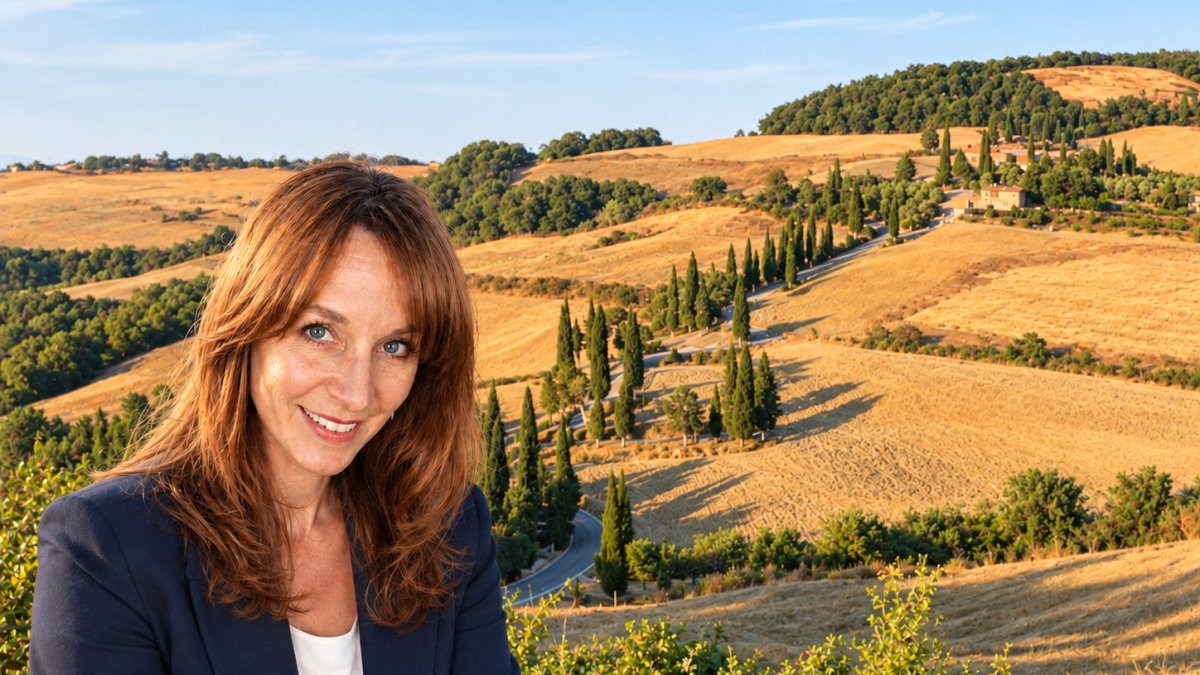
Around half a million people leave the UK to live abroad each year. A survey by the British Council showed 72 per cent of 18- to 30-year-olds would consider living and working overseas, with cold weather, the high cost of living, extortionate childcare, a lack of work-life balance and even poor romantic prospects among their motivations for leaving the country. The i Paper’s Expat Files follows Britons who have taken the leap and settled elsewhere, detailing the ups and downs of their journeys.Aisling Sullivan, 48, moved from Dublin to Milan before settling in Monticchiello, Tuscany, in 2021 with her Italian husband, now 45, and their son, who turns six this month. She tells Francesca Lombardo about buying a €200,000 (£167,000) home in a postcard landscape – and why she still doesn’t feel at home. I speak fluent Italian, my husband is Italian and our son goes to the local school. Yet, five years after moving to the Tuscan countryside, I still feel I belong more in Ireland and, at times, Milan. Do I miss city life? Yes, most days. Shorts We live in Monticchiello, a historic village in Val d’Orcia, Tuscany’s Unesco-listed landscape of rolling hills. It is like living in a postcard; the end of our road is a famous postcard image. I appreciate that beauty every day, but feeling at home is more complicated. I met my husband in 2014 at a language exchange in Dublin. I was 36 and studying Italian as a hobby; he was taking an intensive English course for work. Until 2015, I rented a small one-bedroom apartment overlooking the River Liffey, on the outskirts of Temple Bar, for €700 a month. After a year of travelling between Dublin and Milan, I moved into his apartment. We couldn’t afford to settle in Milan, so we bought our Tuscan home in 2018 for €200,000 (£167,000). It is a two-bedroom, ground-floor maisonette just outside the historic centre, with two private gardens and a basement. Ironically, our monthly mortgage here is lower than my Dublin rent a decade ago. Initially, it was a weekend escape and holiday let. We rented it successfully in 2019, but the pandemic cancelled our bookings. Our son arrived in 2020, and the Milan apartment felt too small during lockdown. With my teaching now online, the Tuscan house offered more space. We moved permanently in 2021. These days, my alarm goes off at 6.45am to get our son ready for the school bus, which collects him outside our home for the 15-minute journey to primary school in Pienza. Then I start work. My clients are still mainly in Milan. My husband works remotely in software sales, so professionally our lives have changed surprisingly little. Getting around costs more than in Dublin. There, I could walk everywhere, including to work, and never needed a car. Tuscany was the first place I bought one. Here, we run two cars, and fuel, insurance and maintenance add up considerably. Working from home has brought unexpected expenses, too. Poor mobile reception meant installing a rooftop signal amplifier. After broadband outages lasting entire days, we also started paying for a back-up connection. Heating the house through winter is another expense. Some of our housing savings are offset by the extra costs of running a home and getting around. For my weekly grocery shop, I drive 15 minutes to Montepulciano and spend around €150 (£125). Grocery prices haven’t surprised me compared with Dublin: some things cost less, while others are more expensive. A separate surprise, however, has been children’s clothes and shoes. I find those essentials much more expensive in Italy, with less choice than in Ireland. I top up at the village grocery shop when I forget something, and we get our olive oil directly from a producer. But I miss Dublin’s restaurants and vegetarian options. We loved going out for Mexican or Thai food. Here, traditional Tuscan cooking dominates. Wild boar is a staple, which is not much use when you are vegetarian. Even finding a really good pizza can be surprisingly difficult. Winter can be especially limiting. Nearby towns go from summer parking battles to feeling like a ghost town between January and April, when seasonal businesses close. We visit Florence to break up the monotony, but I miss having museums, theatre and exhibitions close by. In Dublin, I performed in musical theatre; my social life revolved around putting on shows. That creative outlet simply doesn’t exist for me here. The hardest part, though, has been making friends. People here are cordial but closed. The main leisure and bonding activity here is hunting, which is not something I can participate in as a vegetarian and an animal lover. This fundamental difference creates an immediate boundary between the local community and us. I feel that generations of family connections leave little room for newcomers. Even my husband feels like an outsider. I deeply miss the warmth, laughter and spontaneous buzz of Irish people. I miss last-minute coffees with friends and bumping into familiar faces on Grafton Street. I miss theatre trips followed by a drink to discuss the performance, and Dublin pubs filled with music and singing. Above all, I miss socialising in my own language, where I can truly be myself. Even with fluent Italian, socialising requires mental effort. Humour is hardest: the wit and timing don’t always land the same way in a second language. School has brought conversations, and I go to a weekly dance fitness class, but those encounters have not yet developed into deeper friendships. Going back to Ireland involves a drive of around two and a half hours to Pisa or Rome airport, which also makes it harder for family and friends to visit us. Still, there is so much I love here: extraordinary sunsets, an aperitivo in the garden and snow on Mount Amiata in winter. I can finish work, step outside and take in that view. I believe moving was right for our family. I can miss the warmth of Ireland and appreciate what we have here at the same time. And if going back in time and making different decisions would have meant not having my son, I wouldn’t change a thing.
I moved to idyllic Tuscany – even after five years I struggle to make friends
Full Article
Original Source
Read the full article at Inews →KhanList aggregates and links to publicly available news content. We do not host full articles from third-party sources. Always verify important information with original sources.