
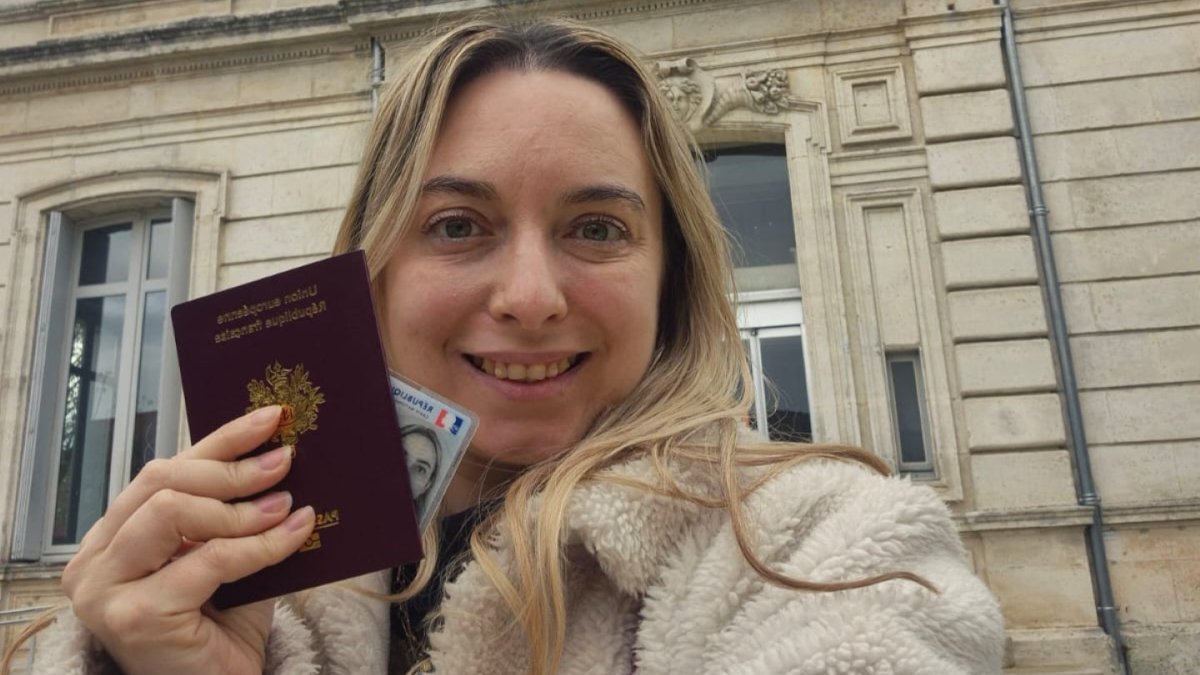
As mortgage rates rise, the average age to buy a first home in the UK has risen to 34 nationally, reaching 35 in London. The share of first-time buyers under the age of 25 has also dropped sharply to just 6 per cent, compared to a quarter of all first-time buyers in the 90s. But things are different across the Channel. The average age of a first-time buyer in France is 31, with 30 per cent able to buy between 25- to 28-years-old. Charlotte Van Spall, 35, moved to rural France as a child. She was ready to buy her first home in her mid-twenties. Here, Charlotte, who runs her own business assisting expats in France, compares her life to her peers back in the UK. Interview by Gillian Harvey.When I was nine, my parents announced we were moving to France from our home in Dewsbury, Yorkshire. I felt anxious about the move, particularly about leaving my friends and starting school in another language. Although we’d spent holidays in the country travelling around in our caravan, I only knew a handful of French words. My parents took the decision to put me and my sister Francesca, then six, straight into the French school system. It was really difficult at first, but while we may have had wobbles in the early days, we eventually made friends and were both fluent in French within a year. In retrospect, it was the best possible decision they could’ve made for us financially. After four years in France, they sold their three-bed, semi-detached house and bought a large three-bed longère with over two acres of land. I was even able to have my own horse – something that would have been unthinkable in the UK.Charlotte’s detached house is a three-minute drive from the town centre and her mortgage is £1,214 a month My life in France has been far more affordable than life in the UK. For one, university is heavily subsidised, costing around €178 a year (£148). At 18, after attending a semester, I dropped out of my course and decided to move to Paris instead. By the time I was in my mid-twenties, I had moved back to my home town and could have easily bought a decent-sized house locally. Houses in my parents’ area near Vierzon in Centre-Val de Loire can go for as little as €100,000 (£83,500) for a three-bed detached with large gardens, hundreds or even thousands of metres in diameter. Buying young wasn’t unusual – many of my friends have owned their properties since their mid-twenties. As I had a permanent employment contract, banks were more than happy to lend me up to 100 per cent of the purchase price, provided the payments didn’t exceed 35 per cent of my monthly income. I wanted to buy something that could be a “forever home” – somewhere I could feel really proud of. I do have a partner but wanted to own my own property for security and as a matter of pride. Eventually, I found my dream home, in the town of Ribérac in Dordogne for €295,000 (£246,000). It’s a beautiful, three-bedroom, detached property, and a three-minute drive from the town centre. The house itself was built in the 80s, but it has been decorated with a mixture of classic and modern styles. It also came with a pool and approximately three acres of land. I even have my own fruit trees – apples, pears, figs, cherries, and a pomegranate bush. While I have neighbours, I’m not overlooked. At the time, I was earning €60,000 (£50,500) and was able to borrow 100 per cent of the house price with help from a mortgage broker, stumping up the estate agency fees (which in France are paid by the buyer) and the solicitor fees (including the equivalent of stamp duty) of €35,000 from my savings (roughly £29,000). The mortgage costs me €1,456 per month (£1,214). The Bank of Mum and Dad is also less of a phenomenon in France: only about 33 per cent of first-time buyers receive family cash gifts or inheritances to help with a purchase, which is lower than the European average of 48 per cent. The great thing about French mortgages is that they are usually fixed for the lifetime of the mortgage, usually spanning up to 20 years, with some lenders offering up to 30. This means whatever interest rate fluctuations occur in the future, my payment amount won’t change. While the property probably won’t rise in value in the way that it might if it were in the UK, I have no intention of living anywhere else, so it really doesn’t matter. Having control over my outgoings in this way means I was able to take the “risk” of quitting my permanent role to start my own business. I now run a service helping English speakers navigate French bureaucracy, from visa applications before they move to administrative matters once they’re living in France. There are a variety of reasons why property prices stay lower in France. The banks have strict lending laws, meaning people aren’t able to overreach themselves. There are strict energy performance regulations, meaning older, large properties require a lot of spending. But a lot of it is probably down to the low population in the more rural areas where supply still outstrips demand. The French people also don’t seem to have the same attitude to property as the British. While buying a house is an expensive business, it’s not seen as an “investment”’ in the same way – they don’t expect to make lots of money on their home. It’s somewhere to live. I have a few friends and acquaintances in the UK and can see how much everyone is struggling to try to get a foothold on the property ladder. Many of them have had to move back in with their parents in their thirties not through choice, but because it’s simply not possible to save up for a deposit otherwise. Some have admitted they are waiting for an inheritance. It seems such a shame that this ordinary rite of passage is becoming more and more out of reach. That just isn’t the case in France.
I moved to France as a child – at 35 I own a house with an orchard for £240,000
Full Article
Original Source
Read the full article at Inews →KhanList aggregates and links to publicly available news content. We do not host full articles from third-party sources. Always verify important information with original sources.