
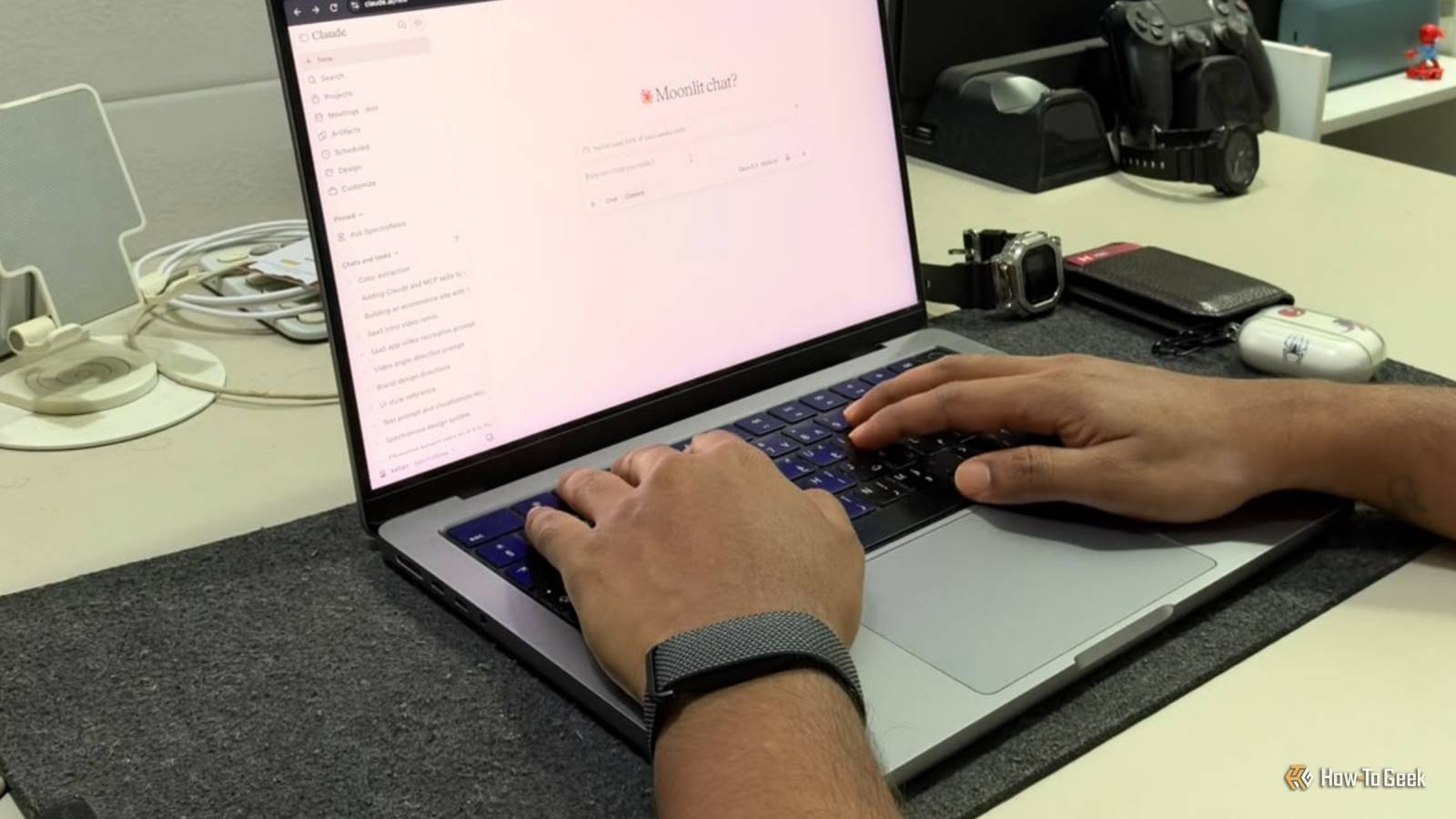
Published Nov 26, 2026, 6:30 AM EST Viraj Gawde is a Tech Journalist with bylines at Travel+Leisure India & South Asia, Android Headlines, 91Mobiles, Croma Unboxed, etc. He has written thousands of news pieces, how-to guides, product comparisons, listicles, and op-eds on consumer tech. Currently, Viraj is obsessed with the fast-evolving world of artificial intelligence and how it is reshaping the way we work, create, and use tech. As a curious generalist, Viraj's work extends into a wide range of subjects, formats, and storytelling styles. When away from desk, he is a finance, sports, and travel geek with a constant curiosity for new experiences. My Fitbit Air gives me plenty of data about my health, but I don’t know what to make of it with only colorful numbers and graphs. I leave the companion Google Health app overwhelmed with more questions than answers. So, I gave Claude and ChatGPT a week’s worth of my vital fitness data and asked them to explain it as if I’d never heard of HRV while also identifying any patterns and connections. I'm not comparing the results from two AI chatbots here. It’s how one experiment taught me more than a month of staring at my Fitbit dashboard — a gap unfulfilled by wearables in showing what my body is doing and helping me understand what it means. My Fitbit Air lacked context for my health and fitness AI explained HRV, RHR, and Readiness scores The Google Health app is the only window to everything the Fitbit Air collects. Each tile looks authoritative, but none tells me why it matters or how it relates to the next one. I had been treating the dashboard like a school report card — Green felt good, Orange felt vaguely guilty, and I moved on. That's not understanding; it’s extra guesswork about why something may have been color-coded that way. Heart-rate variability (HRV) is something that I didn't understand at all. ChatGPT and Claude advised me to stop comparing the readings with others and that my own baseline matters. I used to treat a high or low score as automatically good or bad, but now I look for long-term movements over daily wobbles. Resting heart rate followed the same logic. It gave me an indication of how fast my heart beats when I'm at rest. A beat or two either way is noise, and the trend over several weeks is the signal. AI helped me avoid the habit of reacting to any single day. Readiness score is another area where AI proved to be valuable. I was looking at it in isolation. Claude and ChatGPT pointed out that it is partly built from sleep, HRV, and resting heart rate. They contribute to the bigger recovery picture. So when all of them improve together, I do not see three separate confirmations. They’re overlapping signals I wouldn’t have caught on my own. Sleep patterns and workout data finally lined up Consistency matters more than anything A smartwatch or a fitness tracker and its companion app overwhelm the most when it comes to checking sleep-related data. Duration, efficiency, score, and stages all live on different screens. Once I gave these to Claude and ChatGPT, everything lined up. I learned that spending more time in bed doesn’t translate to better quality sleep. So, a long night can still look weak if much of the time is spent awake in bed. Both chatbots explained that uneven sleep pulled down my score instead of a shortage of hours on average. Looking at individual charts wouldn’t have given me this insight. Besides sleep, another area where AI came in useful was putting my workout history into perspective. I usually judge my activities by how long or intense each session feels, and the models helped me understand that a Fitbit's cardio load is an estimate of cardiovascular strain, not necessarily muscle workload. For one particular week, I also recognized that I was concentrating too much of my weekly activity on a single day. Why I chose six specific health parameters Google Health Coach does this but with less flexibility Credit: Google If you want to try this, give Claude and ChatGPT the same prompts (you can see in the third image in the first gallery) and the same duration window for every metric. The point wasn’t to compare two AI chatbots or discover which one finds a hidden interpretation from my health data. It’s also why I chose six specific health metrics instead of giving the AI models an exhaustive inventory of everything my Fitbit Air tracks. A focused set of metrics also gave them a clear task, so they don’t get lost in a mountain of unrelated measurements. I uploaded screenshots, which was far easier than manually sorting through individual files in the Google Health data export. Your file uploads might be restricted, or you might exhaust your usage limits quickly. Google Health Coach offers a similar experience by relying on Gemini to interpret fitness information and deliver personalized guidance. It addresses the same gap between collecting the data and understanding what to do with it. However, I find the experience cramped inside the companion app, and I wanted more room to explore my data without a dedicated coaching interface. Accessing Google Health Coach also requires a premium subscription that costs $10 monthly or $100 annually. It is bundled free of cost with Google AI Pro and Ultra tiers. Treat AI as a translator, not a doctor What I valued the most was restraint. Both Claude and ChatGPT explicitly mentioned that what they spotted were possibilities instead of conclusions, and none of it counted as medical evidence. Interpretations can sometimes be inaccurate, and any concerning or persistent changes should be discussed with a health professional. The dashboards still matter, and I don’t think AI should replace the health tracking features. However, as an additional and accessible way to understand my wearable data, I find this approach worthwhile. It may not be practical to always upload the data, either. But once in a while is perfectly doable, and understanding the context behind the readings is worth the effort. I don’t need another graph or numbers telling me how I am doing. ChatGPT and Claude turned a pile of disconnected tiles into a comprehensible story I can act on. And sometimes, getting that context is more useful than just keeping another fitness score — you’ll realize. Fitbit Air Brand Fitbit Battery Life 7 days I let Claude analyze a week of my Fitbit Air health data to get a clear picture of how I was doing. It also helped me uncover patterns I couldn't spot in the companion Google Health app.
I misunderstood my Fitbit health data until Claude finally made sense of it
Full Article
Original Source
Read the full article at Howtogeek →KhanList aggregates and links to publicly available news content. We do not host full articles from third-party sources. Always verify important information with original sources.