
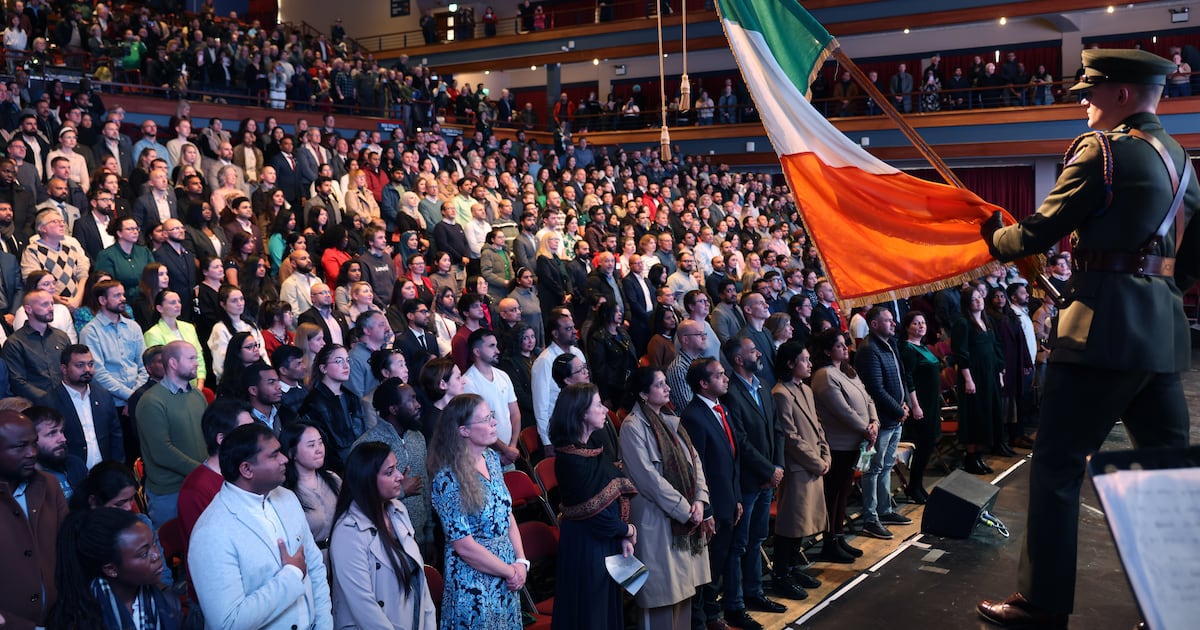
Prospective citizens say colleagues have left Ireland due to high cost of living and more could leave if changes come into effectThe crowd at a citizenship ceremony in Killarney last December. Many people who are near the five-year threshold to secure citizenship are upset at the proposal to extend it by three years. Photograph: Dara Mac Dónaill/The Irish Times When an opportunity arose to move to Dublin in 2022, Max took it immediately because it was “far from Russia”, his native country.Aged in his 20s and working in the technology sector, he came to Ireland under a critical skills visa with his employer after the Russian invasion of Ukraine. He saw it as a “chance to reset my life” and “stop hiding who I am”.Max does not wish for his surname to be published, saying his family, who hold “traditional, homophobic views”, are unaware he is gay and has been in a long-term relationship with Liam, a teacher originally from Co Mayo.In 2022, he had the option to move to Germany, but chose Ireland because of the “clear” five-year path to citizenship, which would provide security and allow him to stay in Europe.READ MOREGermany has since reduced its residency requirement from eight to five years.Max was about a year away from being able to apply for Irish citizenship when Minister for Justice Jim O’Callaghan announced an intention to extend the required five years of reckonable residence to eight years.“If Ireland had required eight years, I would have chosen Germany. Many of my friends moved there, so it would have been easier socially,” he says.The change is “profoundly unfair”, Max believes, “especially without grandfathering protections for people who are already here”.[ Fintan O'Toole: Living in Milwaukee with a Mayo granny automatically makes you Irish. Living here doesn’tOpens in new window ]“It feels like the goalposts are being moved right before the finish line. I moved here under clear rules, knowing my skills were needed.”He feels he is viewed less as a “prospective future citizen” and more like a “cash cow to collect substantial taxes from”.While he supports other “reasonable” immigration reforms announced by the Government, such as language requirements and knowledge of Irish history and civic life, the timeline change has seen morale drop among non-citizen colleagues who feel “undervalued”.Max says some tech workers he knows have left Ireland for other European countries due to Dublin’s “high cost of living” and that the State will lose “valuable talent and find it much harder to recruit skilled professionals” if the citizenship timeline is extended. He hopes the Government will allow those who lived here before the change to complete their path under the original rules.A Department of Justice spokesperson said the proposed amendment to reckonable residence will apply from the enactment of the new Bill: “Those seeking to apply under the current provisions will only be able to do so until the new Bill is enacted.”The change reflects the “significant rights and responsibilities associated with Irish citizenship and brings Ireland more closely into line with the approach taken in several other European countries”, the department said.Others nearing five years of reckonable residence, such as Kanika Sharma, a data scientist living in Dublin, point to the “sentiment changing” towards immigrants in recent years. Kanika Sharma, a data scientist living in Dublin, says she never imagined Ireland would 'unreasonably make your life unpredictable' Originally from Jaipur, India, the 34-year-old says she has seen comments online that immigrants “just come in, they buy houses, [and] they get citizenship easily”.“It’s been made to look like this is the only issue which is why there’s a housing crisis,” she says.While Sharma would expect such “abrupt” policy changes in the US, she says she “never saw Europe and Ireland as a place that would unreasonably make your life unpredictable”.Sharma, who is also on a critical skills visa, has four years of reckonable residence.The proposed change to the timeline was announced “without discussing its impact”, she says, adding she now has a “lack of trust about just knowing my future”.Maryam Umer, who came to Ireland in 2021 to study law, says she might 'pack my bags and leave the country' should the five-year requirement be extended Maryam Umer, a 33-year-old from Kashmir, a disputed region claimed by India and Pakistan, initially came to Dublin to study for a master’s degree in law in 2021.Umer, who works for the Immigrant Council of Ireland as a legal information and case officer, says its helpline has seen “so many calls” from people “panicking” over the changes.She is also one year away from completing her five years.[ Citizenship by descent is not racist, and language tests make perfect senseOpens in new window ]Noting the bureaucratic and financial “burden” that comes with living in the Republic without citizenship, such as residence permit renewals and visas for travel, she says: “At this point, if they change this reckonable residence and if they change the policy around it, I might pack my bags and leave the country.”IN THIS SECTION
‘I might pack my bags’: How immigrants view new citizenship rules
Full Article
Original Source
Read the full article at Irishtimes →KhanList aggregates and links to publicly available news content. We do not host full articles from third-party sources. Always verify important information with original sources.