
Divorce, once rare and stigmatised, has become mainstream – 42 per cent of marriages now end this way, meaning nearly half of us who get married can expect to experience it in our lifetime. Just as every marriage is different, so is every divorce. In this column, divorcees reflect on their life-changing experience. Helped by the benefit of hindsight, they share advice and reflections. One in five Brits have admitted to ending, or considered ending, a relationship over salary differences. Sarah*, 57, shares how her 23-year marriage was impacted by the career choices he made – it led to resentment and eventually separation. We’d been together for 18 months before we got married in 2003. No, it wasn’t a very long time, but we were in our early thirties and had both been previously in long-term relationships, so we thought we’d crack on. One of the first things we did was set up a business. He had moved from the other side of the country to live with me, giving up his tenancy in another business. So I raised £50,000 against my mortgage to enable him to set up another shop. I didn’t resent that at all. It was an act of love. I’ve been in education most of my career, either teaching or in local authority advisory roles, and that gave me financial stability. Unfortunately, the business didn’t really make any money and we decided to sell it three years later at a loss, but we knew the risks and I saw it as part of the path to him flourishing. Shorts My husband was a really keen artist but he didn’t have a degree, so he then went to university as a mature student. By that point, he was in his late thirties. I paid all the bills. I was by then in a leadership role at a school and working long hours. He loved the course and afterwards did a fourth year of teacher training, which, again, I supported him through. He qualified as a teacher, and started teaching at a local sixth form college. This was good but he only worked two days a week: the rest of the time he was pursuing his own art. For most of the rest of our marriage, he worked at the college part-time while I took on more and more work. We would have conversations regularly about our situation and he would always say that there were no full-time opportunities, but I remain sceptical. I think he wasn’t interested in pursuing a full-time position. He liked his lifestyle and working two or three days a week suited him very well. I would get frustrated that he couldn’t be more ambitious and help me out more. We both loved to travel and I funded two to three international holidays a year throughout our 23-year marriage. He’d want things like a boat (which we bought) and a sports car (which we bought) – I would pay upfront and then pay off what I borrowed. My salary changed hugely over my career but reached a peak of £75,000. None of the things I bought ever gave him lasting happiness. Our friends would often say how spoilt he was and how they were envious he got so much on a plate for him. I’ve probably spent over £150,000 on him over the last 25 years if you add up the shopping, cars, boats, holidays. Imagine if I’d been putting that into an investment instead. He continued to pursue his passion and was very talented. But he was very anxious and had low self-esteem and wouldn’t put himself out there. This just got worse over time. Maybe I did spoil him and overcompensate, but I did it because I knew he was struggling. His mental health limited him, but it also became an excuse he relied on. I didn’t intend to leave that career until I retired; I loved it – but I became so burned out I just couldn’t do it anymore. The responsibility and the pressure of being the provider swallowed me whole and, by 2021, I was dealing with physical exhaustion from the menopause and the pressure of my job. I went off sick, then resigned. After some time off, I started my own business. My husband had finally gone full time and I said that this was his opportunity to hold me. But soon he went off on long-term sick leave and never returned. The burden to keep us afloat got heavier and heavier. I went on antidepressants for the first time in my life. I started to resent him for all the time he had at home, and the worse his mental health became, the more resentful he became of me. It got to the point where I could see that the next step in his decline was me becoming his full-time carer. I couldn’t make any more effort for the both of us. So 22 years into our marriage, I walked away. It was tough, but there was no other choice. He even threatened to kill himself, which terrified me. The wild thing is, as a result of me walking away, he has, to a certain extent, got his act together. He’s joined a gym, he’s doing some agency work, he’s going out. He wasn’t doing anything like that before. My husband doesn’t recognise the disparity between what we put into the marriage. He still says now that he was hugely shocked when I left and maybe that was down to our inability to communicate. He thought that because he cooked meals at home two or three nights a week, he was doing his fair share. But really, he never pulled his weight at home in terms of cleaning the house or doing the laundry. A lot of my friends are cross with him for getting away with this for so many years and then also walking away with a settlement from the marriage, too, of £150,000 – but that was the only way that I was going to be able to leave. When we split, I had paid off all of the mortgage with my income and also had a lump sum set aside for retirement. Then there were the additional amounts that I borrowed along the way for holidays, new cars and so on – all of which I had paid off. For most of the marriage, his part-time working contribution came to about a quarter of mine. But when it came to our split, he genuinely believed he should walk away from the marriage with ownership of the house. As it happened, he walked away with about 60 per cent of the house, in terms of equity. I’m not paying him any maintenance, I’m not giving him any of my pension, and I’m back to having a 60 per cent mortgage on the value of my house at 56, but that actually gives me freedom. While I wish I hadn’t got here by burning out, I found ending my marriage and walking away incredibly empowering. I’m happy I took control of my life and I’m in a really good space mentally. I’ve still got all the same uncertainties, but I don’t have this weight of supporting somebody who needed so much from me. I can finally put myself first.
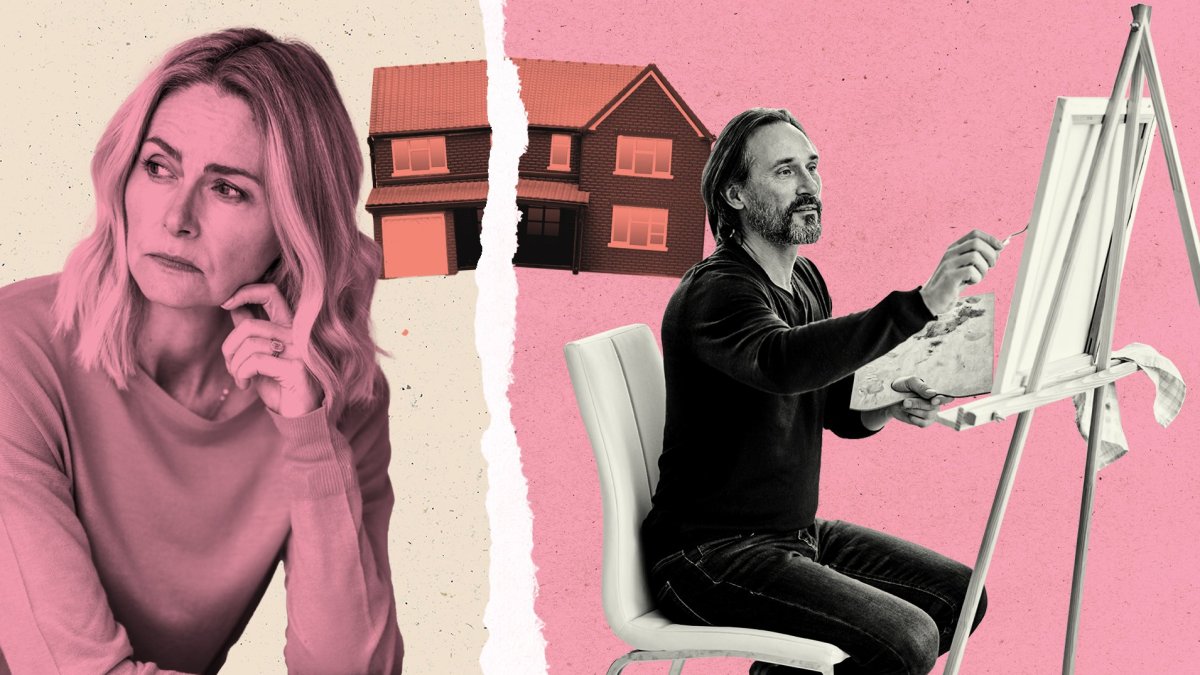
I married an artist who made no money – when we split, he got 60% of the house
Full Article
Original Source
Read the full article at Inews →KhanList aggregates and links to publicly available news content. We do not host full articles from third-party sources. Always verify important information with original sources.