
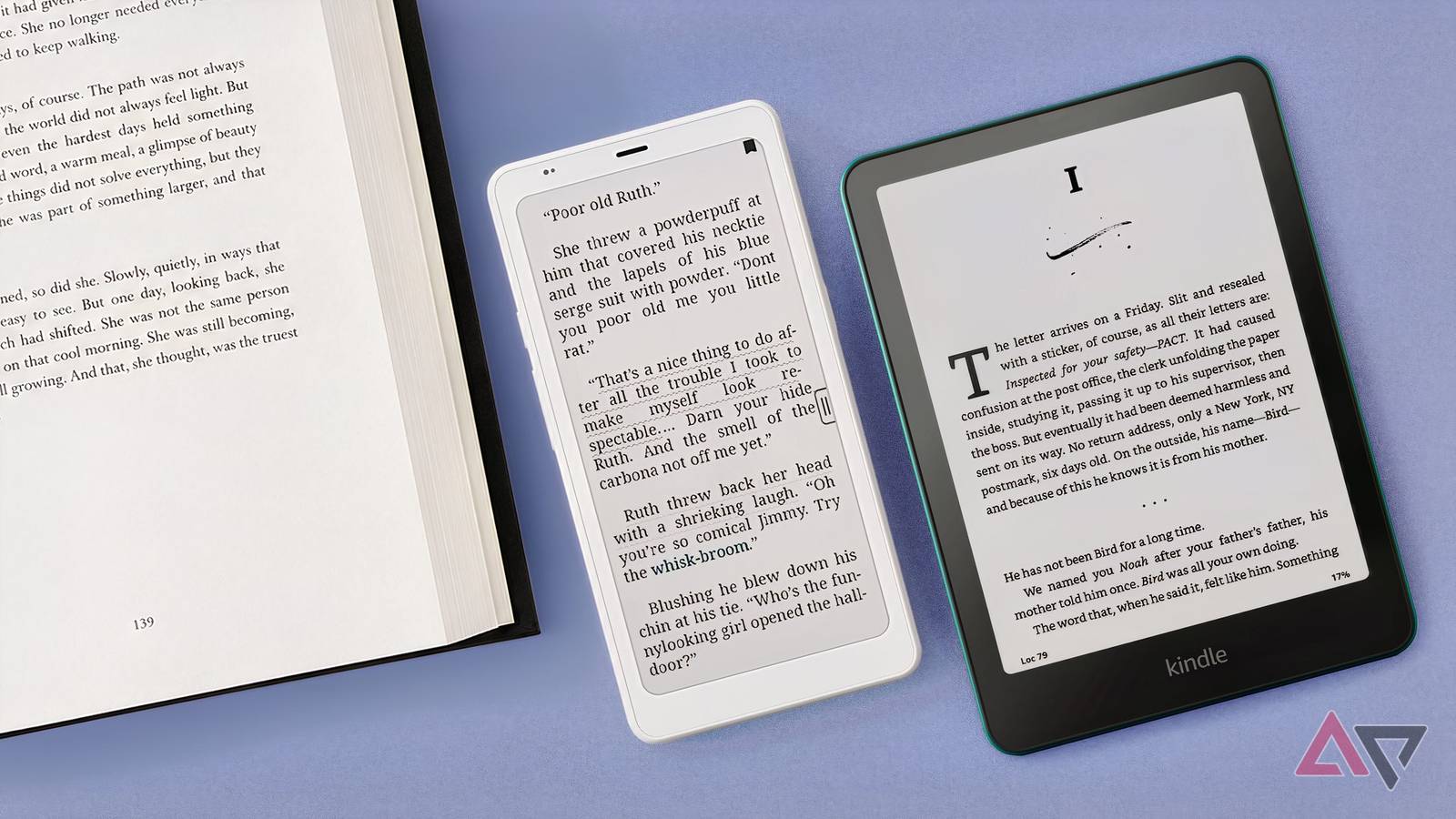
Published Aug 31, 2026, 8:00 AM EDT Tom has been covering technology since 2019, having worked as part of the phones team at TechRadar and then as an editor at What to Watch. Since 2025 he’s been a freelance contributor for many more brands including Digital Trends. BGR, TechRadar Gaming, TechAdvisor and GamesRadar. He's written about myriad topics over his career including phones and tablets, headphones and earbuds, fitness and AV, and enjoys adding more beats to his repertoire. Outside of technology he’s also written reviews and features on games, movies and sports, having worked for many years as an editor at movie & TV website WhattoWatch. He's attended tech launches, product shows, movie premieres and game launches to do so. Tom is based in London, UK, and when not covering technology he does work in the film sector, enjoys to run, cycle, climb and play tennis, and plays several instruments. I've been covering e-readers for years, and it's always welcome to see a change in a market which doesn't often see many revolutions. But an interesting new trend is emerging. Phone-shaped e-readers are the hot new trend that brands are chasing. No, I'm not talking about miniature e-readers which clip to your phone, or phones with E Ink side panels, but something else. These e-readers are designed to mimic, but not replace, your phone, and the launch of a new device like this begs the question: Now that it's becoming popular, when will the Kindle follow suit? The PocketBook Q is a new release which proves the rule A basic feature set, and a small form Credit: PocketBook The device that made me realize that a new trend was here is the PocketBook Q. This device, announced ahead of IFA 2026, is the epitome of a phone-shaped e-reader. The PocketBook has a 5.84-inch display, but thicker bezels than your average mobile, and so it takes up roughly the same amount of real estate as your average smartphone. The Q doesn't offer quite the same feature set as your Android phone. It's not even as advanced as other e-readers. The device uses a Linux-based platform which is designed to be minimal, offering access to books and audiobooks without loads of notifications or distractions. It's intended for simple reading, with tools like brightness and color temperature adjustment, side-lit LEDs, and wide format support. It's evident that eye health and simplicity are the focuses. My go-to reading e-reader is a phone device And it's a very different one I find phone-sized e-readers fascinating, so I've been using one for the last year. I have two e-readers: I've written about how I use the Onyx Book Tab Ultra C for work, but as a personal reading device, I've turned to the company's Palma 2 Pro. This is, as our reviewer called it, a "complex e-reader," and that's because it runs on Android, offering almost every tool that your phone or tablet does. Well, within reason. You can watch Netflix, play games, or edit videos, but with the low-refresh-rate E Ink display, it's a painful chore. The Palma has a camera on the back, has built-in speakers, and Play Store access. So it's as close to a phone as it can get without actually taking or receiving calls. I found the Palma 2 Pro's size ideal for an e-reader. We've become accustomed to phone-sized gadgets in our pockets, or in our hands, after all. The device felt easy to tote around, without needing to go in my backpack. Unlike the tiny e-readers people are testing, the screen is big enough to read without getting eye strain. Judging by the shapes of new e-readers, we're beyond the one-size-fits-all read-by-the-pool era of E Ink devices. There's a growingly diverse range of options, from micro devices to color-screen models and gigantic monolith machines. Each has a place for certain users, and the phone-alike is no different. Boox Palma 2 Pro 6/10 Resolution B/W: 1648 x 824 (300ppi), Color: 412 x 824 (150ppi) Storage 128GB Screen Size 6.13" Processor Snapdragon 750G And where is Amazon's Kindle line in all this? The trend-setter falls further behind Amazon used to be the dominant market leader in the e-reader space with its Kindles. In terms of sales, it still is, but it's no longer the cutting-edge tech maker. Amazon was woefully behind in releasing color or stylus models, with the Kindle Colorsoft and Kindle Scribe behind other brands' efforts, and it lags behind rivals elsewhere too. Case in point: small-form e-readers, the latest growing trend. Despite only having 6-inch screens, the base Amazon Kindle models are still two-handed devices, and there are no small models. I'm not convinced that we will see a small Kindle. When Amazon introduces new e-reader lines, it's for new features: the Colorsoft for color, Scribe for styli, and so on. A small form factor isn't a feature. Amazon has proven that design isn't enough for Kindles to get their own line. Case in point: The premium Kindle Oasis, which I loved, had a comfortable ridge and physical page-turning buttons. We last saw one in 2019, and Amazon officially discontinued it in 2024. Who needs Kindle when you have rivals? Kindles are popular for a reason: they're simple to use and work well. Amazon's online Kindle book store is also one of the go-to places to pick up digital books. However, rivals offer many of the same features, and often at lower prices. Our list of the best e-book readers includes options from different brands, and best of all, the Kindle store or app is available on many, so you don't need a Kindle. With that in mind, it isn't the end of the world if Amazon proves reticent to release a small-form e-reader; we can rely on other brands to do what Kindle won't.
I love phone-size e-readers; a new release shows that Kindles are lagging behind
Full Article
Original Source
Read the full article at Androidpolice →KhanList aggregates and links to publicly available news content. We do not host full articles from third-party sources. Always verify important information with original sources.