
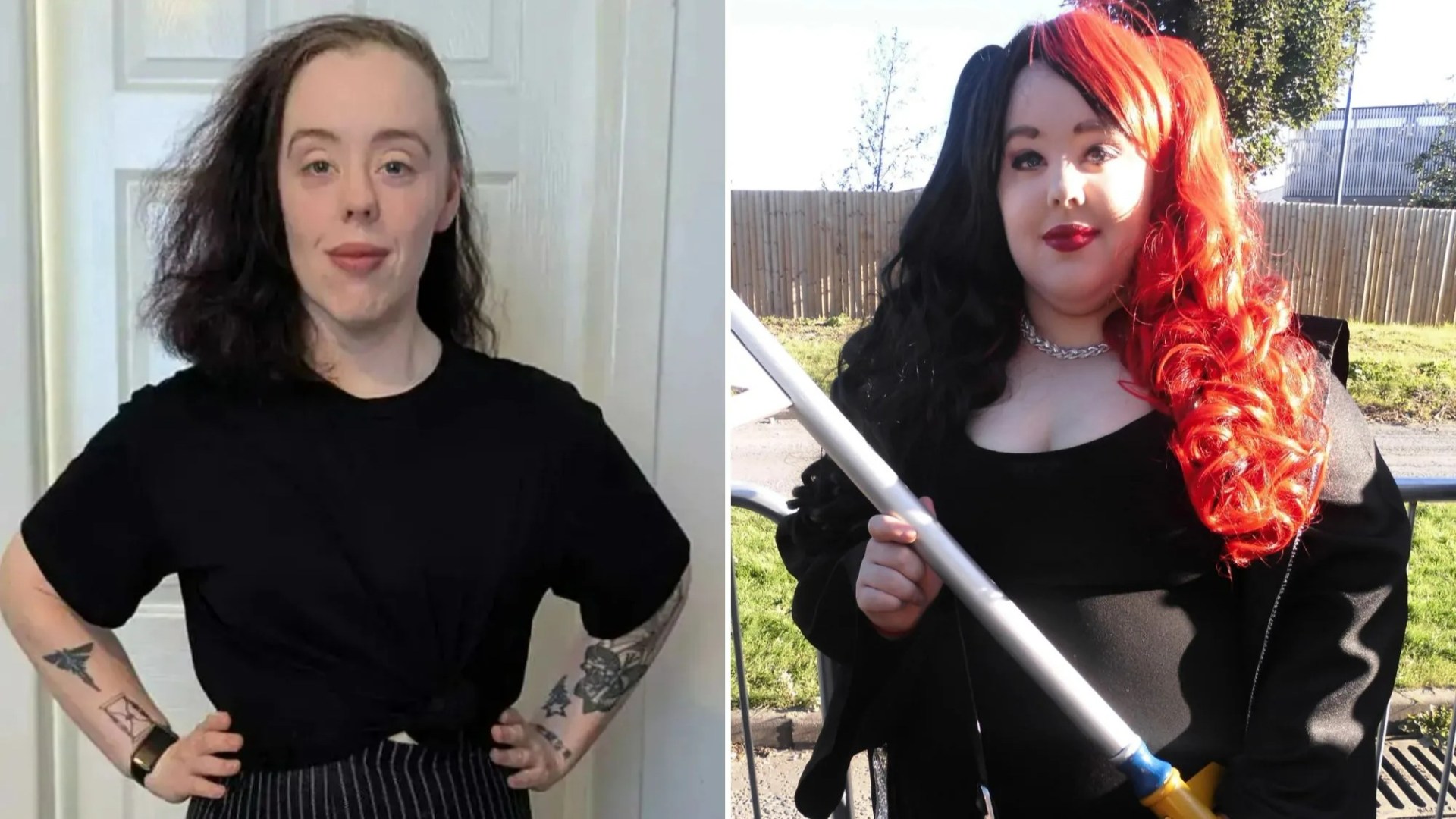
LOOKING at the reflection starring back at her in the mirror, Sarah Harrison didn’t recognise herself. She’d just lost 12st and was feeling her best. But with so much excess skin weighing her down, she she turned to her GP desperate to see if the NHS pay for an op to remove her saggy skin. Sarah Harrison was thrilled that she’d lost 12st, but when she looked in the mirror she still wasn’t happy Credit: Sarah Harrison Sarah, pictured here pre weight loss, felt weighed down by the excess skin that remained after her weight loss Credit: Sarah Harrison “It really affected my mental health,” she tells Sun Health. “I finally felt healthier, but I still couldn’t wear nice dresses, shorts or swimwear. “I still felt like I had to hide my body. It was heavy and uncomfortable.” The NHS does not pay for skin removal unless in exceptional circumstances, because it deems it to be cosmetic (for looks, not health). It means most people, including the many who have used GLP-1 drugs, will have to fork out thousands if they want to tighten up post-shred. So when Sarah, from Manchester, was approved to get 5lbs of excess skin from her stomach, waist and back removed, she knew she was lucky. The 32-year-old is currently waiting to see whether she’ll qualify for a third operation on her arms. But Sarah says she’s faced criticism for having skin-removal surgery funded by the NHS. She says: “Some people have said I should have paid for the surgery myself but I genuinely feel I may have saved the NHS thousands of pounds in the future. Here Sarah is pictured before having the 5lbs of excess skin removed Credit: Sarah Harrison Sarah pictured today, since having her excess skin removed on her tummy and back Credit: Supplied The NHS only pays for excess skin removal in exceptional circumstances, and Sarah’s case fit all the criteria for this Credit: Sarah Harrison Sarah said she used to wrap scarves around herself to try and hide her weight Credit: Sarah Harrison “If I’d carried on the way I was, I could have developed diabetes or other health complications and ended up needing medication for years. “The surgery wasn’t cosmetic to me. It was about my health.” Sarah had tipped the scales at 23st 8lb (330lb) before going on her major weight loss journey. It was meeting her boyfriend Samuel, 36, a sales assistant, during the pandemic that changed everything. With his encouragement, she swapped oversized portions for calorie counting, started walking and exercising, and gradually lost an incredible 12st 11lb, taking her down to 10st 9lb. Sarah says: “I’m proof you can lose weight without injections or pills, although I completely understand they can be the right option for some people. “But for me, changing my mindset around food, calorie counting, walking and exercise completely changed my life. “It wasn’t a quick fix. It took years of hard work, but it was worth every second.” Sarah grew up above her parents’ greengrocer’s shop, where she says food was always available. “I absolutely loved bread and chocolate. I’d have toast, sandwiches, bacon butties, and even dip bread into noodles. My portions were huge.” Sarah says being bullied at school only fuelled her emotional eating. “Children used to call me ‘Piggy’. One boy jumped on my back calling me it, and others made fun of me too. “I tried to laugh it off and made jokes about my size – that was my defence mechanism. But inside, I felt disgusting. I hated how I looked. “I was completely in denial. I wore lots of make-up, backcombed my hair and wrapped scarves around myself because I wanted people to look at my face instead of my body.” Sarah says she is proof you can loose weight without injections or pills Credit: Sarah Harrison Sarah, pictured now, fits into size 10-12 clothes after her excess skin surgery Credit: Sarah Harrison In 2015, Sarah’s dad died from terminal cancer after battling weight problems throughout his life. The following year, while travelling to Sorrento with her mum and sisters to scatter his ashes in one of his favourite places, Sarah experienced a moment she’ll never forget. She said: “I couldn’t fasten the seatbelt on the plane and I had to ask for a seatbelt extender. “I was absolutely mortified because I felt like everyone was looking at me. It was one of the most embarrassing moments of my life. “My dad had struggled with his weight all his life. He was around 20 stone when he was only 16, and seeing him become so frail after cancer made me realise I didn’t want my health to go downhill.” Sarah tried everything from Slimming World to Atkins, keto and fasting diets, but nothing stuck. Everything changed in 2020, however, when she matched with Samuel on dating app Hinge. “He always told me I was beautiful,” Sarah said. “But he also knew I wasn’t happy with myself. He didn’t pressure me, just simply supported me.” Samuel introduced Sarah to the calorie-tracking app MyFitnessPal, and for the first time, she started weighing her food to stay within a calorie deficit. “Seeing how many calories I was eating in a day was a real eye-opener. I realised I was having far too much pasta, rice and bread. “Samuel helped me realise that small changes to my diet could make a big difference.” Sarah weighed herself weekly and was thrilled to see the scales showing a small loss each time. “My clothes started getting baggy,” she said. “I went from looking for size 18-20 clothes to size 16 and then 14. It was the best feeling.” By early 2024, Sarah weighed just over 12 stone. But while the weight had gone, she was left with heavy folds of loose skin hanging from her stomach, waist and back. “I’d suffered with eczema my whole life, but now it was much worse – with painful sores and rashes underneath the folds of skin because of sweating,” she says. “Even having a shower meant lifting the skin to wash underneath it, and I couldn’t bear to look in the mirror.” Sarah visited her GP, who referred her to specialists at Wythenshawe Hospital. She says: “They looked at how I’d lost the weight and took into account that I’d done it naturally. “They seemed happy I hadn’t used gastric surgery or GLP-1s, and I felt that worked in my favour when I was being considered for surgery. “They asked whether I’d kept it off and how much my weight and the leftover skin was affecting me physically and mentally.” Sarah also told them how the loose skin was making her eczema worse. “All of these things helped with my referral for skin removal on the NHS and I was put on the waiting list, which was 12 months long. “Before it could go ahead, I was asked to lose even more weight first, to prove I was committed and wouldn’t regain it.” After waiting a year and losing another stone, Sarah finally underwent surgery. “I was so excited because it felt like the start of a new chapter,” she said. “When I woke up afterwards I was in pain, but it also felt strange not carrying that extra weight anymore.” Pictured with her boyfriend Samuel, she says he helped her realise that small changes can make a big difference Credit: Sarah Harrison NHS criteria for skin removal The NHS does offer patients a tummy tuck – known as an abdominoplasty – in exceptional circumstances, but they view it as a cosmetic surgery. It can involve removing excess loose skin, fat and stretch marks and tightening the abdominal muscles. The aim is to remove excess skin on the tummy that cannot be removed through exercise – for example, excess skin caused by pregnancy or losing a lot of weight. The procedure is usually only offered to people with a healthy body mass index (BMI). According to the NHS, the procedure costs between £5,000 and £10,000 pounds to have in the UK. This doesn’t include the price of any consultations or follow-up care. As the NHS considers skin-removal surgery a non-essential procedure, it generally reserves funding for cases where loose skin is causing persistent health issues. These include: Recurrent skin infections, ulcers or rashes that don’t respond to medical treatment Significant difficulties with mobility or hygiene Psychological distress or depression linked to the excess skin, supported by medical documentation Even if these symptoms exist, NHS approval is not automatic. The process is assessed by local Integrated Care Boards (ICBs), which each have their own criteria for deciding whether surgery is clinically justified. What’s more, you’ll typically have to prove that your weight has been stable for at least 12 to 18 months. You should also be able to show that you’ve attempted non-surgical solutions without success. The NHS referral and assessment process If you believe you may qualify for NHS funding, your first step is to book an appointment with your GP. They can evaluate your symptoms and refer you to a consultant or specialist for assessment. During the NHS evaluation process, your condition will be reviewed based on both physical and psychological impact. Photographs may be taken as part of your assessment to document the severity of skin laxity and its effects on your health. If your case meets the clinical thresholds set by your local NHS board, funding approval may be granted for a specific procedure. Many patients find that despite their challenges, the NHS deems their condition “cosmetic” and therefore ineligible for surgery. Sources: NHS and the Centre for Surgery Surgeons removed around 3lb of loose skin from her stomach and waist and another 2lb from her back. Recovery took several weeks and Sarah couldn’t work or drive. Sarah, who now wears a dress size 10-12, feels emotional when looking back at old photos. “I never thought I’d get here and I’m proud of myself,” she said. “If I hadn’t liked Sam’s profile on Hinge, my life could have been completely different. And I couldn’t have done it without the support from my sister Katie and mum Pauline along the way. “I still count my calories, but if I know I’m going out for a meal or there’s a special occasion where I’ll eat more than usual, I’ll have a day off from tracking.” She may eventually have surgery on her arms, although that could be classed as cosmetic rather than medically necessary, meaning she would need to pay for the surgery privately. She’s also chosen to donate her removed skin so it can be used for medical teaching and research. “I just want people to know it is possible,” she said. “It takes time and hard work, but changing your mindset could change your whole life.”
I lost 12st WITHOUT fat jabs & got NHS to pay for my saggy skin removal – here’s how I beat strict criteria
Full Article
Original Source
Read the full article at Thesun →KhanList aggregates and links to publicly available news content. We do not host full articles from third-party sources. Always verify important information with original sources.