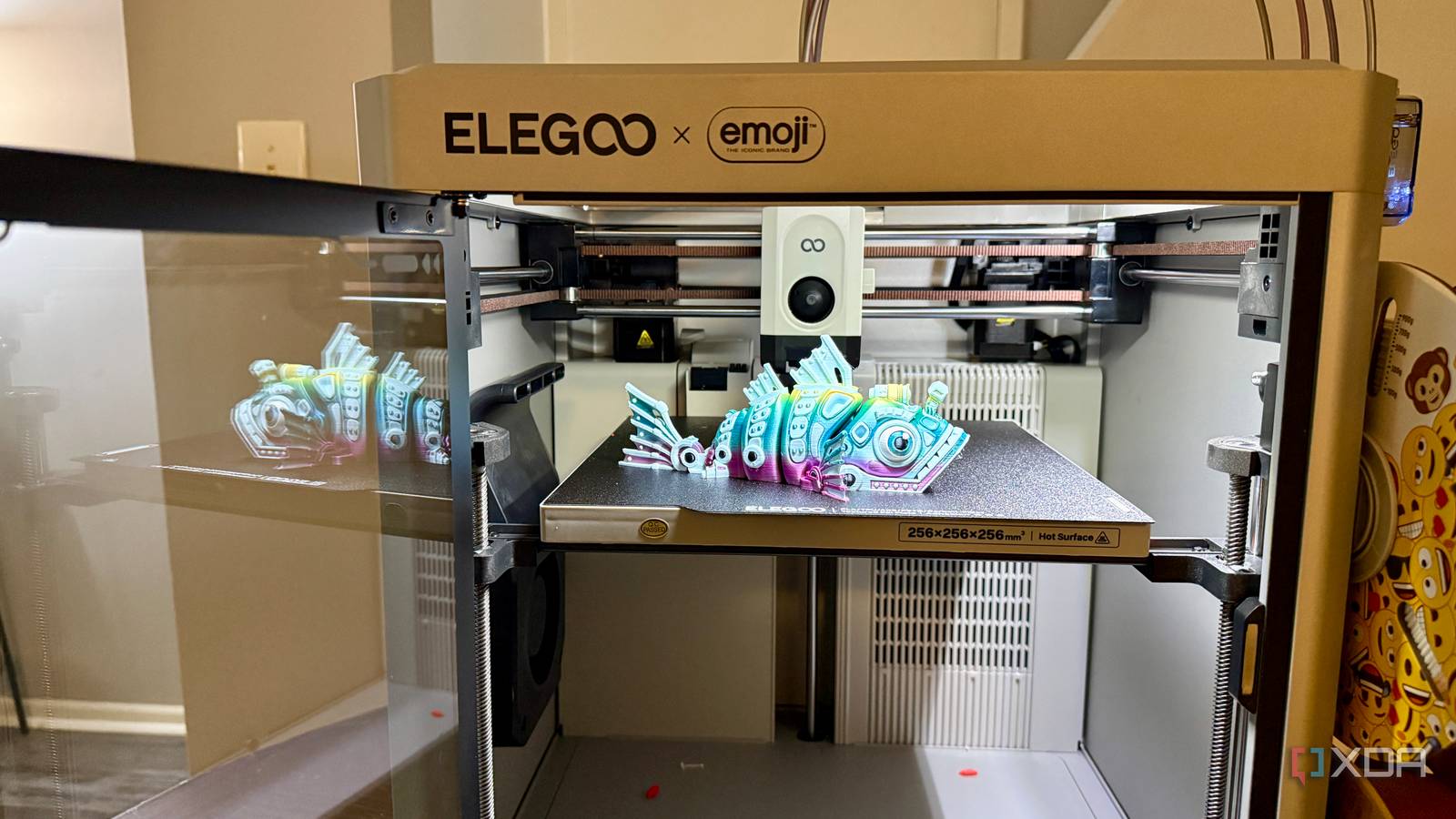
If you own a 3D printer, the normal workflow doesn’t require much thought once you’ve done it a few times. You find or design a model, open it in your slicer, set up the print, send the job, and the printer gets to work. Lawmakers in several states now want to add another step before any plastic starts moving: the printer, or the software connected to it, would have to decide whether you’re allowed to print the file at all. New York has included provisions in its 2026 enacted budget for firearm-blocking technology, while California and Washington have pursued similar measures to stop printers from producing firearms and prohibited components. I understand what lawmakers are trying to accomplish, but the closer I look at how 3D printing actually works, the less convinced I am that anyone has figured out how this mandatory screening is supposed to function reliably. California wants printers to decide what you can print The law defines the goal before defining the technology California's AB 2047 offers one of the clearer looks at how this could work, at least on paper. The bill would require 3D printers sold or transferred in the state to include what it calls firearm-blocking technology, and manufacturers would eventually have to certify that their machines comply. Before a printer started a job, the file would have to be evaluated to determine whether it could produce a firearm or a prohibited firearm component. That's a pretty dramatic change from the way I expect a printer to behave now, where sending a file generally means I want the machine to print it. Lawmakers are writing a requirement for your printer to judge your files before anyone can really explain how it's supposed to know when to say no. The tricky part starts as soon as you ask what, exactly, the printer is supposed to recognize. AB 2047 describes a firearm blueprint detection algorithm that could examine STL files, other CAD files, or geometric code to identify designs capable of producing prohibited parts. The California Department of Justice would establish the actual performance standards later, with a deadline of March 1, 2028. So the legislation can tell manufacturers what result they need to achieve, but the standard that determines whether they've achieved it doesn't exist yet. The bill is at least realistic enough to admit the system won't be perfect. Its future standards would allow some false positives and false negatives, and regulators could consult technical experts when deciding how much error is acceptable. The detection system would also need updates as firearm designs changed or new ones appeared. That acknowledgment matters, but it also made me pause at the phrase "acceptable false positives," because those aren't abstract numbers when your perfectly ordinary file is the one a printer refuses to run. The hardest part is recognizing what a file becomes A printer does not always see the original model Credit: @PrintingProgrammer/PrintablesImage Credit: YouTube A 3D-printing workflow isn't just a model moving untouched from your computer into a machine. I might start with an STL, but I don't send that STL straight to the printer and expect it to figure everything else out. The slicer turns the model into the instructions the printer actually follows, deciding things such as toolpaths and how the object gets built layer by layer. California's proposal accounts for that by allowing detection to happen in firmware, pre-print software, or another approved system, but that means the screening system could end up inserted at several very different points in the workflow. Putting the detector into slicer software makes some sense because that's where the original model is still readily available for inspection. The problem is that 3D printing doesn't revolve around one slicer, one manufacturer, or even one preferred way of sending files to a printer. California's proposed integrated approach could require jobs to come through an authorized software path, which immediately raises questions about third-party and open-source slicers. The bill tells regulators to consider open-source-compatible designs, but whatever solution they approve still has to prevent a user from simply bypassing the check. Putting the detection inside the printer's firmware doesn't magically make those questions disappear. Now the printer itself has to perform the analysis, store or access whatever information the detector needs, receive updates, and decide whether a file resembles something prohibited. I keep coming back to modified geometry here, because 3D models are extremely easy to edit. The bill expects systems to recognize known prohibited files and altered versions of them, but how far can a design change before it's no longer considered the same thing? That's exactly the kind of detail that matters in practice, and it hasn't been answered yet. Mandatory screening could reshape ordinary 3D printing workflows False positives could turn normal prints into blocked jobs This could affect people who have never considered printing anything firearm-related. California is large enough that manufacturers may find it easier to build a single compliant software and firmware stack than to maintain separate versions for different states. If that happens, blocking technology created for one jurisdiction could quietly become part of ordinary 3D printers sold everywhere. That alone makes false positives more than a niche concern, because millions of perfectly normal prints could end up passing through software designed to decide whether their geometry looks suspicious. The problem becomes clearer when you stop talking about "prohibited files" in the abstract. Compare a 3D-printable Glock magazine body with something as harmless as a 3D-printed AA battery holder. Both can consist of a rectangular body with repeated cavities, retaining walls, openings, and internal geometry designed to hold a row of similarly sized objects. A person can look at the finished parts and immediately understand that one holds ammunition and the other holds batteries. Still, a detection algorithm doesn't get that context for free. It has to decide based on geometry, dimensions, known-file matches, or some combination of those signals, and that's where the line gets very fuzzy. The issue here isn't that a battery holder and a firearm magazine are the same object. They aren't. The problem is that a detection system may have to distinguish between unrelated parts that share similar dimensions, cavities, walls, openings, and other geometric features, especially after a prohibited design has been modified. That's what makes California's willingness to accept some false positives much more significant than it sounds in legislative language. If the detector is broad enough to catch modified firearm designs, it also has to be precise enough not to flag battery holders, tool organizers, brackets, enclosures, and other ordinary mechanical parts that happen to share similar geometry. Then there's the question of what happens when it gets the decision wrong: does the printer refuse the job, can you appeal it, can you override it, or does somebody else have to review the file? An "acceptable false-positive rate" sounds manageable on paper, but it becomes a very different problem when you're staring at a printer that won't make an innocent part, and nobody can clearly tell you why. There is a real public safety problem behind this Supporters are trying to stop manufacturing before it happens There is a genuine reason these bills exist. Consumer 3D printers are affordable, capable machines that can be used to manufacture functional firearm components without the traditional equipment that once made it substantially harder. New York's law and the proposals in California and Washington aim to put a barrier directly in the manufacturing process. Instead of discovering an illegal firearm after it has already been made, the idea is to prevent the relevant parts from being produced in the first place. It's also fair to say that a system doesn't have to be perfect to have value. California's proposal doesn't demand flawless detection, and the bill clearly expects people to modify files or otherwise try to defeat the screening system. If the filter stops someone who downloads a known prohibited model and presses Print, supporters can reasonably argue that it has done something useful. I don't think that argument should be dismissed simply because someone with enough technical knowledge may eventually find a way around the restriction. The California proposal also shows more awareness of the technical problem than the simplest version of this idea suggests. Lawmakers aren't demanding that manufacturers add a finished detector immediately and hoping for the best. The bill gives regulators time to develop performance standards, allows consultation with technical experts, considers open-source architectures, and openly acknowledges that some detection mistakes will happen. Those are sensible provisions, even if they don't solve the underlying engineering problem. A worthwhile goal still needs a workable technical standard Bad detection can punish harmless prints without stopping determined users Image Credit: Danny LumSource: Starostenko/MakerWorld That's also what bothers me most about the proposal, because so many of those provisions amount to "we'll figure this part out later." The government can define the outcome it wants, but someone still has to build software capable of analyzing arbitrary geometry and determining whether it represents something prohibited. It has to do that consistently enough that manufacturers can legally sell their printers without constantly interfering with normal printing. That's not a minor technical detail attached to the law. It's the part that determines whether the entire idea works. Make the detector too permissive, and slightly altered prohibited files get through. Make it too aggressive, and people start having legitimate mechanical parts rejected because some piece of their geometry crosses whatever similarity threshold the algorithm uses. California's proposal leaves that balance to future standards, which means manufacturers don't yet know where the line will actually be drawn. Maybe the eventual technology works better than I expect, but I'd like to see the detector demonstrate that before we start designing entire consumer printer ecosystems around it. Circumvention creates another awkward problem. Consumer 3D printing has benefited enormously from replaceable hardware, third-party slicers, local network control, open firmware, and machines that can keep running years after the manufacturer loses interest in them. A mandatory detector meant to resist technically knowledgeable users pushes in the opposite direction, because a screening system isn't very useful if you can deactivate it with a settings toggle. Even with allowances for open-source implementations, manufacturers may have to lock down parts of the workflow that owners currently expect to control. The unanswered implementation details are the whole story I don't have a problem with the basic goal of making illegal firearm manufacturing harder, and ignoring the fact that modern 3D printers can make firearm components isn't a serious answer either. What bothers me is the jump from recognizing the problem to requiring printers to inspect and approve files before the technology and standards for doing that have been worked out. New York has already committed to the idea, and California's AB 2047 makes it clear how many questions remain between the legislation and something that can actually ship from a printer. Detection accuracy, updates, slicer compatibility, offline operation, false positives, and long-term support aren't details to clean up afterward. That's why the most interesting question here isn't simply whether a printer should refuse to make an illegal gun part. It's what happens when we require a machine to make that decision in the first place. California can describe the result it wants, but regulators and manufacturers still have to invent the system that reliably gets there without breaking ordinary uses along the way. Maybe they can. Until there's a much clearer technical answer, though, lawmakers are writing a requirement for your printer to judge your files before anyone can really explain how it's supposed to know when to say no. Elegoo Centauri Carbon 2 Combo $449 $499 Save $50 If state legislators have their way, your 3D printer may soon have to send your models through a mechanism to be sure they aren't prohibited items before printing them.
I looked into how 3D printer firearm blocking is supposed to work, and the answer is nobody has figured it out
Full Article
Original Source
Read the full article at Xda-developers →KhanList aggregates and links to publicly available news content. We do not host full articles from third-party sources. Always verify important information with original sources.